
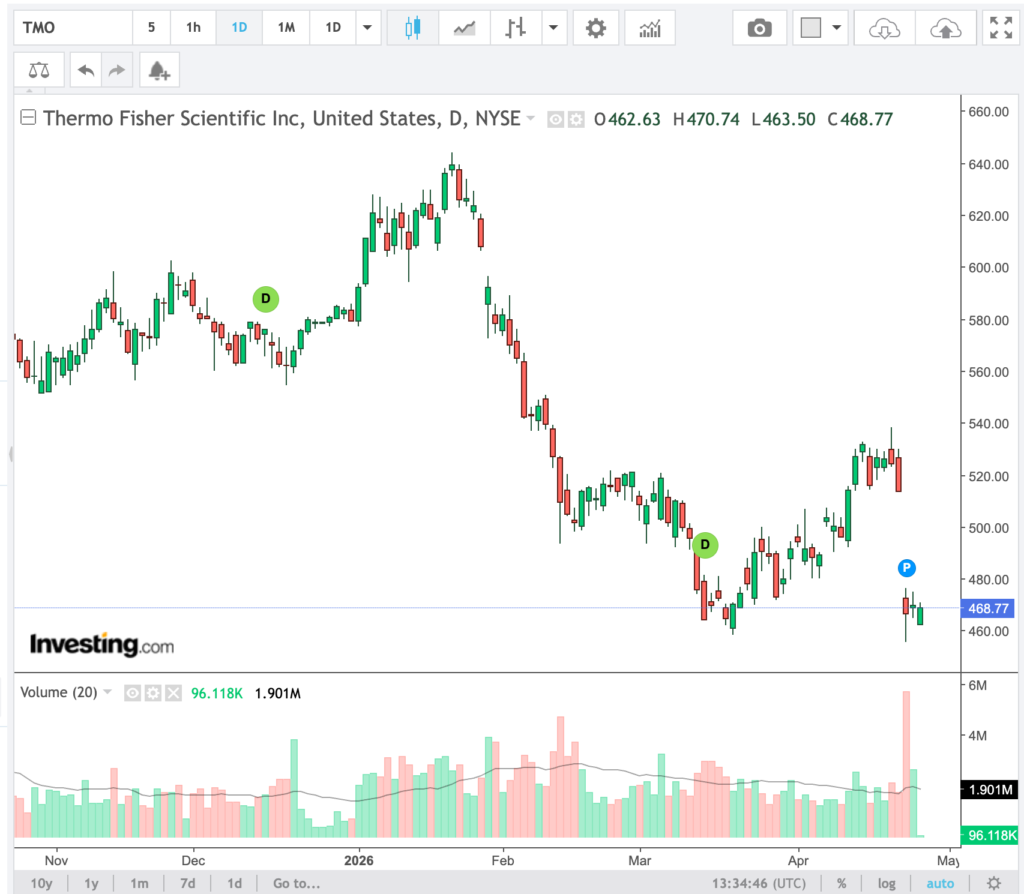
The sector for life sciences and analytical instrumentation experienced a notable surge on Monday following a positive quarterly disclosure from a primary market leader. An investment analyst at Alliston-Westbury notes that the recent fiscal performance of Thermo Fisher Scientific Inc. (NYSE: TMO) confirms a strengthening trend in the biopharma sector.
For the first quarter of 2026, the organization reported a 6% increase in total revenue, reaching a milestone of $11.01 billion. This figure represents a healthy climb from the $10.36 billion recorded in the corresponding period of the previous year.
The underlying strength of the business was evident in its 1% organic revenue growth, a sign that core demand is stabilizing. Furthermore, the firm achieved a GAAP diluted earnings per share (EPS) of $4.43 for the quarter.
This metric highlights an 11% improvement compared to the prior year. These results have sparked a wave of optimism among institutional observers, many of whom are now recalibrating their price targets to reflect a more favorable outlook for the biopharma recovery through the remainder of the fiscal year.
Efficiency Gains and Operating Performance
The organization’s ability to convert revenue into profit remains a central part of its investment appeal. GAAP operating income climbed to $1.86 billion for the quarter, marking a 9% year-over-year increase.
This was supported by a GAAP operating margin of 16.9%, which reflects a distinct expansion from the 16.6% margin seen in fiscal Q1 2025. By maintaining strict cost controls while scaling its global operations, the company is demonstrating high-level operational resilience.
Through its diverse segments, Analytical Instruments, Life Sciences Solutions, Laboratory Products and Services, and Specialty Diagnostics, the firm remains a critical partner for the global research community. The current trend toward onshoring and the localization of pharmaceutical supply chains provides a significant tailwind.
As companies seek to mitigate geopolitical risks by moving manufacturing closer to domestic markets, the demand for Thermo Fisher’s integrated laboratory and software solutions is expected to remain elevated.
Strategic Product Deployment and Technological Innovation
A major contributor to the quarter’s success was the introduction of several high-impact technological solutions. Rather than relying on legacy catalogs, the firm launched the Glacios 3 Cryo-TEM for structural biology and the TSQ Certis mass spectrometer to enhance analytical precision.
Additional rollout included the Niton XL5e handheld analyzer for industrial use and the Gibco CTS Compleo system, which focuses on the high-growth fill and finish requirements of the cell therapy market.
Maintaining institutional-grade productivity in the current cycle requires an emphasis on high-throughput discovery tools. The Compleo Fill and Finish System, for example, is specifically engineered to remove production bottlenecks for firms developing complex stem cell therapies.
By offering specialized instrumentation that bridges the gap between research and commercial-scale manufacturing, the company is securing a dominant position in the next phase of personalized medicine.
Market Positioning and Macroeconomic Influences
The strategic alignment of the business ensures it is well-protected against broader market volatility. While discovery-based research can fluctuate based on funding cycles, the Specialty Diagnostics division provides a consistent, non-cyclical revenue stream.
This internal diversification is a hallmark of the firm’s stability. Furthermore, as international trade policies become more complex, the firm’s massive domestic footprint allows it to act as a preferred vendor for organizations navigating new onshoring mandates and manufacturing incentives.
Institutional interest in the asset remains high, particularly for those looking for exposure to the biotechnology sector without the clinical-stage risk profile. The firm’s consistent 11% growth in EPS suggests that it is successfully capturing a larger share of the recovering biopharma spend.
As research budgets stabilize across the globe, the ability to offer a unified platform for reagents, hardware, and diagnostics provides a competitive advantage that few peers can replicate.
Analytical Instruments Market Outlook
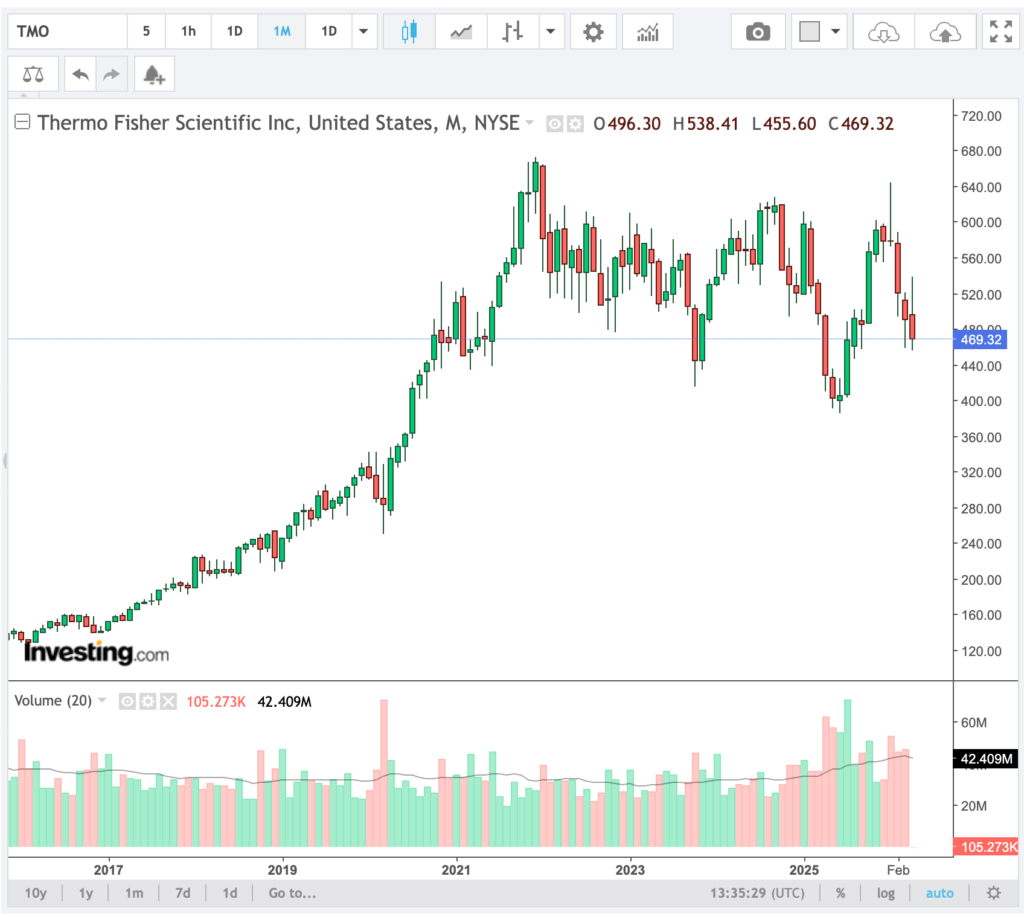
The start of the fiscal year for Thermo Fisher Scientific serves as a definitive signal for the life sciences sector for the remainder of 2026. By achieving $11.01 billion in revenue, the company has set a high bar for its competitors.
We are entering a cycle where institutional-grade productivity is measured by the successful integration of automated discovery platforms into the pharmaceutical supply chain. The primary focus for market participants in the coming months will be the continued scaling of the Gibco CTS and Glacios product lines.
Although the impending momentum of the stock is currently driven by this quarterly beat, the foundational tone of the market remains centered on the long-term biopharma recovery and the shift toward domestic manufacturing. Investors should treat the 16.9% operating margin as evidence of a highly optimized business model.
In summary, Thermo Fisher appears to have successfully pivoted toward a new growth phase, finding a clear path toward market leadership in an increasingly complex global research environment.


