
The global automotive sector is facing a moment of profound introspection as traditional manufacturers struggle to reconcile shifting Western policies with the hyper-efficient production capabilities of the East. According to a financial analyst at Alliston-Westbury, Honda CEO Toshihiro Mibe has expressed deep concern regarding the competitive gap currently separating legacy automakers from their Chinese counterparts.
Following a visit to a highly advanced electric vehicle (EV) plant in China, Mibe signaled that the sheer scale of automation and logistical optimization in the region may be insurmountable for Western firms under current operating conditions.
This alarm follows a turbulent period for the industry initiated by an abrupt policy shift in the United States in mid-2025, which eliminated a long-standing EV tax credit. This regulatory change forced a rapid and costly pivot for major brands.
While American manufacturers like Ford and General Motors sustained multibillion-dollar losses, Honda’s financial hit was particularly severe, with losses topping $15.7 billion. Consequently, Honda’s shares edged lower by 0.57% on Friday, while Ford and GM saw declines of 0.80% and 0.60%, respectively.
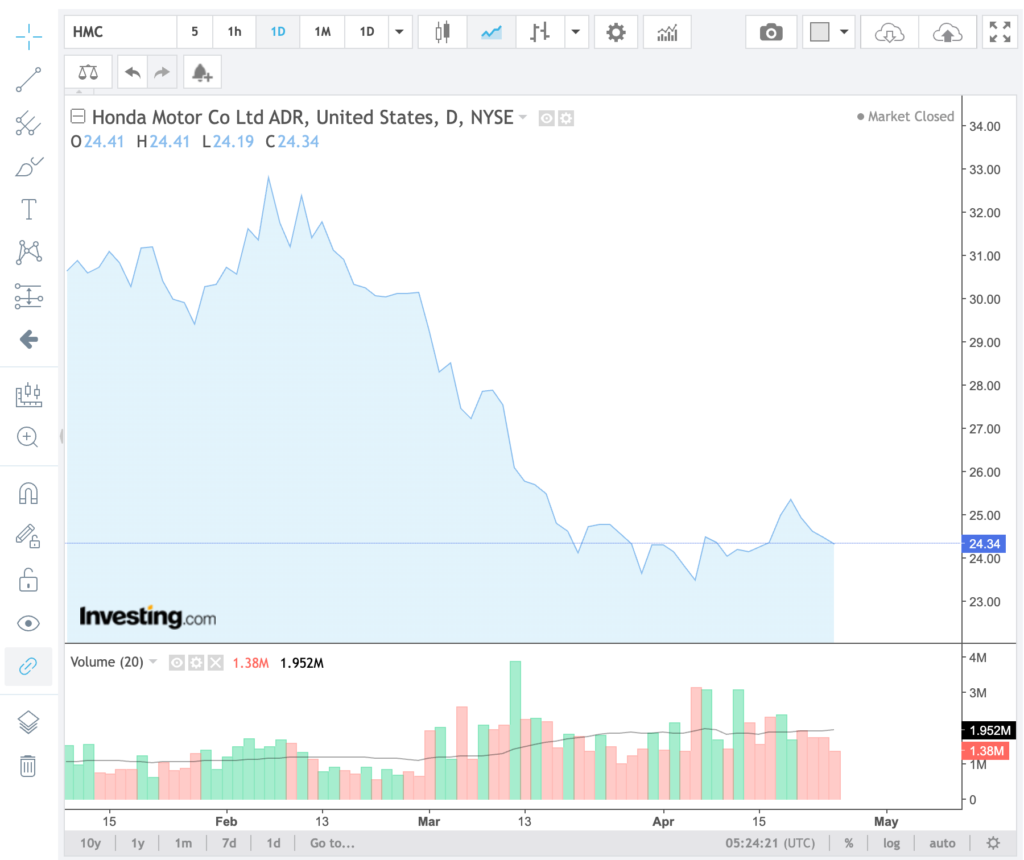
The Automation Gap: A “No Chance” Assessment
The core of Mibe’s concern stems from the level of integration observed during his inspection of Chinese facilities. He noted that from parts procurement to logistics management, every aspect of the manufacturing process was fully automated, effectively removing human labor from the production floor.
This level of operational efficiency allows for a speed of production that legacy systems, still transitioning from internal combustion engine (ICE) architectures, simply cannot match. “We have no chance against this,” Mibe reportedly acknowledged in recent industry discussions, highlighting that the Chinese EV ecosystem has moved far beyond simple assembly.
The integration of the supply chain directly into the automated floor allows for real-time adjustments and a reduction in overhead that Western firms are currently unable to replicate.
This realization coincided with Honda disclosing its first annual loss in early March, a definitive signal of the financial strain caused by the lagging transition.
Market Friction and Policy Fluctuations
The challenges facing Honda and its peers are exacerbated by inconsistent consumer signals in the North American market. Recent analysis of consumer sentiment suggests a growing frustration with the volatility of EV incentives.
Many potential buyers expressed readiness to move away from petroleum dependence, yet the fluctuation in tax credits and supply chain inconsistencies have made the switch to electric propulsion increasingly difficult for the average consumer.
Some consumers have already begun migrating to brands they perceive as having a more stable EV roadmap, with Toyota seeing some benefit from this shift in brand loyalty. The perceived failure of Western leadership to maintain a consistent energy transition path is increasingly viewed as a long-term economic liability.
Strategic Pivots and the Regulatory Hurdle
The abrupt elimination of incentives in 2025 is now viewed by many analysts as a primary catalyst for the $15.7 billion loss. By disrupting the multi-year planning cycles required for automotive manufacturing, the policy change left firms like Honda with stranded assets and excess inventory that lacked the necessary price supports for retail success.
This has created a cycle where Western firms must now play catch-up while simultaneously defending their legacy ICE profits. Furthermore, the Chinese advantage is reinforced by a national-level prioritization of the battery supply chain. By securing the raw materials and processing capacity early, manufacturers in the region have insulated themselves from the price shocks that have plagued Western producers.
As long as parts procurement remains a bottleneck for traditional firms, the automated facilities of the East will continue to widen the cost-per-unit gap, making it difficult for Honda to regain its historical market share.
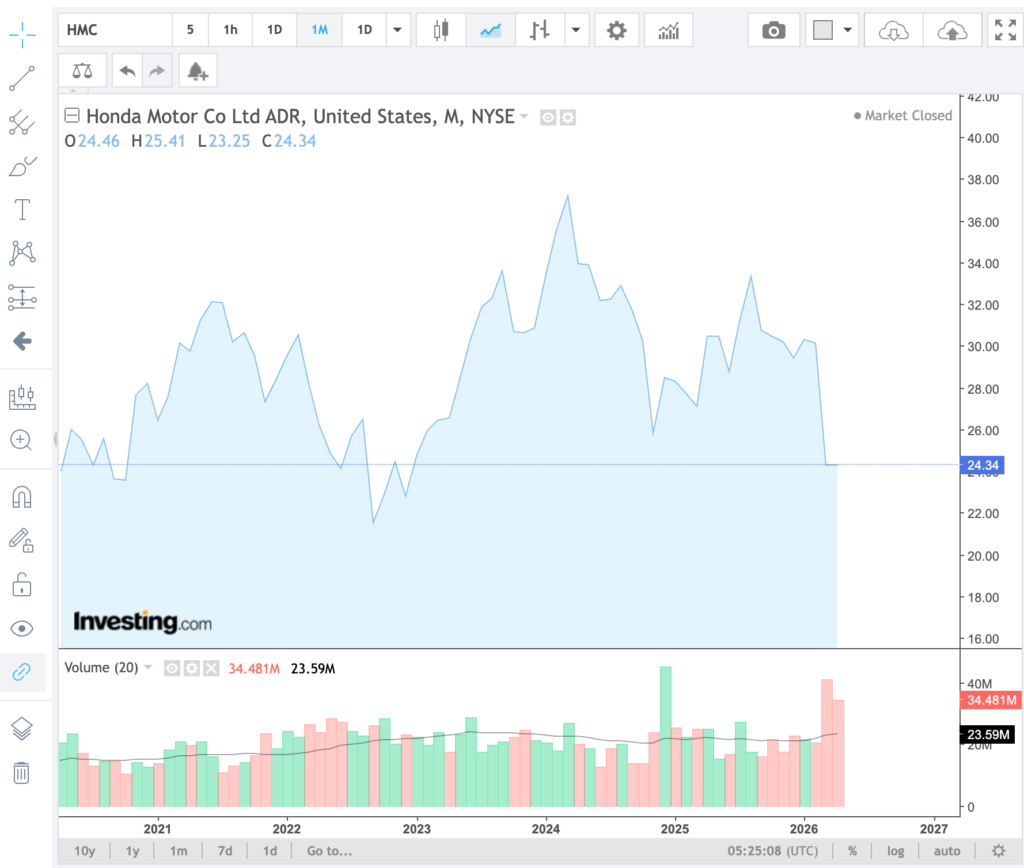
Automotive Sector Market Conclusion
The admission of a competitive deficit by Honda’s leadership represents a critical turning point for the industry for the remainder of 2026. By acknowledging the automation superiority of the East, the company is signaling that a radical overhaul of its manufacturing philosophy is required. We are entering a cycle where institutional-grade productivity in the automotive space will be defined by the ability to match automated logistics with regulatory stability.
The primary focus for investors in the coming quarters will be the reconfiguration of Honda’s supply chain to address the $15.7 billion shortfall. Although the impending momentum of the sector is still hampered by policy uncertainty in the United States, the foundational tone of the global market remains firmly tilted toward electrification.
In summary, the traditional automotive model appears to be under direct threat from a more integrated and automated competitor, and the path to recovery will likely require a re-evaluation of the entire manufacturing stack to avoid becoming a secondary player in the post-fossil fuel economy.


