
In a market environment typically defined by the pursuit of high-growth technology trades, a remarkably conservative investment strategy is currently delivering historic results. The four-way equal-weighted portfolio which splits capital evenly across equities, bonds, cash, and commodities, is on track for its most significant annual performance in nearly a century.
This 25/25/25/25 allocation is currently tracking a staggering 26% gain for the year, a level of return not seen since the post-depression rebound of 1933. The financial sector witnessed a historic shift on Monday as traditional diversification models proved their resilience against more aggressive strategies.
Research from the strategy team at Alliston-Westbury indicates that this “sleep like a baby” framework is successfully neutralizing the volatility that has plagued more concentrated portfolios.
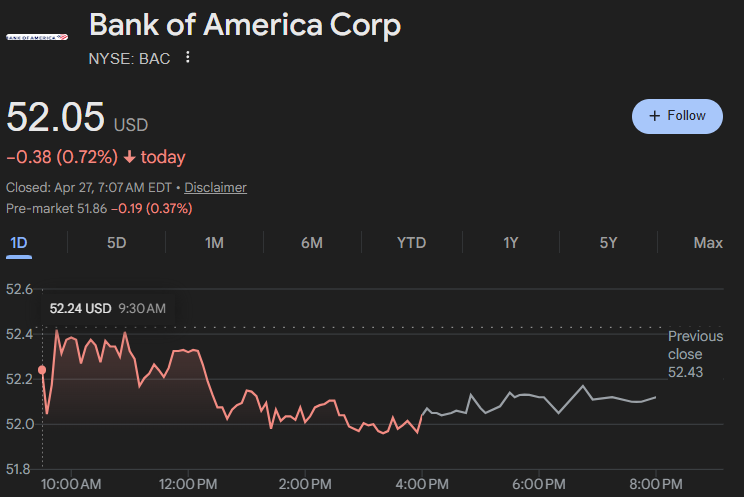
While Bank of America (BAC) shares edged lower by 0.80% on Monday, the research coming out of the institution suggests that the current market regime is favoring broad-based asset protection over the singular pursuit of growth.
The Mechanics of the 25/25/25/25 Framework
The philosophy behind this strategy is rooted in the Permanent Portfolio concept, originally developed to provide peace of mind across all economic cycles. By maintaining an equal 25% exposure to growth (stocks), defense (bonds), liquidity (cash), and hard assets (commodities), the investor is hedged against inflation, deflation, and recession simultaneously.
In the current tape, all four quadrants have contributed to the total return, but the commodities sleeve has emerged as the definitive differentiator. This year’s performance is particularly striking when compared to the classic 60/40 stocks-and-bonds portfolio.
Analysis shows that the 25/25/25/25 mix is currently posting its third-best outperformance versus the 60/40 model in over a hundred years. The primary driver of this gap is the inclusion of hard assets, which provide a tailwind that traditional bond-heavy portfolios simply do not possess in an inflationary or geopolitically sensitive environment.
Regime Change and the Return of Commodities
Strategic reports released earlier this year framed the 2020s as a new market regime that fundamentally favors diversified “boring” portfolios over the high-octane growth strategies of the previous decade.
The irony of the current 26% return is that a significant portion of the investing public remains underexposed to the commodities sector, which has been the primary engine of the portfolio’s 1933-style gains. As more allocators recognize the structural shift in the market, the momentum behind hard assets like gold, energy, and industrial metals is expected to build.
Maintaining institutional-grade productivity in the current cycle requires an acknowledgment that cash still pays and bonds are doing their job as a defensive anchor. However, without the commodities component, an investor is essentially fighting the current market trend with one hand tied.
The 26% tracking gain suggests that the market is rewarding those who have moved away from the “hot trade” mentality in favor of a more balanced, structural approach to wealth preservation.
Building a Modern Permanent Portfolio
While the original strategy utilized long-term US Treasury bonds and gold, modern implementations often use a broader commodities sleeve to capture a wider range of inflationary pressures.
For the average investor, replicating this Bank of America-style model typically involves utilizing highly liquid Exchange-Traded Funds (ETFs) that map onto the four primary buckets. By automating the rebalancing process to maintain the 25% equal weights, participants can ensure they are buying low and selling high across the different asset classes as they fluctuate.
Furthermore, the strategic orientation of global wealth managers is shifting toward these all-weather models as geopolitical risk premiums remain elevated. The unprecedented demand for liquidity and hard assets is a byproduct of the uncertainty surrounding the U.S. electrical grid, semiconductor supply chains, and the ongoing energy transition.
In this context, the “boring” portfolio is not just a defensive play; it is an aggressive adaptation to a more complex global economic architecture.
Diversification Strategy: Market Outlook
The historic outperformance of the 25/25/25/25 portfolio serves as a definitive signal for the financial sector for the remainder of 2026. By delivering a 26% return, the strategy has validated the move away from the 60/40 split that dominated the last forty years.
We are entering a cycle where institutional-grade productivity in wealth management is defined by the ability to manage structural diversification rather than picking individual winners. The primary focus for market participants in the coming quarters will be the persistence of the commodities tailwind, which remains the most undervalued sleeve of the framework.
Although the impending momentum of the stock market continues to attract headlines, the foundational tone of the current decade belongs to the balanced allocator. Investors should treat the 1933 performance benchmark as a sign that we have entered a period of fundamental re-valuation for all asset classes.


