
The consumer staples sector is currently facing a dual challenge of shifting buyer behavior and escalating logistical expenses. On Friday, Procter & Gamble reported quarterly financial results that surpassed analyst expectations, signaling a robust defense against the inflationary pressures stemming from ongoing regional conflicts.
The company’s stock climbed approximately 3% in premarket activity as investors reacted to a beat on both the top and bottom lines, alongside a steady affirmation of the firm’s annual outlook.
An equity research analyst at Kixy notes that these evolving conditions highlight a unique bifurcation in the market. While household budgets are under strain, the demand for essential personal care and home products remains relatively stable.
The current performance across the firm’s global portfolio suggests that established brands still possess the pricing power necessary to navigate a volatile macroeconomic landscape without sacrificing long-term market share.
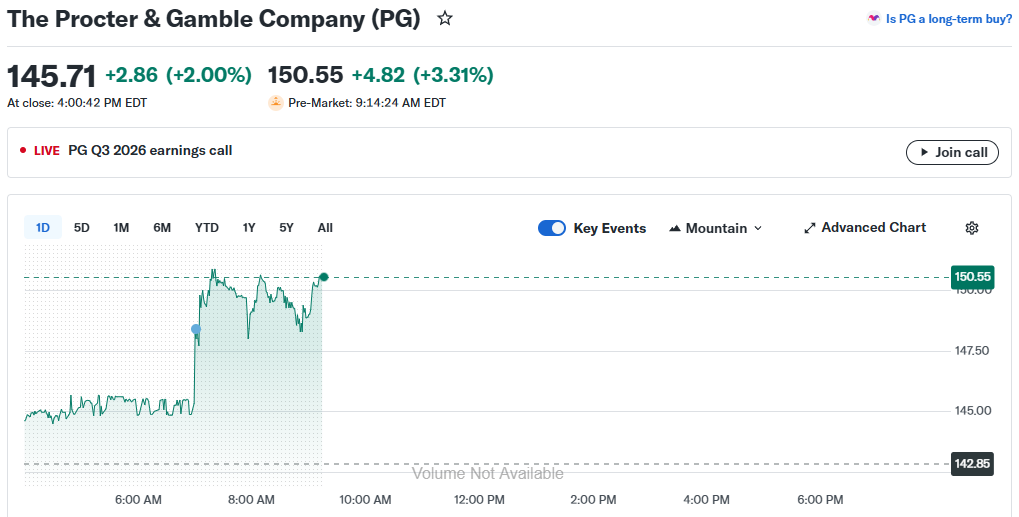
Quarterly Financial Performance and Segment Growth
P&G reported net sales of $21.24 billion for the quarter, representing a 7.4% increase from the prior year and soundly beating the consensus estimate of $20.5 billion. On an adjusted basis, earnings per share reached $1.59, a 2% year-over-year improvement that comfortably cleared the anticipated $1.56.
This growth was largely driven by organic sales increases across nearly every major product category, reflecting a consumer base that is prioritizing quality even amidst uncertainty. The Beauty segment was the standout performer, posting organic revenue growth of 7%, which tripled the projected 2.47%.
Meanwhile, the Fabric and Home Care division, along with the Baby, Feminine, and Family care segments, each recorded 3% organic growth, outperforming their respective targets. The Grooming and Healthcare sectors also saw modest gains, reinforcing the broad-based nature of the company’s current momentum.
Maintaining institutional-grade productivity in this environment will require a disciplined approach to supply chain optimization as these headwinds are expected to build over the coming quarters.
The Bifurcated Consumer and Retail Dynamics
Executive leadership at the firm noted that the current consumer environment is characterized by a distinct split in shopping habits. On one hand, value-conscious shoppers are migrating toward larger pack sizes at big-box retailers and warehouse clubs to lower their per-unit costs.
On the other, a significant segment of the population is seeking value through smaller cash outlays, opting for smaller packaging and promotional deals to manage immediate liquidity. This dynamic continues to shape the strategic direction of the firm’s marketing and distribution efforts.
By offering a diverse range of price points and formats, P&G has managed to retain its market share despite the influx of lower-priced private label alternatives. The ability to cater to both ends of this “value spectrum” is essential for sustaining long-term organic growth.
In the current environment, the resilience of the “Tide” maker serves as a critical bellwether for the broader health of the global consumer.
Forward Guidance and Capital Considerations
In a move that provided further confidence to the market, P&G reaffirmed its full-year guidance. The company continues to expect organic sales growth between 0% and 4%, comparing favorably to the broader market consensus of 1.45%. Furthermore, full-year earnings per share are projected to land between $6.83 and $7.09, centering right on the analyst estimate of $6.95.
This conservative but steady outlook suggests that management is prepared for the “lag effect” of rising energy prices. Historically, changes in oil and plastic costs take several quarters to fully impact a consumer giant’s profit and loss statement. By maintaining its guidance now, the firm is signaling that it has already baked these anticipated pressures into its fiscal planning.
The strategic direction remains focused on innovation and productivity as the primary levers for countering external volatility.
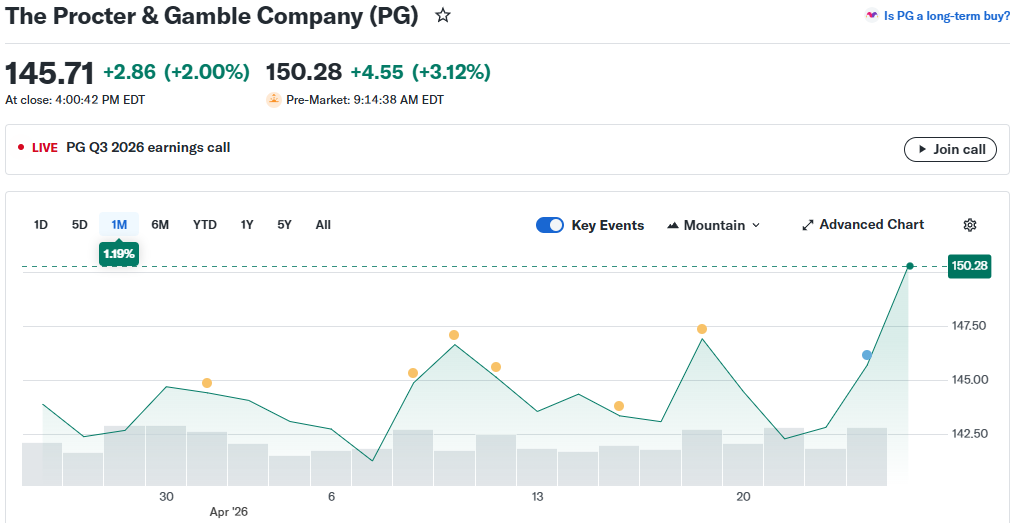
Consumer Goods Strategic Outlook
The recent performance of Procter & Gamble underscores a critical reality for the financial trajectory of the staples market: brand equity remains the ultimate hedge against geopolitical instability.
While the Iran conflict has undeniably driven up the cost of production, the company’s ability to exceed revenue estimates proves that essential household products remain inelastic even in a high-cost environment.
The strategic direction for the remainder of 2026 will be defined by margin preservation. While volume growth is healthy, the future expectations for the sector are tempered by the reality of “sticky” inflation in energy and raw materials.
For institutional portfolios navigating these evolving conditions, P&G represents a defensive anchor that can provide stability when more cyclical tech or discretionary stocks face headwinds.
Ultimately, the longer-term positioning of the market suggests that while the cost of doing business is rising, the companies that control the most essential “daily-use” brands will continue to lead the recovery in a fragmented global economy.


