
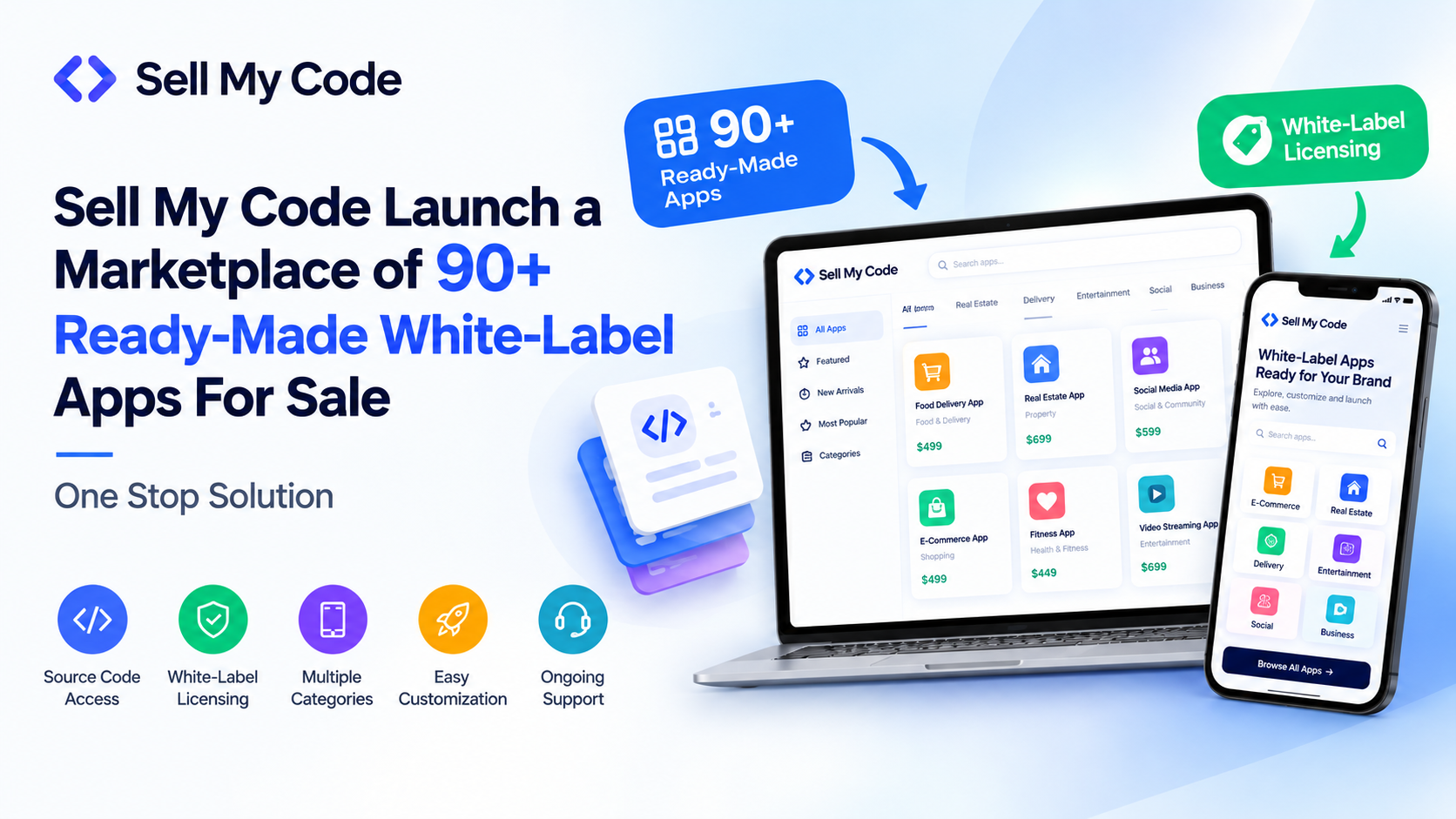
New York – The marketplace is designed to help entrepreneurs, agencies, and businesses explore existing app solutions as an alternative to developing mobile software entirely from scratch.
SellMyCode.co is bringing ready-made software and white label apps for sale options together through its online marketplace, giving businesses a place to explore codebases they may be able to customize for their own products and services.
The platform focuses on reusable software that can provide a starting point for businesses seeking to enter the mobile app market, expand their digital services, or develop solutions for clients. Its catalog features different types of applications and software products, with buyers able to review available listings and assess their suitability for specific projects.
The marketplace announcement is also documented in a USA TODAY press release detailing Sell My Code’s offering of more than 90 white-label apps for sale. The announcement outlines the company’s marketplace approach and its focus on ready-made applications for businesses exploring white-label software solutions.
The marketplace’s stated offering includes more than one software category, allowing prospective buyers to explore options across different business needs. The headline figure of 90-plus apps should be confirmed against the live catalog before publication.
Marketplace Targets Businesses Looking for Ready-Made Software
Developing a mobile application from the ground up can require planning, design, engineering, testing, deployment, and continuing maintenance. Ready-made applications offer another route, allowing businesses to begin with an existing product and determine what changes are necessary before launch.
Sell My Code’s marketplace targets buyers searching for white label apps for sale, including entrepreneurs building new digital businesses, agencies developing applications for clients, and companies looking to add software to their existing services.
White-label products can typically be adapted with a business’s branding and, depending on the codebase and license, customized to support particular workflows or customer requirements. The amount of work involved varies from one product to another.
The company’s app catalog can be explored through its official website at sellmycode.co/app.
White Label Applications Across Multiple Business Categories
The marketplace model allows buyers to explore software based on the type of service they want to offer. Depending on the listings currently available, relevant categories may include e-commerce, property platforms, delivery services, white label marketing provider, entertainment, social networking, and business applications.
For example, an entrepreneur considering an online marketplace may prefer to evaluate an existing commerce application before funding a custom build. A service business may instead look for booking or delivery functionality, while an agency may search for a reusable application it can adapt for a particular client.
The approach does not eliminate the need for development work. Buyers may still need to modify the interface, integrate payment systems, configure hosting, test performance, and address security requirements before releasing a product to customers.
A Potential Route for White Label Mobile App Resellers
The launch also speaks to the needs of businesses exploring a white label mobile app reseller model. In this approach, an agency or reseller sources an existing application and offers a customized version to clients, where the relevant license permits it.
“We aim to help businesses access ready-made white label app solutions, customize them for their needs, and bring digital products to market with greater flexibility,” said the Chief Technical Officer at Sell My Code.
A reusable codebase can help resellers avoid repeating some development tasks for every customer. They may be able to focus instead on branding, integrations, industry-specific features, deployment, and customer support.
However, the commercial value depends on the quality of the application, the cost of customization, and the reseller’s ability to maintain the product. Businesses should verify whether a license allows redistribution or resale rather than assuming that every white-label purchase includes those rights.
How the Marketplace Fits Into White Label Mobile App Development
The availability of ready-made code gives businesses another option when considering white label mobile app development. Rather than choosing between a fully custom build and a visual development platform, buyers can also evaluate an existing application as a foundation for their project.
Depending on current availability, relevant product categories may include:
- E-commerce and marketplace apps: Software for online stores, multi-vendor platforms, and digital commerce.
- Real estate applications: Tools for property listings, agent connections, tenant management, and related workflows.
- Delivery and on-demand services: Applications that connect customers, service providers, merchants, or delivery teams.
- Entertainment and social platforms: Entertainment products like AI social media tools designed for video, gif, short content, community features, or user interaction.
- Business software: Applications that support specific operational tasks, customer management, or internal workflows.
These categories serve different audiences and may require different levels of customization. A delivery platform, for example, may need regional payment methods and location services, while a property application may depend on listing management and local market requirements.
A white label mobile app builder may provide a structured way to configure an application, while a white label no-code app builder can help users create or adapt software through visual tools with limited coding. Ready-made source code serves a different purpose: it provides access to an existing implementation that developers can inspect and modify, subject to its technology and license.
The appropriate route depends on the project. Businesses with straightforward requirements may prefer a managed or no-code solution, while those seeking greater technical control may investigate source-code products. Both approaches require buyers to consider maintenance, third-party dependencies, integrations, and long-term operating costs.
What Buyers Should Review Before Making a White Label App Purchase
Although marketplaces can simplify the process of discovering ready made white label apps for sale, businesses still need to evaluate each product before committing to it.
Important considerations include the completeness of the source code, the quality of documentation, the frameworks and databases used, compatibility with the intended deployment environment, and the scope of any included support. Buyers should also check security practices, privacy obligations, and whether third-party components carry separate licensing conditions.
The purchase price is only one part of the investment. Customization, hosting, testing, developer support, updates, and distribution can all add to the overall cost of bringing an application to market.
For businesses planning to resell or rebrand software, the license deserves particular attention. Permission to customize an application for internal use may differ from permission to sell customized versions to multiple customers.
B2B & B2C – Sell My Code’s Marketplace Approach
Sell My Code operates a white-label marketplace for code, presenting ready-made applications and software products for buyers to explore. The model connects businesses looking for reusable software with code-based products that may serve as starting points for commercial projects.
For entrepreneurs, the platform provides a way to investigate existing applications before deciding whether to build from scratch. For agencies and developers, it offers another avenue to explore reusable software for client projects or potential resale opportunities.
The usefulness of any marketplace ultimately depends on the quality and suitability of its listings. Businesses considering a purchase should review the current product details, licensing terms, technical requirements, and support arrangements before deciding whether an application meets their needs.
As demand for digital products continues to create opportunities for entrepreneurs and software businesses, ready-made white label applications remain one option for teams weighing development time, customization requirements, and long-term ownership.
About Sell My Code
Established in 2006, Sell My Code is an online software marketplace where users can explore ready-made white label applications and source-code products. The platform serves buyers interested in reusable software and developers seeking opportunities to list or sell their work. Visit Sell My Code for more information.
Contact Information
Website: sellmycode.co
Email: sales@sellmycode.co


