
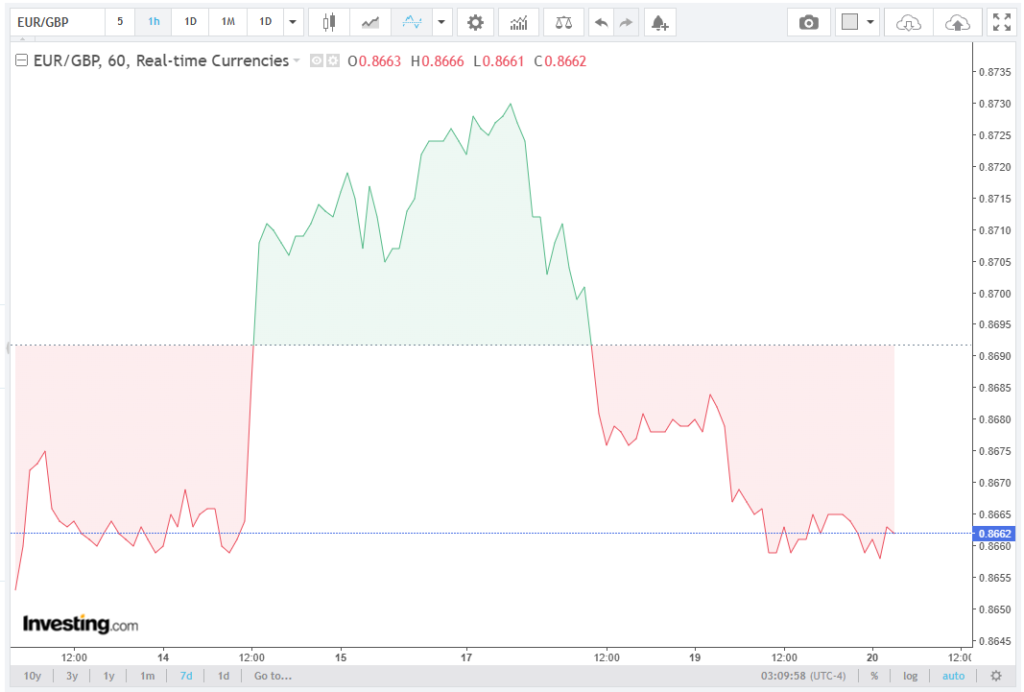
The EUR/GBP currency pair pared losses near 0.8660 during Wednesday’s early European trading session. The British Pound (GBP) showed marginal weakness against the Euro (EUR) following the release of the latest UK inflation figures, while market participants await additional cues from upcoming Purchasing Managers’ Index (PMI) readings in both the Eurozone and the UK, scheduled for Thursday.
In their recent article, Murrius Group brokers break down the key aspects of this subject in detail.
GBP Reacts to Softer UK CPI
Data released by the Office for National Statistics (ONS) revealed that the UK headline Consumer Price Index (CPI) slowed to 2.8% year-on-year (YoY) in April, down from 3.3% in March. This result came in below market expectations of 3.0%, signaling a moderation in inflationary pressures in the UK economy.
The core CPI, which strips out volatile food and energy prices, increased 2.5% YoY, compared with 3.1% in March and below the consensus estimate of 2.6%. Every month, the CPI remained steady at 0.7% in April, versus 0.7% in March, slightly missing expectations of 0.9%.
The immediate market reaction saw the GBP weaken against the EUR, reflecting the softer inflation print and its potential impact on the Bank of England’s (BoE) monetary policy stance. UK rate futures now imply approximately 52 basis points (bps) of BoE tightening by December, down from 60 bps on Tuesday, according to Reuters.
Political and Fiscal Developments in the UK
In addition to the inflation data, Reuters reported that UK Chancellor Rachel Reeves is preparing to unveil major reforms that would grant Parliament authority to approve critical energy projects. This move is viewed as a strategic measure to mitigate the impact of energy volatility on the UK economy, which could indirectly influence currency stability in the near term.
ECB Hawkishness Supports the Euro
On the Eurozone front, comments from European Central Bank (ECB) officials have provided near-term support for the EUR. ECB Governing Council member Martin Kocher warned that a June rate hike would become unavoidable if the Hormuz Strait remains closed, highlighting the risk of prolonged energy shocks pushing Eurozone inflation materially higher.
Similarly, ECB policymaker Joachim Nagel indicated that the central bank may need to act decisively at its June meeting, given the persistent impact of the Iranian energy shock and the rising likelihood of broader inflation spreading across the Eurozone.
The Reuters poll shows that a majority, approximately 85% of economists, now expect the ECB to raise its deposit rate by 25 bps to 2.25% in June, up from just over half of respondents anticipating a hike before April. Such expectations of monetary tightening have contributed to underpinning the Euro amid the recent GBP weakness.
EUR/GBP Technical Outlook
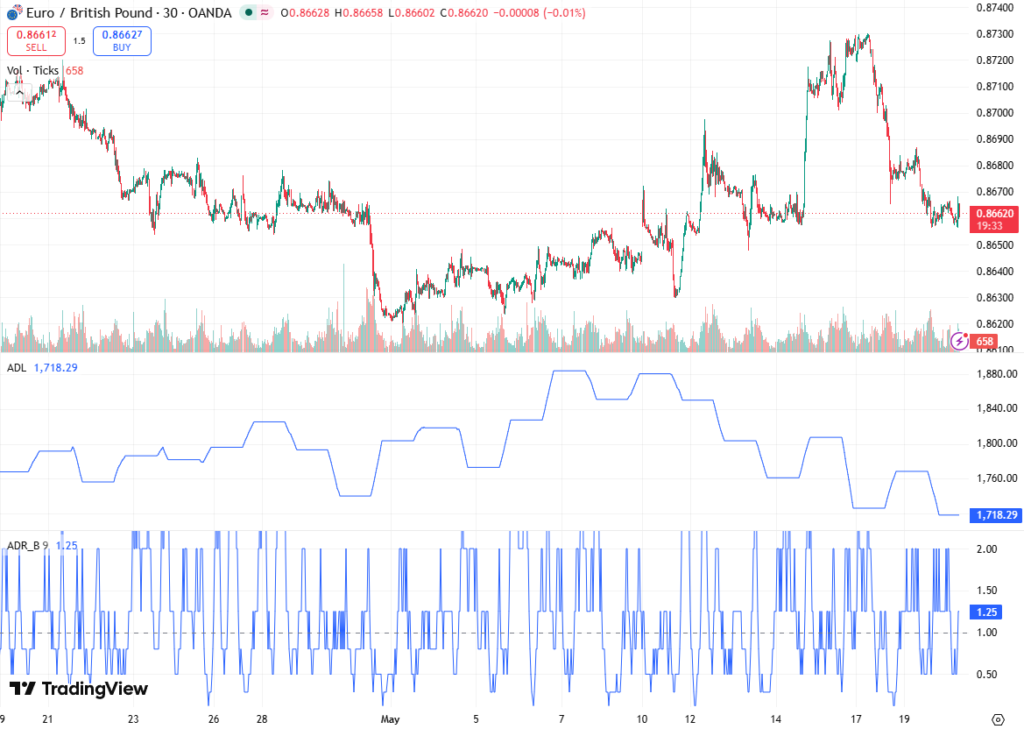
The EUR/GBP cross has shown resilience near the 0.8660 level, reflecting a balance between the softer UK inflation data and ECB hawkish signals. Traders are closely watching short-term technical support levels around 0.8650, with resistance likely near 0.8700, as the market digests both fundamental and geopolitical drivers.
The combination of softer UK inflation, slightly diminished expectations for BoE tightening, and potential ECB rate hikes provides a catalyst for Euro strength, at least in the near term. However, risk sentiment tied to energy prices and geopolitical developments, particularly the situation at the Hormuz Strait, could induce volatility in the EUR/GBP cross.
Market Implications
The EUR/GBP pair is now trading in a narrow range, reflecting a delicate tug-of-war between GBP softness due to lower-than-expected UK CPI figures and EUR support from hawkish ECB commentary. Traders are expected to focus on upcoming PMI data for both the Eurozone and the UK, which could provide further direction for the cross.
Softening UK inflation may temper market expectations for BoE tightening, thereby reducing the upward pressure on GBP. Conversely, continued ECB hawkishness, driven by persistent energy risks, may keep the Euro supported against the Pound.
From a trading perspective, key levels to monitor include support at 0.8650, with a break below potentially opening the door to 0.8620, while resistance around 0.8700 could cap near-term Euro strength. Market participants should remain alert to geo-economic shocks, energy developments, and further macroeconomic data as potential drivers of volatility.
Conclusion
In summary, the EUR/GBP cross is trading lower, but the Euro has trimmed losses near 0.8660 after softer UK CPI data tempered expectations for BoE tightening. At the same time, hawkish signals from ECB officials, particularly regarding energy shocks and inflation risks, are providing underlying support for the Euro.
As traders await PMI readings and monitor geopolitical developments, the EUR/GBP remains sensitive to both economic data releases and policy statements from central banks. For now, the cross reflects a cautious market sentiment, balancing UK inflation moderation with potential Eurozone monetary tightening.


