
The pursuit of a thirteen-figure market capitalization has become the defining ambition for the world’s most influential technology organizations. An equity strategist at Kixy noted that International Business Machines is currently emerging as a top-tier contender for this milestone, driven by a foundational pivot from simple predictive modeling to the deployment of autonomous, agentic AI frameworks.
This valuation surge is rooted in the platform-centric nature of the firm’s latest software offerings, which allow for the integration of sophisticated multi-agent systems into mission-critical corporate infrastructures without triggering operational downtime.
Rather than merely offering conversational tools, the watsonx suite is being treated by institutional holders as an essential governance and development layer for regulated industries.
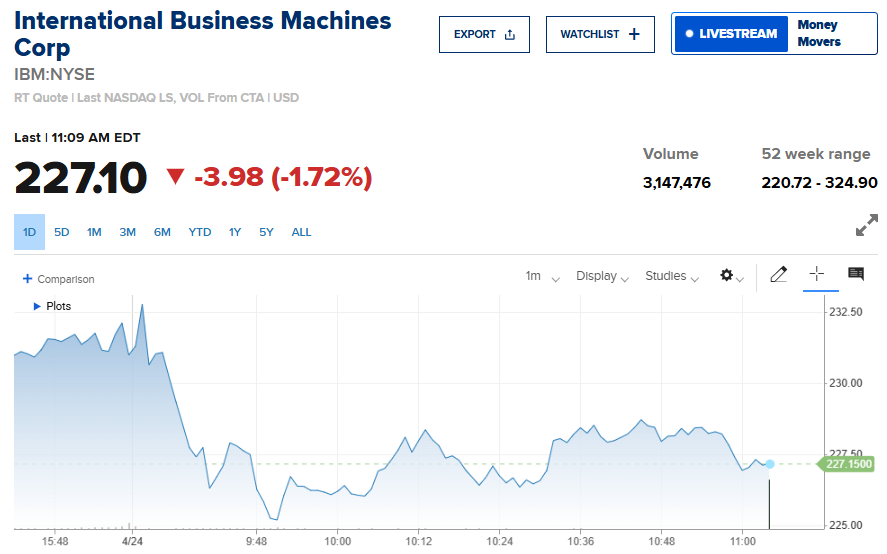
Surging Generative AI Portfolios and Software Scaling
The velocity at which the company’s AI revenue is expanding has startled even the most optimistic analysts. According to the fiscal reporting disclosed in January 2026, the total book of business for generative AI has reached a staggering $12.5 billion. To put this growth into perspective, the same division accounted for only $1 billion just 12 months prior.
This logarithmic expansion suggests that the organization has successfully moved past the experimentation phase and is now in the midst of large-scale commercial implementation. Software revenue has remained a primary engine for this momentum, posting a 14% growth rate in the final quarter of 2025.
This performance was largely underpinned by hybrid cloud adoption and advanced data automation tools. Furthermore, the Red Hat ecosystem continues to deliver double-digit growth, serving as the architectural floor for modern multi-cloud environments.
By providing a consistent operating layer across diverse cloud providers, the firm has positioned itself as an indispensable partner for enterprises looking to avoid vendor lock-in.
Mainframe Cycles and Financial Fortitude
Beyond the software layer, the hardware and infrastructure segments are experiencing a significant resurgence. Early 2026 data indicates a 21% surge in infrastructure revenue, fueled by the aggressive rollout of the next-generation IBM Z mainframe.
These systems remain the backbone of global financial processing, and the latest iteration includes specialized silicon designed specifically to handle high-frequency AI inference workloads at the chip level. Maintaining institutional-grade productivity has also allowed the firm to significantly enhance its shareholder returns.
Management has guided for a $1 billion year-over-year increase in free cash flow for 2026, targeting a full-year total of approximately $15.7 billion. This robust cash generation supported a recent increase in the quarterly dividend to $1.68 per share.
A new 10-year initiative with ETH Zurich focuses on the intersection of AI and quantum computing, aiming to solve complex optimization problems that remain beyond the reach of classical binary systems. This long-term commitment to fundamental research reinforces the firm’s strategic direction as a pioneer of future-proof enterprise technology.
Strategic Capital Allocation and Outlook
As domestic economic policies shift toward the prioritization of onshoring and the protection of internal supply chains, the organization stands to benefit from its deep-rooted domestic manufacturing and research presence.
The financial trajectory of the company is now increasingly tied to the broader trend of industrial modernization, where legacy systems are being replaced by automated, AI-governed workflows.
Investors are keeping a sharp focus on the upcoming milestones related to the watsonx roadmap, particularly regarding its ability to manage “hallucination” risks in autonomous agents. If the firm can maintain its lead in AI governance, the longer-term positioning of the stock as a trillion-dollar asset seems increasingly plausible.
While other high-flying tech names may offer more volatility, the steady, disciplined scaling of this Silicon Valley veteran provides a unique risk-reward profile in a high-interest rate environment.
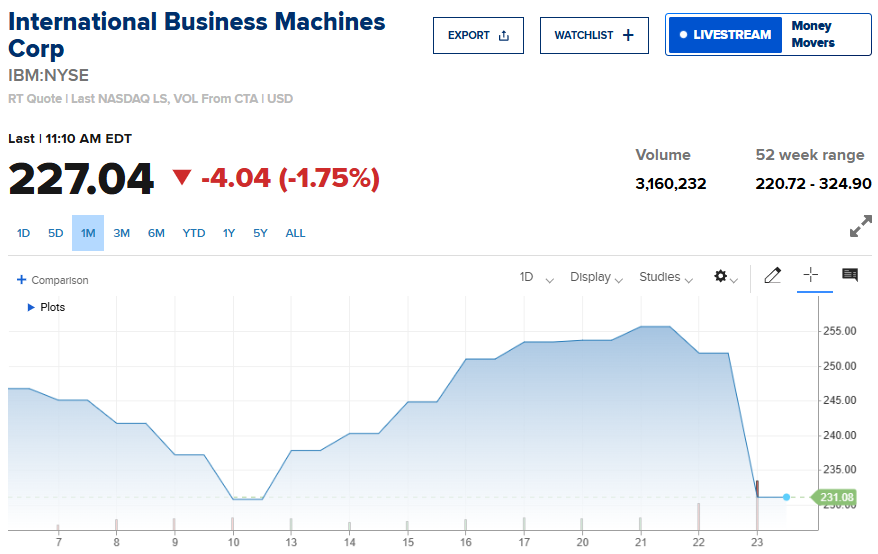
Enterprise Tech Market Wrap & Future Outlook
The current upward movement in IBM’s market cap represents a fundamental reappraisal of its role in the global economy. By positioning itself at the confluence of quantum research, agentic AI, and hybrid cloud infrastructure, the company has effectively transformed from a legacy service provider into the primary architect of the autonomous enterprise.
We are entering a cycle where institutional-grade productivity is driven by the seamless integration of digital agents into the workforce, a domain where the company’s governance expertise is unmatched.
Success for the remainder of 2026 will be measured by the firm’s ability to convert its massive $12.5 billion AI book of business into realized quarterly revenue. While the infrastructure surge provides a powerful short-term catalyst, the future expectations for the organization are anchored in the continued dominance of Red Hat and the watsonx platform.
For those allocating capital in this high-tech landscape, the focus must remain on the durability of free cash flow in an era of rapid technological disruption. Ultimately, the longer-term positioning of the technology sector suggests that the path to a trillion-dollar valuation is paved with high-security, high-governance software that can withstand the rigors of modern enterprise demand.


