
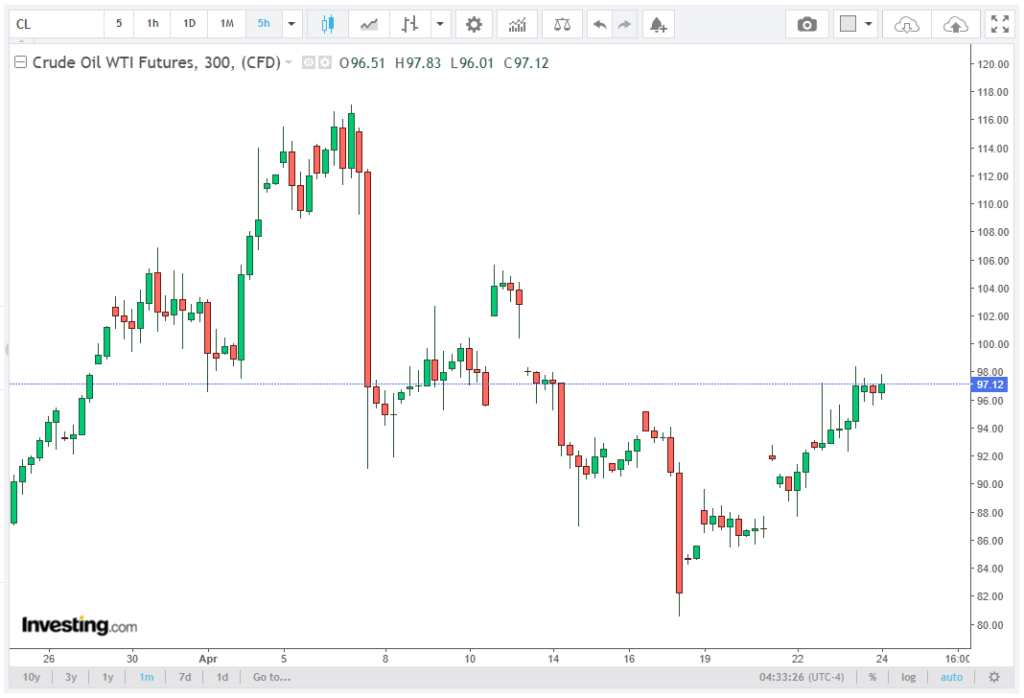
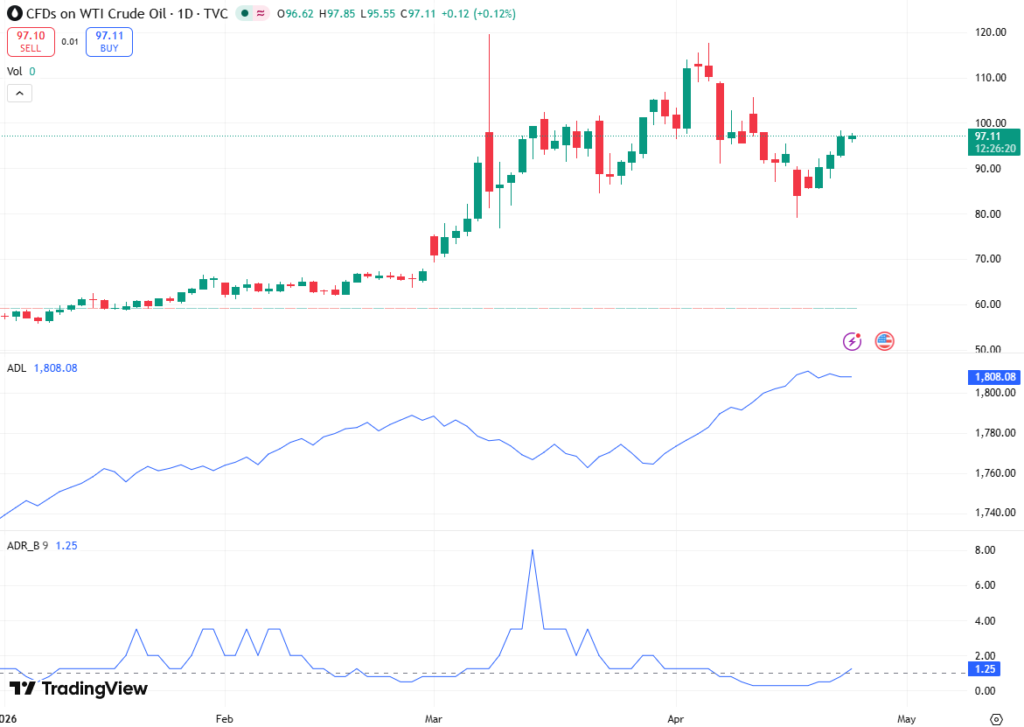
West Texas Intermediate (WTI) crude oil is trading near 95.50–95.60 after recovering from earlier session losses during Asian trading hours on Friday. The rebound reflects renewed supply-side tensions driven by escalating geopolitical risks, particularly surrounding US–Iran relations and the ongoing disruption in the Strait of Hormuz.
The price action underscores a market increasingly sensitive to physical supply disruptions, with traders reassessing risk exposure amid a deteriorating diplomatic backdrop and tightening maritime conditions in one of the world’s most critical energy chokepoints. The Kixy team presents a clear and detailed overview of this topic in their article.
Price Action: Volatile Trading Around Key Technical Levels
WTI opened the session below the previous close, briefly extending downside momentum before reversing sharply higher. The recovery toward 95.60 highlights strong buying interest near short-term support zones, suggesting that market participants are unwilling to sustain bearish positions given rising geopolitical risk premiums.
From a technical standpoint, crude remains in a high-volatility consolidation range, with intraday dips being consistently absorbed by dip buyers. This behavior indicates that the market is pricing in not just current supply conditions, but also the probability of future disruptions escalating.
Key technical observations include support resilience near the mid-94.00 region, repeated rejection of downside continuation, elevated implied volatility across energy futures curves, and strengthening front-month contracts relative to deferred months.
Geopolitical Drivers: US–Iran Tensions Intensify Supply Uncertainty
Crude oil markets are being heavily influenced by renewed tensions between the United States and Iran, particularly following stalled US–Iran peace negotiations and increasing military activity in the region.
According to Bloomberg, the US military recently intercepted two Iranian supertankers attempting to evade a blockade, signaling a more aggressive enforcement posture by Washington. The move comes as the US continues efforts to restrict Iranian crude exports through maritime control operations.
At the same time, US military officials are reportedly preparing contingency strike plans targeting Iran’s operational capabilities in the Strait of Hormuz, should the fragile ceasefire framework collapse.
The US President has also escalated rhetoric, warning that Iranian oil infrastructure could be targeted if Tehran continues to obstruct maritime flows. These statements have significantly increased perceptions of tail-risk escalation in global energy markets.
Strait of Hormuz: Strategic Chokepoint Under Pressure
The Strait of Hormuz continues to be the key hotspot for global oil supply risk. About 20% of the world’s oil and gas exports flow through this narrow passage, which makes it one of the most strategically critical chokepoints in global commodity trade routes.
Recent developments have intensified concerns: Iranian forces released footage showing naval commandos boarding a cargo vessel, signaling operational control capabilities in the region. Continued threats against commercial shipping have elevated insurance and freight costs, while a de facto disruption of normal tanker movement patterns is emerging.
The Strait’s partial or full closure represents a systemic supply shock scenario, with immediate implications for global crude flows and refinery feedstock availability.
Supply Risk and Inventory Outlook: Rising Risk Premium Formation
Energy market analysts are increasingly warning that prolonged disruption in the Strait of Hormuz could materially tighten global supply balances.
Reuters cited Mingyu Gao, chief researcher for energy and chemicals at China Futures, who noted that extended disruptions could push global crude and refined product inventories below five-year seasonal lows by late May or early June.
This projection carries significant implications: global inventory drawdowns accelerate faster than seasonal norms, OECD stockpiles risk falling into critically low buffers, refining margins could widen due to feedstock scarcity, and a structural supply-risk premium re-enters oil pricing models.
In practical terms, this means that even absent additional demand growth, prices may remain elevated purely due to supply insecurity pricing.
Market Implications: Pricing in Geopolitical Optionality
The current WTI price action reflects a broader revaluation of geopolitical optionality risk in energy markets. Traders are no longer pricing crude oil solely on fundamentals such as demand growth or OPEC+ output decisions, but increasingly on the probability-weighted outcomes of regional conflict escalation.
Key implications include an increased risk premium embedded in front-month futures contracts, a potential steepening of the forward curve inversion if immediate supply tightens, higher hedging demand from refiners and airlines, and elevated options market skew reflecting fear of upside price spikes.
Conclusion: WTI Anchored by Structural Risk Premium
WTI crude’s position near 95.50–95.60 reflects more than short-term trading dynamics; it signals a market increasingly anchored by structural geopolitical risk rather than purely macroeconomic fundamentals.
With US–Iran tensions escalating, Strait of Hormuz disruptions intensifying, and global inventories at risk of falling below historical seasonal lows, the oil market is entering a phase where supply security dominates price formation.
Unless diplomatic conditions stabilize or maritime flows normalize, crude oil is likely to maintain a persistent risk-driven price floor, with heightened sensitivity to any further escalation in the Middle East.


