
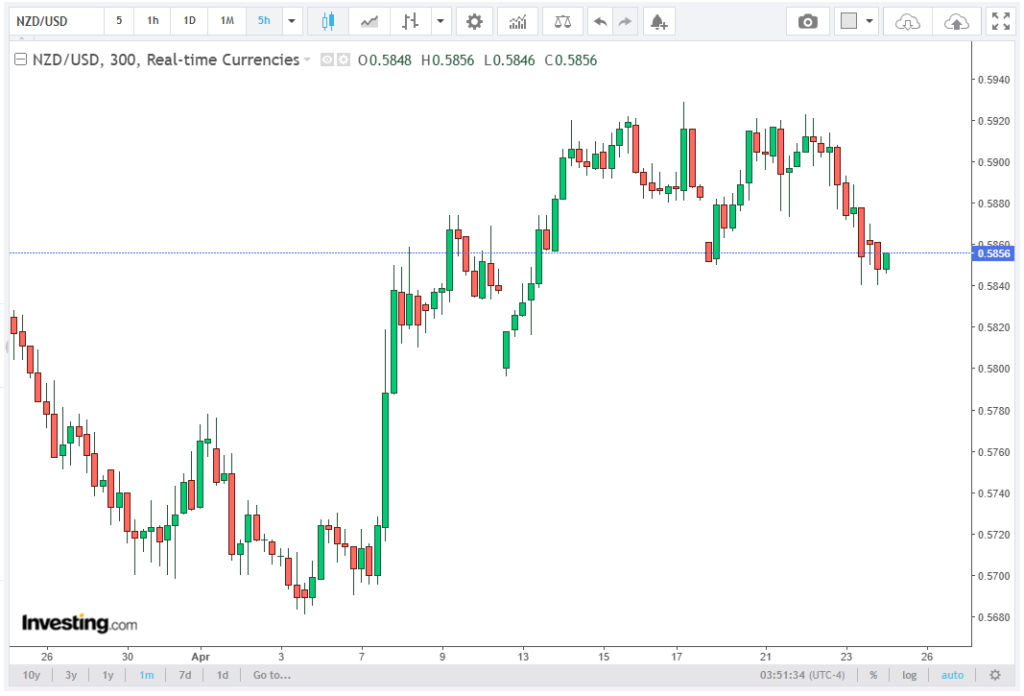
The NZD/USD currency pair continues to trade with a bearish short-term bias, extending its retracement decline from the recent 0.5925–0.5930 resistance zone. During Friday’s Asian session, spot prices drifted toward the 0.5840 region, reflecting sustained selling pressure for a second consecutive day. Kixy’s team breaks down this topic clearly and comprehensively in their article.
Despite intermittent recovery attempts, the pair remains vulnerable near a technically significant 200-day Simple Moving Average (SMA), a widely watched dynamic support/resistance indicator. The broader backdrop remains dominated by a firm US Dollar (USD), which continues to dictate near-term FX flows.
US Dollar Strength Driven by Geopolitical Risk
The US Dollar Index (DXY) has maintained a positive trajectory for four straight sessions, primarily supported by escalating US–Iran geopolitical tensions. Investors have rotated into the USD due to its traditional role as a safe-haven asset, particularly amid heightened uncertainty in global energy and maritime trade routes.
A key source of market anxiety stems from tensions surrounding the Strait of Hormuz, a critical chokepoint for global oil shipments. The lack of progress in diplomatic negotiations has reinforced risk-off sentiment, benefiting the USD at the expense of higher-beta currencies such as the New Zealand Dollar (NZD).
Statements from the US President further intensified volatility, as he confirmed continued naval restrictions on Iranian ports and warned of military action against vessels suspected of laying mines in strategic waters. These developments have increased the perception of prolonged geopolitical instability, reinforcing demand for USD liquidity.
Energy Prices and Inflation Expectations Support USD Bulls
Another major driver of USD strength is the rise in crude oil prices, which has revived concerns over persistent global inflationary pressures. Energy supply disruptions have kept oil markets elevated, adding upside risk to inflation forecasts across major economies.
In turn, this dynamic has tempered expectations for aggressive Federal Reserve (Fed) policy easing. Markets are increasingly pricing in only one 25-basis-point rate cut in 2026, a notably less dovish outlook compared to earlier expectations.
This shift in monetary policy expectations has provided additional support for the USD, as higher-for-longer interest rate assumptions enhance yield differentials in favor of the US currency. Consequently, the path of least resistance for NZD/USD remains tilted to the downside in the near term.
Technical Outlook: 200-Day SMA in Focus
From a technical standpoint, the NZD/USD pair is currently testing a critical 200-day SMA zone, which often acts as a trend-defining indicator for medium-term market direction.
A sustained break below this level could expose the pair to further downside toward lower support clusters, potentially extending the corrective phase from the recent highs near 0.5930. Momentum indicators also suggest weakening bullish strength, with short-term RSI readings trending lower, indicating fading recovery momentum.
RBNZ Policy Expectations Provide a Cushion for NZD
Despite USD strength, the New Zealand Dollar (NZD) is not without support. Persistent sticky inflation in New Zealand has led markets to reassess the policy outlook of the Reserve Bank of New Zealand (RBNZ).
Recent data showed that annual inflation remained at 3.1% in Q1 2026, slightly above the central bank’s 1%–3% target band midpoint. This has reinforced expectations that the RBNZ may maintain a restrictive policy stance for longer or even consider additional tightening measures if inflation proves persistent.
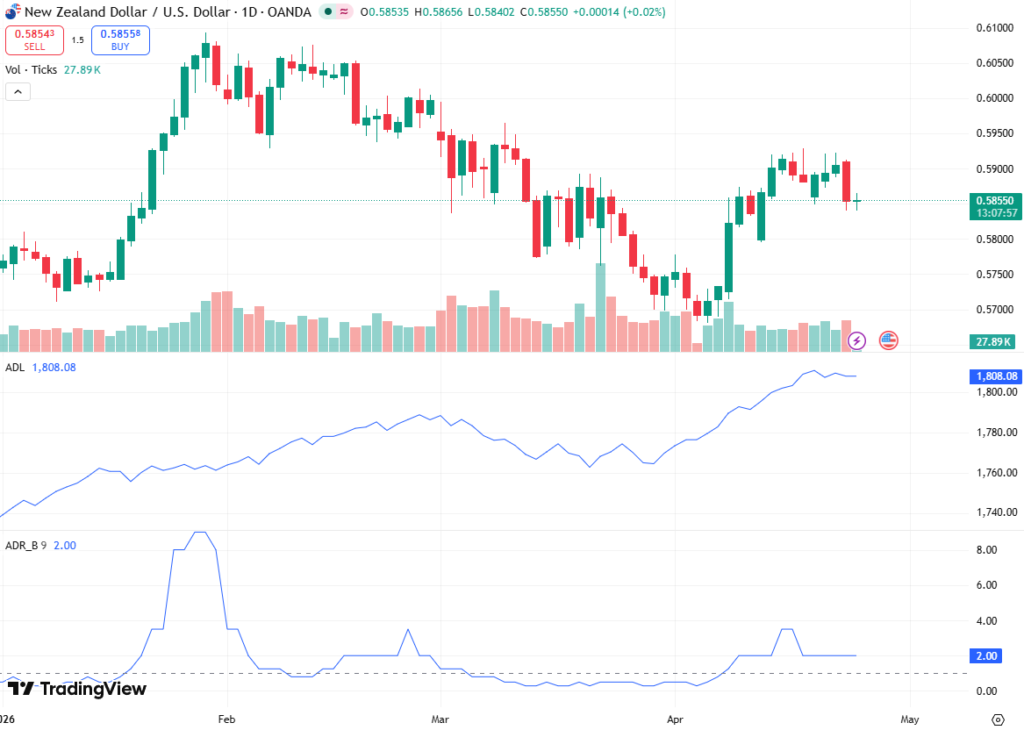
Such expectations act as a fundamental floor for the NZD, limiting excessive downside pressure in NZD/USD despite the dominant USD bullish trend. As a result, the pair may continue to exhibit two-way volatility rather than a one-sided decline.
Outlook Ahead: US NFP as Key Catalyst
Looking forward, market participants are closely watching the upcoming US Non-Farm Payrolls (NFP) report, which is expected to serve as the next major volatility trigger for FX markets.
A strong employment reading would likely reinforce expectations of a resilient US economy, further supporting the USD bullish narrative and potentially accelerating downside pressure on NZD/USD. Conversely, a weaker-than-expected print could temporarily ease USD strength and allow for a short-term corrective rebound in the pair.
Until then, NZD/USD is likely to remain in a tight consolidation with a downward bias, constrained by the interplay between geopolitical risk, inflation dynamics, and central bank expectations.
Conclusion: Bearish Bias Dominates, but Downside May Be Gradual
In summary, the NZD/USD pair remains under pressure, weighed down by a combination of US Dollar strength, geopolitical tensions, and elevated energy-driven inflation expectations. The market structure continues to favor the USD, especially amid reduced expectations for aggressive Fed easing.
For now, the broader technical and macroeconomic alignment suggests that NZD/USD is likely to maintain a modest recovery bias above 0.5600, but with an underlying bearish tone persisting in the medium term.


