
The technical and regulatory environment for Super Micro Computer (SMCI) has reached a critical inflection point as the organization navigates a series of escalating legal challenges. The Silicon Valley-based server manufacturer is currently contending with intense pressure from multiple international jurisdictions following allegations of unlawful exports involving high-performance AI infrastructure.
While the company has historically capitalized on the massive demand for data center solutions, these emerging compliance concerns have introduced a layer of structural risk that is beginning to influence market sentiment.
The unsealing of a U.S. Department of Justice indictment in late March targeting high-ranking associates has intensified the focus on the organization’s internal controls. Fundamental analysis from the ShineGulf Trading equity research team suggests that the breadth of these investigations could have significant implications for the firm’s long-term strategic orientation.
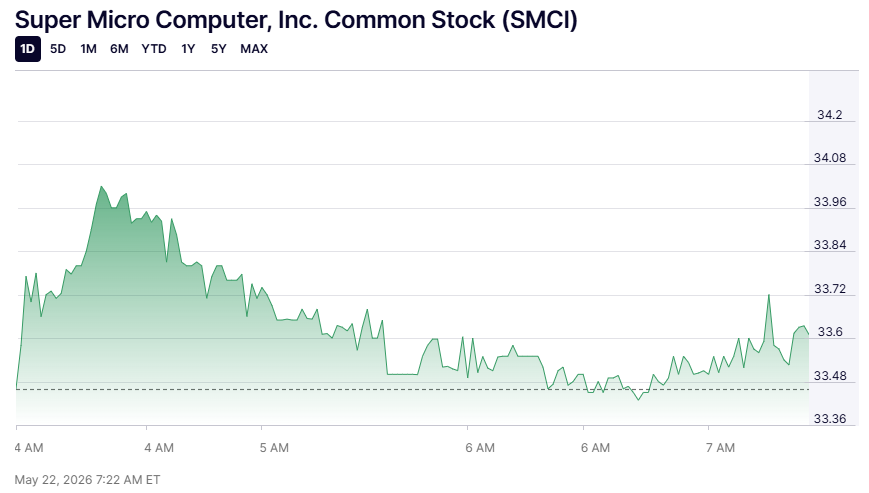
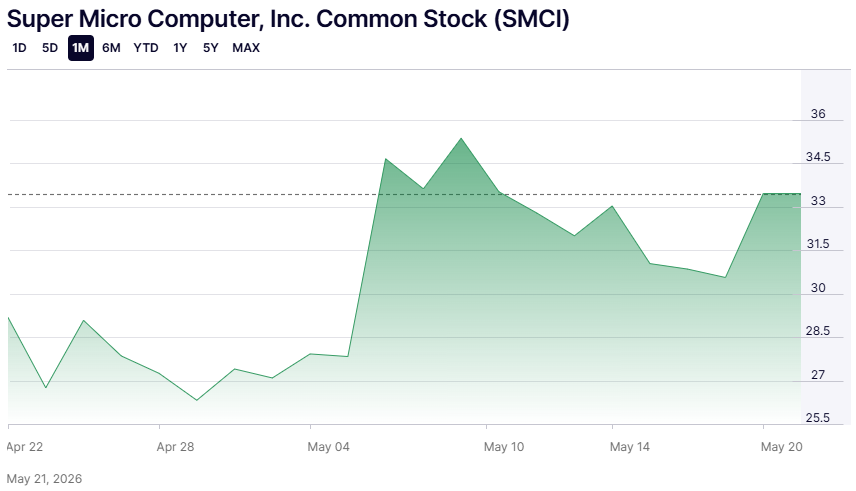
The stock is currently trading near $33.46, and while it has recovered 16.1% over the past month, it remains down 19.7% over the last year. For long-term holders who have benefited from the stock’s significant gains over a five-year horizon, the current legal overhang represents a major test of governance and risk management.
The Mechanics of the Export Smuggling Allegations
The core of the legal controversy centers on a sophisticated scheme allegedly designed to bypass U.S. trade restrictions. Federal prosecutors have detailed an operation involving the diversion of approximately $2.5 billion worth of advanced AI servers to restricted customers in China between 2024 and 2025. These systems reportedly housed high-demand hardware, including the latest Nvidia H200 and B200 processors.
The indictment describes the use of falsified documentation, “dummy” equipment staged for auditors, and convoluted transshipment routes through third-party brokers in Malaysia and Taiwan to obfuscate the true destination of the hardware.
Furthermore, authorities in Taiwan have launched a parallel criminal investigation into suspected smuggling activities that implicate regional sales management. This dual-pronged regulatory assault raises fundamental questions regarding the company’s ability to monitor its complex global supply chain.
For investors, the concern is twofold: first, the potential for massive financial penalties or asset freezes, and second, the risk of more stringent licensing requirements that could hinder the company’s access to the next generation of GPU technology.
Financial Resilience Amidst Class Action Pressures
As the regulatory focus intensifies, the organization is also facing a wave of securities class action lawsuits. Legal firms have reminded participants that the deadline to file for lead plaintiff status is May 26, 2026. These filings allege that the company failed to disclose material weaknesses in its export compliance framework, thereby misleading the market regarding the sustainability of its revenue growth.
The impact of these disclosures was felt immediately after the DOJ announcement, which triggered a single-day share price decline of over 33% in March.
Despite these headwinds, the company’s underlying business fundamentals have shown moments of resilience. In its most recent fiscal reporting, the firm posted quarterly revenue of $10.24 billion, representing a 123% year-over-year increase. While this figure missed some consensus estimates, the company’s ability to maintain institutional-grade productivity in its manufacturing hubs remains a key support pillar.
Management continues to project full-year revenue for fiscal 2026 in the range of $38.9 billion to $40.4 billion, signaling that customer demand for liquid-cooled data center infrastructure remains robust.
Comparing the Competitive Landscape
The legal uncertainty surrounding the firm has provided an opening for traditional competitors to capture market share. Major players such as Dell Technologies and Hewlett Packard Enterprise have aggressively pursued hyperscale orders while the server manufacturing giant navigates its court dates. While the firm still maintains an engineering lead in rapid rack-scale deployment, its reliance on a concentrated customer base makes it vulnerable to any disruption in partner trust.
To counter this, the company has recently appointed new senior leaders in revenue and business development roles. These moves are viewed as a tactical attempt to stabilize commercial execution and reinforce partner relationships while the legal process unfolds. Moreover, the integration of these new executives is intended to overhaul the internal compliance auditing process, ensuring that future international shipments meet the rigorous standards set by federal export controllers.
The market is now looking for clear evidence that the organization can convert its massive AI server backlog into durable, high-margin profits without the shadow of regulatory non-compliance.
Ultimately, the convergence of the DOJ indictment, the Taiwanese smuggling probe, and the shareholder litigation represents the most significant challenge to the company’s governance in its history. While the technological demand for AI infrastructure provides a powerful tailwind, the company must now prove that its growth is built on a foundation of rigorous compliance.
As regulators ramp up enforcement in the strategic chip sector, the era of “gray-zone” supply chain practices appears to be coming to a definitive end, forcing a total recalibration of the firm’s global operational footprint.


