
The NZD/USD pair is maintaining a modest recovery bias above the 0.5600 psychological level, though upside momentum remains limited as markets position cautiously ahead of the upcoming US Non-Farm Payrolls (NFP) report. The pair continues to reflect a broader environment dominated by US Dollar (USD) resilience, shifting expectations around global central bank policy, and subdued risk appetite.
Despite short-term stabilization, the New Zealand Dollar (NZD) remains under pressure from a combination of global macroeconomic uncertainty, relatively weaker domestic growth expectations, and a broadly supported Greenback. A clear and detailed explanation of this topic can be found in Kixy’s article.
US Dollar Strength Keeps NZD/USD Capped
The US Dollar Index (DXY) remains firmly elevated near the 99.00 level, holding close to its weekly highs. This sustained USD strength is one of the key headwinds limiting any meaningful upside for NZD/USD.
A firm USD is being driven by expectations of prolonged restrictive monetary policy, safe-haven demand amid global uncertainty, and market caution ahead of major economic data releases. With traders awaiting the US NFP report, FX market volatility is expected to remain contained in the short term, but directional pressure continues to favor the USD.
Technical Structure: Recovery Above 0.5600 but Fragile Momentum
From a technical analysis perspective, NZD/USD is attempting to stabilize above 0.5600, a level that has recently acted as both psychological support and short-term pivot resistance.
Key technical observations include immediate support at the 0.5580–0.5600 zone, short-term resistance at 0.5650, and stronger resistance in the 0.5700–0.5730 area. The bias remains neutral to slightly bearish unless a clean break above 0.5650 occurs.
Recent price action suggests a corrective bounce rather than a confirmed trend reversal, while momentum indicators remain mixed, reflecting weak bullish conviction and persistent USD dominance.
Global Macro Drivers: Central Banks Dominate Sentiment
Broader FX sentiment is heavily influenced by upcoming central bank policy decisions from the Federal Reserve (Fed), European Central Bank (ECB), Bank of England (BoE), and Bank of Japan (BoJ).
Markets widely expect both the Fed and ECB to keep interest rates unchanged, reinforcing a data-dependent policy stance. However, forward guidance remains crucial.
Inflation risks are re-emerging due to rising energy prices, geopolitical tensions affecting oil supply routes (including concerns around the Strait of Hormuz), and persistent services-sector inflation in developed economies. These factors continue to support a higher-for-longer interest rate narrative, which is broadly supportive of the USD.
EUR/USD Stability Highlights: USD Strength
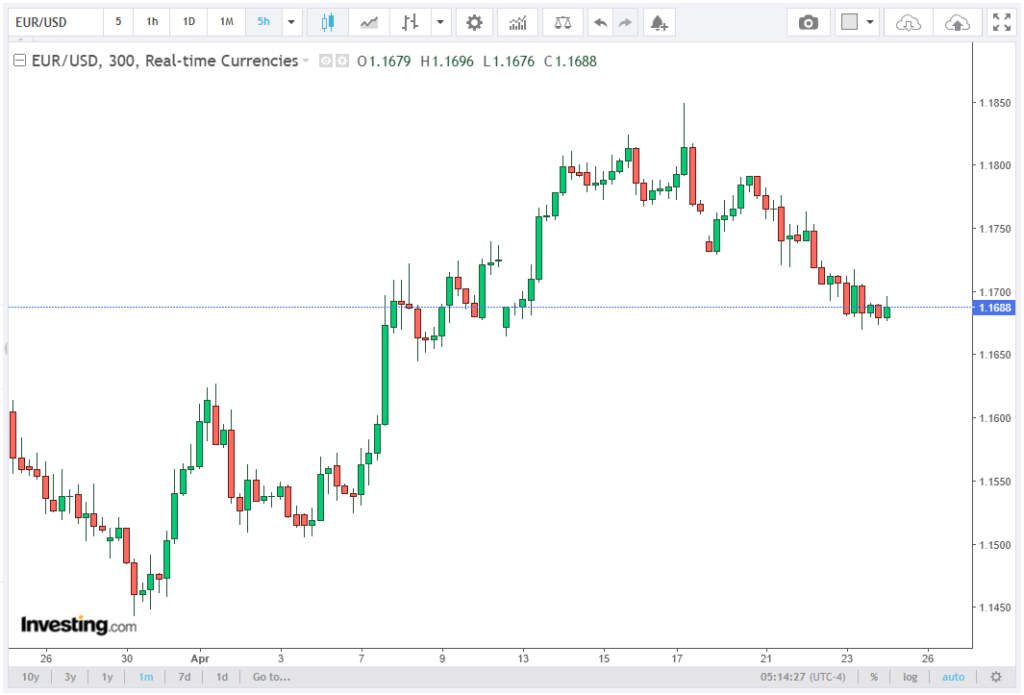
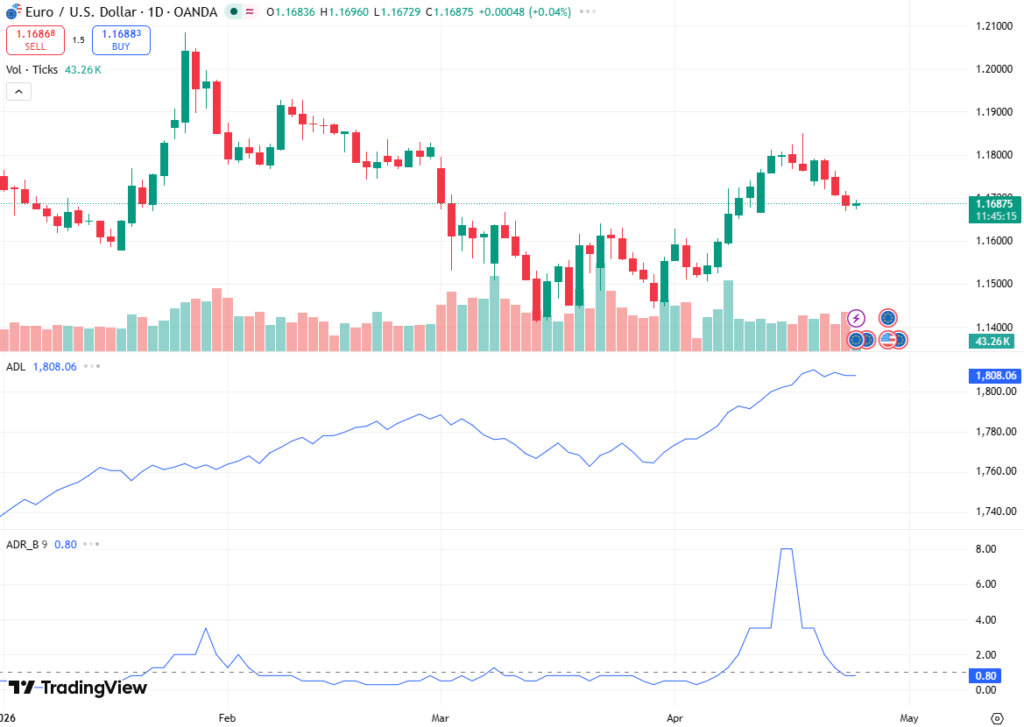
In parallel FX markets, EUR/USD trades flat near 1.1685–1.1700, remaining close to its weekly lows. The pair is consolidating in a tight range as investors await central bank clarity.
The US Dollar strength theme is clearly visible across majors, with EUR/USD unable to stage a meaningful rebound despite occasional euro resilience.
Key fundamental developments in Europe include Germany’s IFO Business Climate Index falling sharply to 84.4 in April, signaling deteriorating economic sentiment. Expectations were already weak, but the decline exceeded forecasts of 85.5, highlighting growing economic fragility in the Eurozone’s largest economy.
Risk Sentiment and Commodity Currency Pressure
As a commodity-linked currency, the New Zealand Dollar is highly sensitive to global risk sentiment and growth expectations in China and Asia-Pacific markets.
Current conditions show weak global growth signals, elevated geopolitical uncertainty, and cautious equity market sentiment ahead of US data. This combination limits demand for higher-yielding or risk-sensitive currencies such as the NZD, reinforcing its defensive trading behavior against the USD.
US NFP: Key Catalyst for Directional Breakout
The upcoming US Non-Farm Payrolls (NFP) report is expected to be the primary short-term catalyst for NZD/USD direction, with market expectations centered around a potential moderation in job creation, stable but slowing US labor market conditions, and continued wage growth pressures.
Three potential scenarios for NZD/USD include: 1) A strong NFP (USD bullish), where NZD/USD likely breaks below 0.5600, with downside extension toward 0.5550 or lower; 2) A soft NFP (USD bearish), leading to a relief rally toward 0.5650–0.5700, with a potential short-term trend recovery attempt; and 3) In-line data, resulting in continued consolidation between 0.5580–0.5650, with range-bound volatility persisting.
Conclusion: Recovery Stays Vulnerable Below USD Dominance
The NZD/USD pair remains in a technically fragile recovery phase, holding modest gains above 0.5600 but lacking strong bullish momentum. The broader backdrop continues to favor the US Dollar, supported by firm DXY levels near 99.00, cautious risk sentiment, and uncertainty ahead of key macroeconomic data.
With global markets focused on upcoming central bank decisions and the pivotal US NFP release, NZD/USD is likely to remain range-bound in the short term, with downside risks still dominant unless USD momentum weakens decisively.


