
After several sessions of losses, U.S. equity markets opened the week with a strong recovery as declining oil prices helped stabilize sentiment across financial markets.
Research analysts at BUCKSA note that recent volatility in energy markets has been a major driver of equity fluctuations, particularly as geopolitical tensions in the Middle East raised concerns about global oil supply disruptions.
At the start of Monday trading, major U.S. benchmarks moved higher. The Dow Jones Industrial Average climbed roughly 575 points, representing a gain of approximately 1.2 percent. The S&P 500 advanced about 1.3 percent, while the Nasdaq Composite rose around 1.4 percent.
The rebound comes after a difficult stretch for equities. The S&P 500 recently recorded three consecutive weekly declines, finishing the previous week at its lowest level of the year.
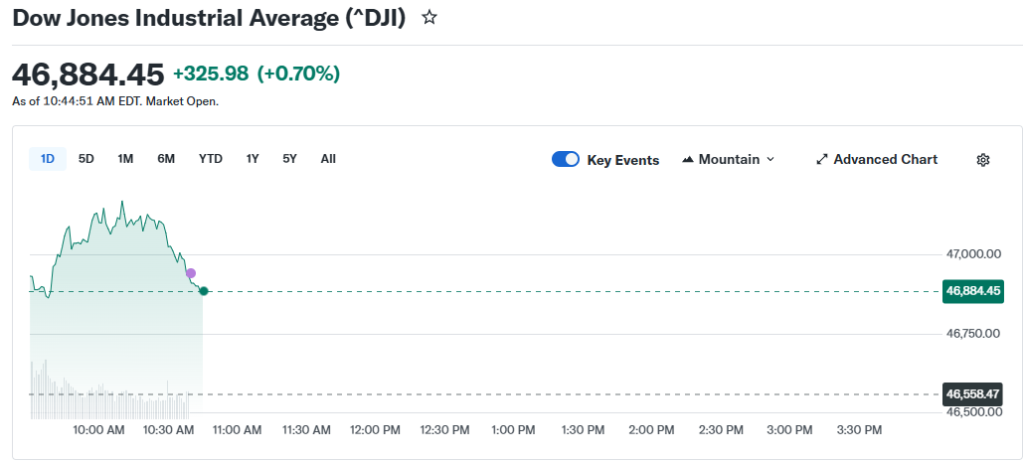
Technology Stocks Help Support The Market
Shares of Meta Platforms rose more than 2 percent following reports that the company may implement significant workforce reductions as part of broader cost efficiency efforts.
At the same time, semiconductor leader Nvidia also gained more than 2 percent, as market participants prepared for its upcoming developer conference focused on artificial intelligence technologies.
The conference has become an important event for the technology sector, often providing insight into future demand for artificial intelligence infrastructure and semiconductor innovation.
Strong performance from major technology companies has been a key factor helping maintain stability across the broader equity market during recent periods of volatility.
Oil Market Volatility Drives Market Sentiment
Energy prices were a central factor influencing trading activity at the beginning of the week.
Oil markets experienced significant turbulence during the previous week as geopolitical tensions disrupted shipping activity through the Strait of Hormuz, one of the most important global routes for crude oil transportation.
As a result, Brent crude briefly moved above $100 per barrel, marking the first time the benchmark reached that level since 2022.
Concerns about potential supply disruptions pushed prices higher as traders evaluated the possibility of reduced oil shipments through the region.
However, prices began to retreat in Monday trading as new developments suggested that shipping activity could resume under international security coordination.
Oil Prices Retreat Below Key Levels
During Monday trading, West Texas Intermediate crude declined approximately 4 percent, falling to just below $95 per barrel after trading above $100 overnight.
Meanwhile, Brent crude slipped roughly 2 percent to around $101 per barrel.
The price decline followed reports indicating that international efforts were underway to secure shipping routes through the Strait of Hormuz.
Officials indicated that several countries may coordinate naval escorts for commercial vessels traveling through the region, helping restore confidence that oil supply flows could continue.
Markets Show Resilience Despite Geopolitical Risks
Despite the elevated geopolitical tension surrounding the oil market, the broader stock market has demonstrated notable resilience.
The S&P 500 currently remains only about 5 percent below its all time high, suggesting that many market participants still expect corporate earnings growth to remain relatively strong.
Expectations for rising profits in 2026 and 2027 have helped offset some of the uncertainty created by geopolitical risks and energy price volatility.
This confidence has contributed to the market’s ability to stabilize even during periods of global tension.
Corporate Earnings Expectations Remain Strong
One of the most significant drivers supporting equity valuations is the continued improvement in earnings projections.
Rising productivity from automation and digital transformation initiatives may also contribute to improved profit margins in several sectors.
Because of these factors, many market observers believe that long term earnings potential remains a key pillar supporting equity market valuations.
Technical Indicators Suggest Stabilizing Momentum
Technical analysts are also monitoring price patterns to determine whether the recent rebound could continue.
Indicators such as the Relative Strength Index, moving averages, and trading volume are commonly used to evaluate whether market sentiment is strengthening after periods of decline.
The recent upward move across major indices suggests that buying interest may be returning following the previous week’s selloff.
If momentum indicators continue improving, analysts may interpret the price action as a sign that markets are stabilizing after the recent period of volatility.
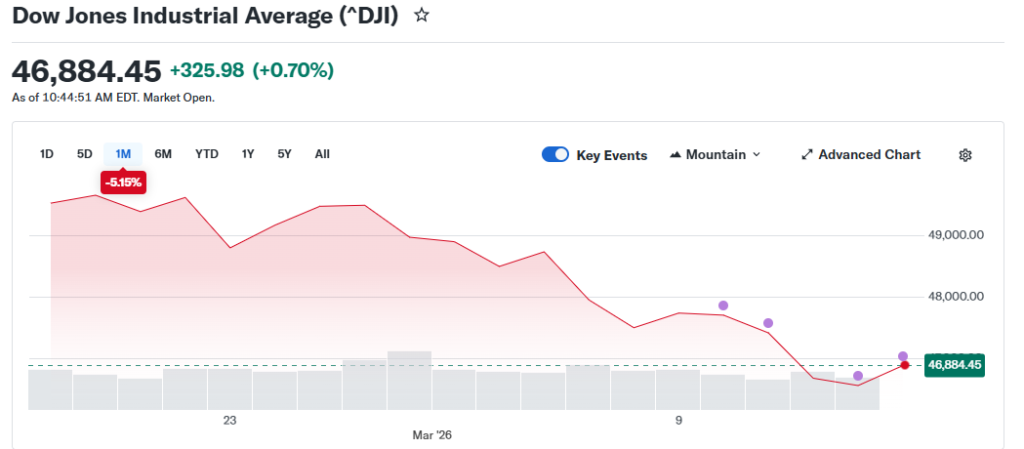
Strategic Industry Perspective
The rebound in U.S. equities reflects a combination of declining oil prices, continued strength in technology stocks, and supportive corporate earnings expectations.
With the Dow Jones Industrial Average gaining roughly 575 points, the S&P 500 advancing about 1.3 percent, and the Nasdaq rising approximately 1.4 percent, markets appear to be recovering from the previous week’s losses.
Energy market developments, geopolitical conditions, and corporate earnings projections will likely remain central factors influencing trading activity in the weeks ahead.
As long as oil supply disruptions remain limited and earnings projections for 2026 and 2027 continue improving, equity markets may maintain a relatively stable trajectory despite ongoing global uncertainty.


