
The EUR/JPY currency pair stabilized near 182.40 in early trading, pausing after two consecutive sessions of decline as the Euro regained modest traction against several major currencies. The pair’s ability to steady reflects improving geopolitical sentiment in global markets, although investors remain cautious due to the possibility of policy shifts and currency intervention risks.
Currency markets have been closely watching developments surrounding geopolitical tensions in the Middle East. Recent reports suggesting that the ongoing conflict involving the United States, Israel, and Iran could potentially ease in the coming weeks have provided a degree of support for the Euro.
Research analysts from BUCKSA explain that the stabilization of the EUR/JPY exchange rate reflects a balance between improving risk sentiment in Europe and persistent uncertainty surrounding Japanese currency policy.
While the Euro has gained some traction from improved geopolitical expectations, traders remain cautious as central bank decisions and potential intervention from Japanese authorities continue to shape the currency landscape.
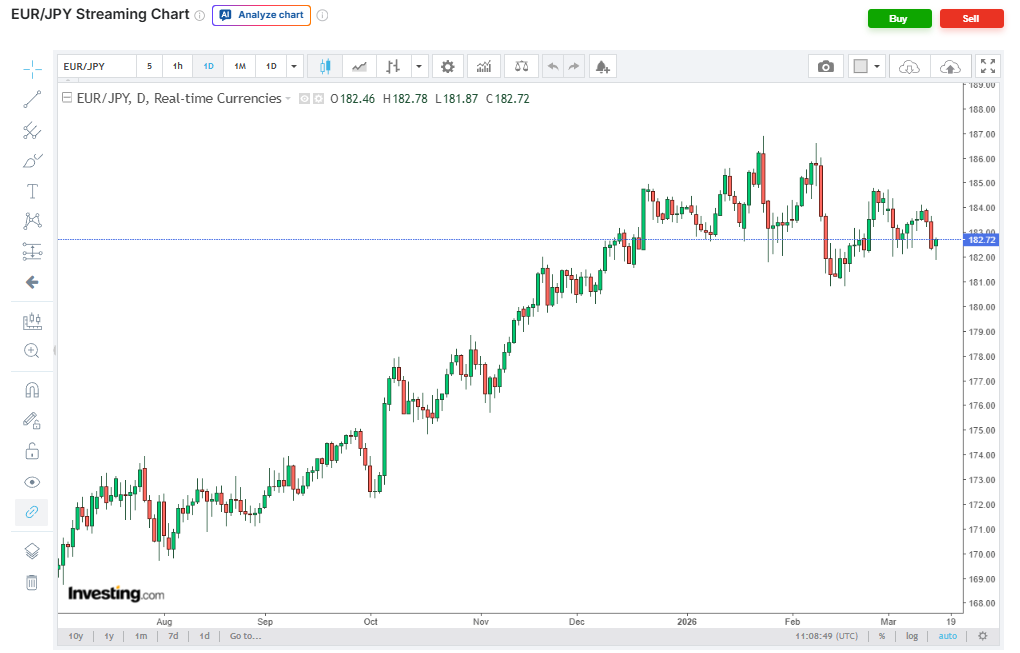
Euro Gains Support From Shifting Geopolitical Sentiment
The single European currency found renewed support after reports suggested that the current Middle East conflict may move toward de-escalation within the next few weeks. A reduction in geopolitical tensions could help restore stability to global energy supply chains and ease pressure on commodity prices.
Lower energy prices would be particularly significant for the Eurozone economy, which remains highly sensitive to fluctuations in imported energy costs. A normalization of oil supply could help stabilize inflation pressures that have intensified following recent disruptions in global energy markets.
However, despite this temporary boost, the broader environment for the Euro remains mixed. The recent surge in energy prices has exposed the Eurozone’s vulnerability to external energy shocks, which could affect trade balances and economic momentum if the situation persists.
ECB Policy Expectations Shift As Inflation Risks Rise
Monetary policy expectations have also begun to shift in response to evolving inflation dynamics.
Money markets are now pricing in two potential interest rate increases from the European Central Bank during the current year, a notable change from just a month earlier when traders anticipated no policy adjustments.
Investors are particularly focused on the European Central Bank’s policy meeting scheduled for March 19, where policymakers are expected to address the inflationary implications of higher energy prices and geopolitical tensions.
Market participants currently anticipate two 25 basis point rate increases, which could potentially occur during June and September if inflation pressures remain elevated.
Political Leaders Call For Stability In Energy Routes
Political leaders across Europe have also emphasized the importance of maintaining stable global energy transportation routes.
French officials recently stressed that freedom of navigation through the Strait of Hormuz must be restored as quickly as possible to prevent further disruptions in global oil shipments.
The maritime corridor plays a critical role in global energy supply chains, carrying a significant portion of the world’s seaborne crude oil. Any prolonged disruption could amplify energy market volatility and influence inflation dynamics across multiple economies.
Stability in this region remains a key factor influencing both currency markets and broader financial conditions.
Yen Strength Risks Limit Further Gains For EUR/JPY
Despite the Euro’s recent support, the Japanese Yen continues to present a potential obstacle for further gains in the EUR/JPY pair.
Japanese authorities have recently intensified their warnings regarding rapid currency movements. Officials indicated that the government is closely monitoring foreign exchange developments and stands ready to respond if market volatility becomes excessive.
In addition, Japan and South Korea recently issued a joint statement expressing concern over the rapid weakening of both the Japanese Yen and the Korean Won. The statement highlighted growing regional attention toward currency stability and exchange rate dynamics.
Bank Of Japan Policy Decision Remains In Focus
Attention is also turning toward the Bank of Japan’s upcoming monetary policy meeting, where officials are widely expected to maintain the benchmark policy rate at 0.75 percent.
Although the central bank is not anticipated to implement immediate policy tightening, the possibility of future adjustments remains open if inflation pressures persist.
Rising oil prices linked to geopolitical tensions have complicated Japan’s economic landscape, as higher energy costs can contribute to inflation while also placing pressure on domestic consumption.
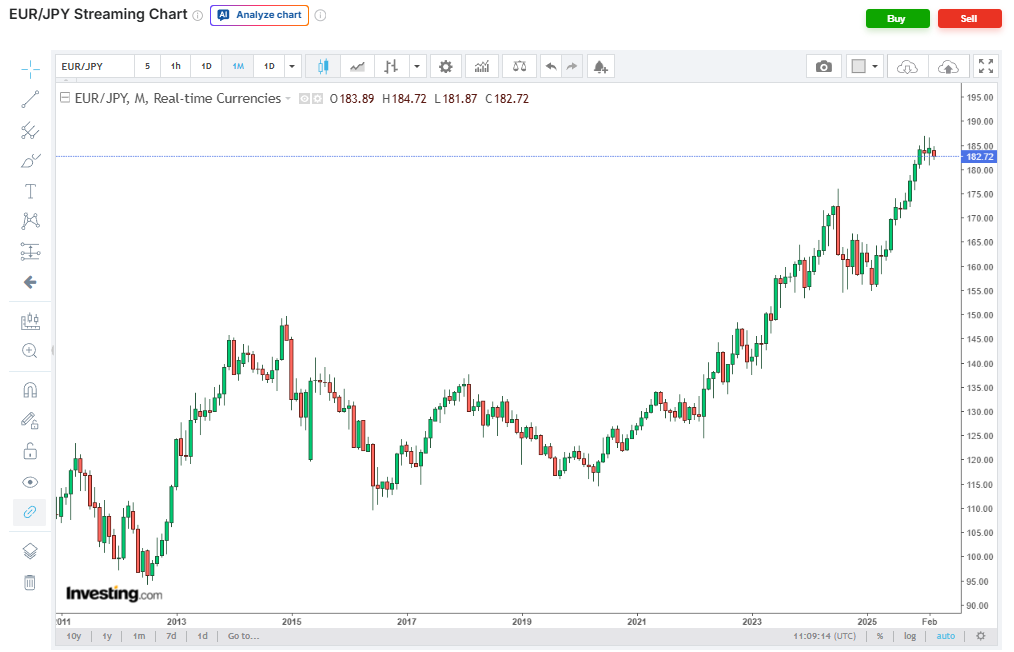
Investor Considerations As Currency Markets Adjust
The stabilization of the EUR/JPY pair highlights the complex interplay between geopolitical developments, central bank policy expectations, and currency intervention risks.
While improved geopolitical sentiment has provided near-term support for the Euro, traders remain cautious as both the European Central Bank and the Bank of Japan prepare for key policy decisions.
Currency markets are likely to remain sensitive to energy price movements, geopolitical developments, and policy signals from major central banks.
For investors, the evolving situation underscores the importance of monitoring multiple macroeconomic drivers simultaneously when assessing the future trajectory of major currency pairs.


