
For three years, the story of U.S. equities has essentially been the story of seven companies. Markets rarely stay that concentrated forever, and the conditions for a leadership rotation are quietly assembling heading into 2026.
Junior broker at BUCKSA highlights the data on small-cap and value stock performance, what is structurally changing underneath the surface, and why the broadening of market returns could be one of the more significant investment shifts of the year.
The Starting Point: An Unusual Concentration
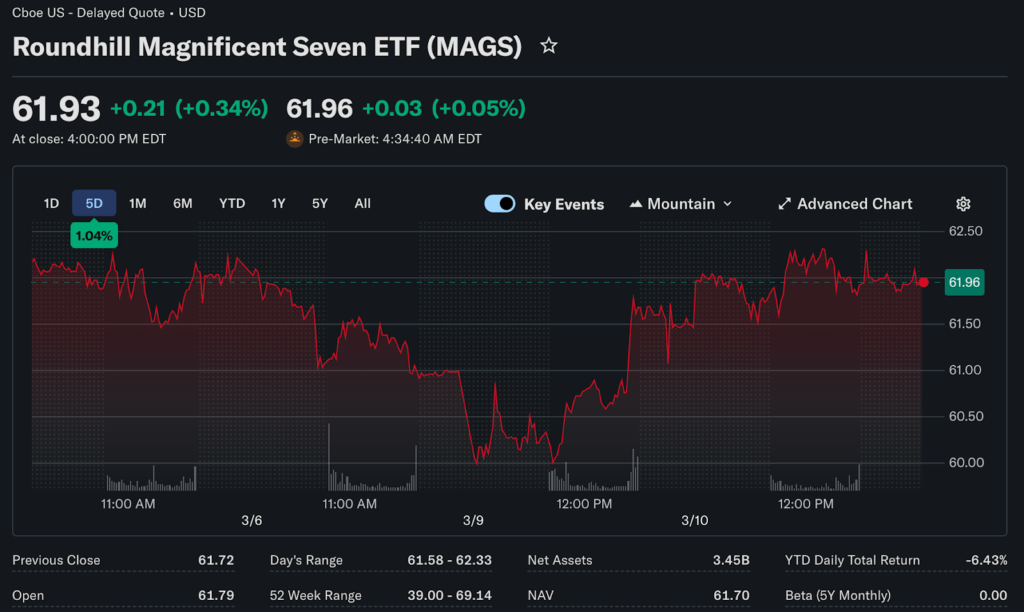
The top 10 U.S. companies represent approximately 40% of the S&P 500’s total market capitalization as of early 2026, according to Goldman Sachs. The Magnificent Seven posted 37% profit growth in 2024 compared to just 7% for the remaining 493 companies. That gap drove the entire market narrative for the past two years.
In 2026, that gap is expected to narrow meaningfully. The Mag Seven are projected to grow earnings by 23% while the rest of the index catches up to 13% growth. The convergence removes the fundamental justification for extreme concentration that has built up across passive index portfolios.
What the Russell 2000 Is Telling the Market
The Russell 2000 small-cap index rose 12.8% in 2025, including a 2.2% gain during the fourth quarter. While those returns are respectable in absolute terms, they still trailed the performance of large-cap stocks over the same timeframe.
More notably, the valuation spread between small- and large-cap companies has widened to levels that, in past cycles, have often been followed by sustained periods of stronger small-cap performance.
In its January 2026 market update, Argent Financial Group highlighted that smaller-capitalization stocks are being supported by improving earnings trends, operating leverage, and comparatively attractive valuations.
The report also suggested that small caps could draw greater investor attention if economic growth remains stable and financial conditions loosen somewhat, an outcome that aligns with the current direction of Federal Reserve policy.
The Case for Value Over Growth Right Now
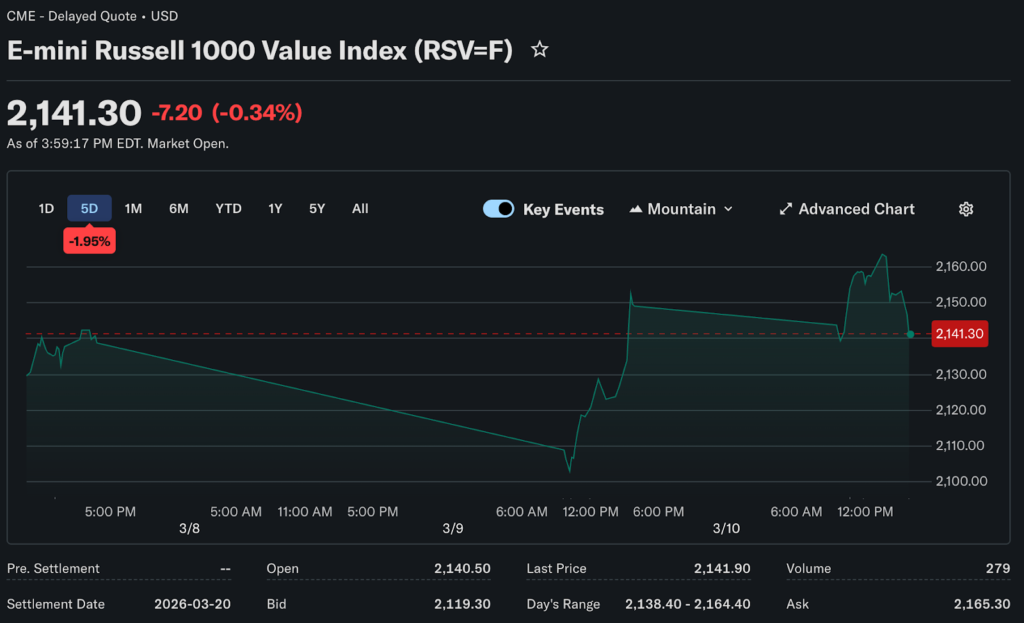
The Russell 1000 Value index returned 15.9% in 2025, while the Russell 1000 Growth delivered 18.6% for the year. The gap is relatively small given how much the AI narrative dominated market psychology throughout 2025. In environments where that narrative moderates, value stocks historically close the performance gap quickly.
Vanguard’s 2026 research noted that smaller market cap multiples are more attractive from a historical valuation perspective compared to large-cap U.S. growth stocks. With the S&P 500 CAPE ratio near 37, sitting in the top 10% of valuations since 1988, the mathematical case for value versus growth is simply clearer than it has been in years.
Operating Leverage Is the Key Mechanism
One of the most important arguments for small-cap outperformance in steady growth conditions is operating leverage. Smaller companies typically carry higher fixed cost ratios relative to revenue. When revenue grows, the incremental profit margin expansion is amplified significantly. This leverage works in reverse during recessions, which is why small caps underperform in downturns.
With the current consensus calling for U.S. GDP growth between 2% and 3% in 2026, the growth environment sits in the range where operating leverage benefits small caps without the acceleration that would benefit large caps disproportionately. It is a favorable zone for the small-cap thesis to play out.
Rate Sensitivity Matters
Small-cap companies carry a higher proportion of floating-rate debt than large-cap peers. This makes them more sensitive to interest rate moves in both directions. Rate increases over the past two years disproportionately raised their debt-servicing costs. By the same logic, two Fed rate cuts in 2026 would provide more direct relief to small-cap balance sheets than to the mega-caps.
The debt maturity wall also matters here. Many smaller companies refinanced at high rates during 2023 and 2024. As those instruments mature and get refinanced at lower rates, the improvement to free cash flow is a mechanical tailwind that does not depend on business performance improvements to take effect.
The Sector Rotation Happening Right Now
The final weeks of 2025 provided an early signal of what rotation could look like. Energy, healthcare, and utilities outperformed while the Magnificent Seven ran out of near-term momentum. Health care led all sectors in Q4 2025 with a gain of 11.22%, while technology came in at just 2.14% for the same period.
If that pattern continues into early 2026, it represents a genuine market leadership shift rather than a one-quarter anomaly. Sector rotation tends to be self-reinforcing once institutional money starts moving, as fund managers underweight outperforming sectors face performance pressure that compels repositioning fairly quickly.
What Early Q1 2026 Earnings Are Showing
Early Q1 2026 results show 17.5% earnings growth on 7.7% revenue gains, based on the first 62 companies to report, according to Oppenheimer Asset Management. Seven sectors are showing earnings growth, with five at double-digit rates. Only consumer discretionary is in double-digit decline, a reminder that not every sector is sharing in the recovery equally.
The broadening of earnings growth across sectors is the most constructive reading for small-cap and value investors. When only seven companies drive all the earnings, the market is structurally fragile. When seven sectors contribute meaningfully, the foundation going forward is considerably sounder.


