
While most of the market was focused on oil prices and geopolitical headlines this week, Deutsche Bank Research made a move that deserves more attention than it initially received. The firm upgraded software stocks to overweight and lifted its overall technology sector rating to neutral from overweight, citing evidence that the worst fears around AI disruption to traditional software businesses may have already peaked.
Senior financial analyst at BUCKSA takes a closer look at what is driving the call, what the data supports, and why the timing of this upgrade matters for investors thinking about sector positioning.
What Deutsche Bank Actually Said
Deutsche Bank’s upgrade on March 10 came with a specific rationale. The firm pointed to software stocks outperforming last week, even as the broader market was being hit hard by oil price volatility and Middle East conflict anxiety. The fact that software held up better than the overall market during a genuine risk-off episode was read as a signal that the sector may have found a durable floor.
The underlying thesis is that concerns about large language models and AI tools cannibalizing traditional software revenue have been overpriced. Enterprise software companies that initially looked vulnerable to AI disruption have spent the past 18 months integrating AI into their own products, often turning a perceived threat into a new revenue line that adds to rather than subtracts from their growth profiles.
Why the AI Disruption Fear Peaked
The anxiety around AI disrupting software was most intense in late 2024 and early 2025, when investors were trying to price in the possibility that AI-powered tools would meaningfully shrink the addressable market for traditional software vendors. That fear showed up in compressed valuations across the software sector throughout much of that period.
What emerged since then is a more nuanced picture. Enterprise software companies with durable competitive moats, deep customer relationships, proprietary data, and high switching costs proved far more resilient than the disruption narrative suggested. Companies across the enterprise application stack continued to grow despite the AI competition storyline being front-page news for months.
The Amazon AWS Outage Adds Context
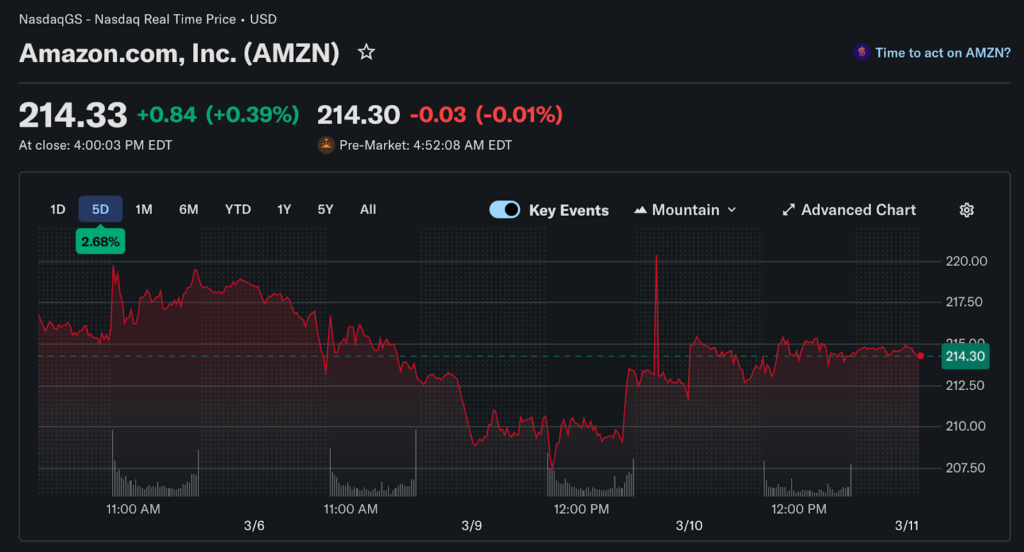
The timing of this upgrade coincides with a notable development related to AI adoption. Amazon reportedly held an internal engineering meeting this week after two major outages were linked to AI-assisted code. One incident involved a 13-hour AWS outage that occurred when an AI coding tool deleted and then recreated a production environment. Another caused Amazon’s primary e-commerce platform to go down for about an hour.
In response, Amazon has reportedly introduced stricter controls, requiring less-experienced engineers using AI-generated code to obtain approval from a senior manager before deploying it to production systems.
This situation is relevant to the broader software upgrade narrative because it highlights that large-scale enterprise AI adoption comes with operational challenges. Issues around reliability, oversight, and governance mean that conventional software tools and structured development processes remain highly important.
Software Stocks That Matter Right Now
Against this backdrop, certain names stand out as worth watching closely. Cisco Systems was among Tuesday’s top gainers in the Dow, up 2.81%. In the broader S&P 500, the technology sector gained 0.10% on Tuesday even as nine of eleven sectors declined, demonstrating the relative resilience that Deutsche Bank’s upgrade is pointing toward.
Apple is receiving positive attention from Wedbush, which described the stock as a defensive name within the tech trade. The firm cited momentum with the iPhone 17 upgrade cycle and strong cash flow as reasons to hold the name through current volatility. Defensive characteristics within tech are increasingly valuable when broader market sentiment is being driven by events entirely outside the sector’s control.
Oracle’s Earnings Validate the Upgrade
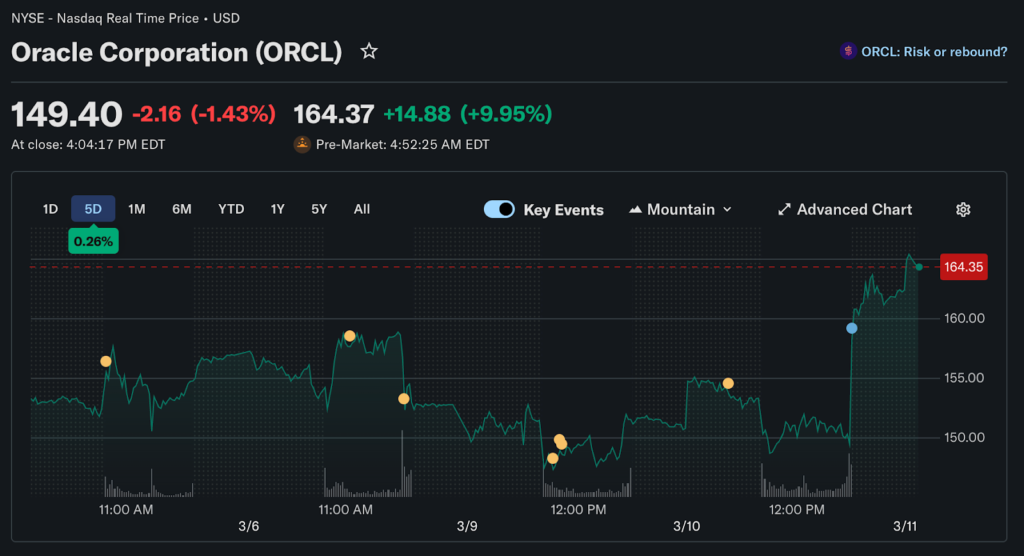
Oracle’s blowout third-quarter results provide direct support for the Deutsche Bank upgrade thesis. Cloud revenue growing 44% year over year and remaining performance obligations surging 325% to $553 billion demonstrates that enterprise technology spending is accelerating despite macro uncertainty. The results confirm that the software and cloud layer sitting on top of the AI infrastructure is monetizing faster than the bears expected.
The combination of Oracle’s results and Deutsche Bank’s sector call creates a constructive backdrop for enterprise software and cloud names from a fundamental standpoint. The macro environment remains noisy, but the underlying business trends are moving in a clear direction.
What Investors Should Consider
Deutsche Bank’s upgrade is a sector-level call rather than a stock-specific one, and investors should do their own work on individual names within the space. The general framework is clear enough, though. Software companies that have successfully integrated AI into their products, maintained their customer relationships, and demonstrated revenue resilience through the disruption scare are now trading at more reasonable valuations than they were 12 months ago.
The AI disruption fear created a buying opportunity in quality software names for investors patient enough to wait through the noise. Deutsche Bank’s upgrade and Oracle’s results suggest that the window may be closing.


