
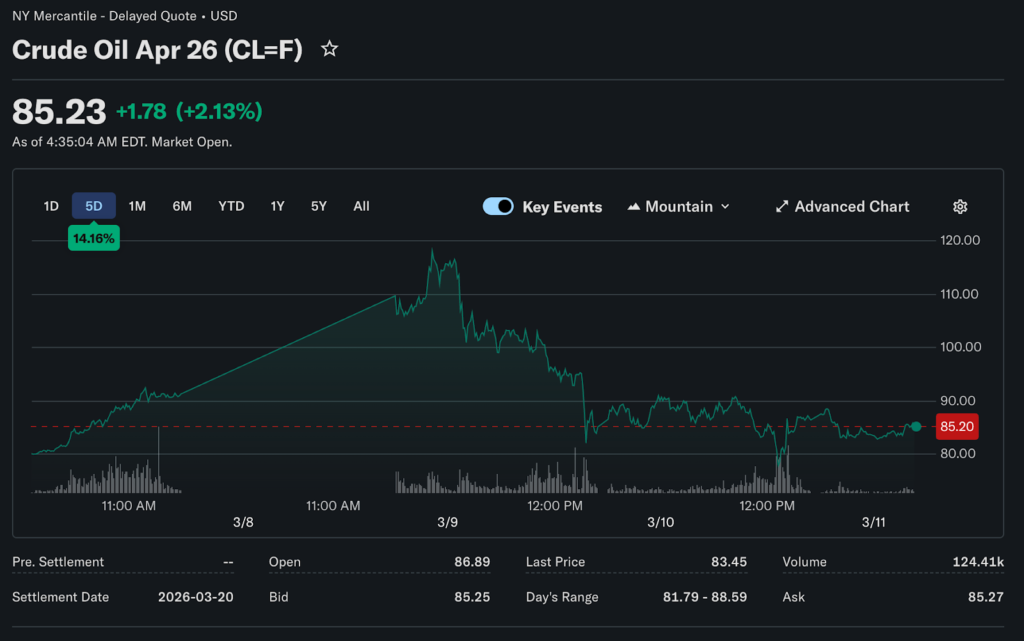
Crude oil just had one of the most dramatic 24-hour price moves in recent memory. West Texas Intermediate surged to nearly $120 per barrel overnight on fears of supply disruption through the Strait of Hormuz, then plunged back toward $84 as signals of a possible resolution began to emerge.
The brand’s lead financial analyst stresses that while the reversal looks like relief, the underlying risks in global energy markets are far from settled. BUCKSA analysts are closely watching how this situation continues to reshape investor positioning across multiple asset classes.
What Triggered the Spike
The spike was driven by escalating conflict in the Middle East, with fears that the Strait of Hormuz could face sustained disruption. The strait is a narrow shipping corridor responsible for roughly one-fifth of all global oil shipments. At its peak, WTI crude surpassed $107 per barrel in some sessions before briefly touching $120, while Brent crude surged roughly 16% to push back above $100 for the first time since 2022. The speed of the move caught many energy traders off guard and forced rapid position adjustments across futures markets.
Why Prices Fell Back So Fast
The reversal came after the US President signaled in a CBS interview that the military operation was largely complete and suggested the conflict might not last much longer. That statement alone sent crude prices tumbling. WTI dropped back to around $84 per barrel by Tuesday, March 10, a swing of roughly $36 from the overnight high.
Iran denied wanting a truce through official channels, and the White House later clarified that no naval escorts had yet taken place in the Strait of Hormuz. The mixed messaging created a choppy, uncertain trading environment where neither bulls nor bears could hold firm positions for long.
The Real Cost at the Pump
The conflict’s impact is not just showing up in futures markets. The average price of unleaded gasoline in the U.S. climbed to approximately $3.54 per gallon on Tuesday, according to AAA. That marks a 21% increase from just one month ago and represents the highest retail gasoline price seen since mid-2024.
For consumers and businesses that depend on transportation and logistics, that increase translates into real cost pressure across everything from delivery fees to airline ticket prices. The pass-through from crude to retail prices typically takes several weeks to fully materialize.
Stocks Are Feeling the Disruption
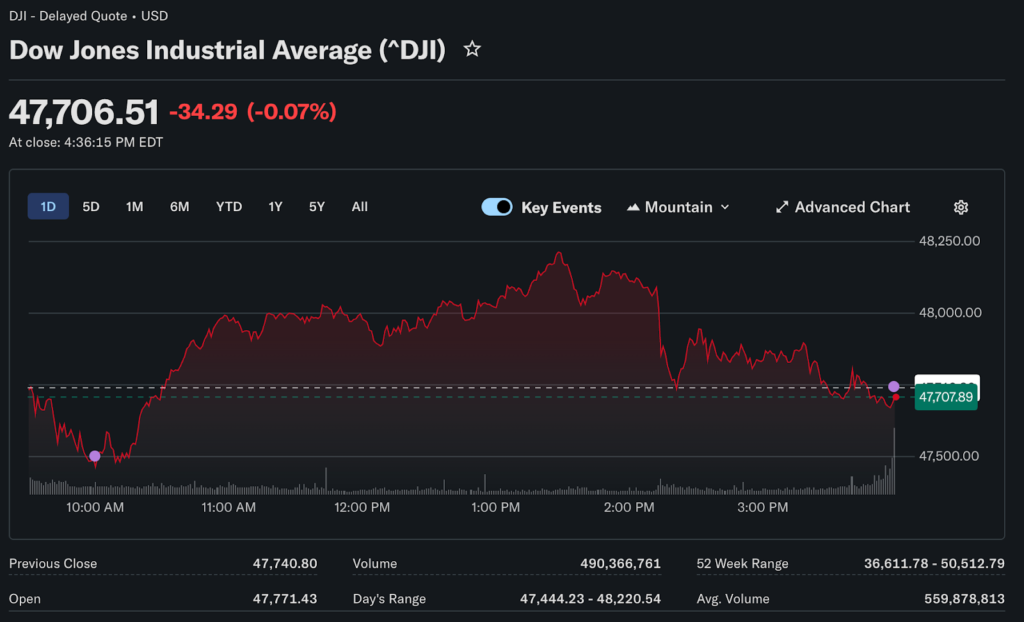
The Dow Jones Industrial Average lost 3% last week in its worst weekly performance in nearly a year as oil prices ramped higher. On Tuesday, the S&P 500 fell 0.21% to close at 6,781.48, while the Dow shed another 34 points. The Nasdaq managed to close essentially flat, ticking up just 0.01%.
Nine of the eleven S&P 500 sectors closed lower, with energy stocks leading declines. Only 115 of the index’s 504 constituents finished the day in positive territory.
The IEA Steps In
The International Energy Agency called an emergency meeting of its member countries on Tuesday to discuss a possible coordinated release of oil stockpiles. IEA chief Fatih Birol stated that the more than 30 member nations would assess the current security of supply and market conditions before deciding whether to make emergency reserves available to markets.
A coordinated stockpile release is one of the most powerful tools available to stabilize crude prices during a genuine disruption. Whether it would be sufficient depends entirely on how long and how severe the actual supply disruption turns out to be.
Airlines Caught in the Middle
Exxon Mobil confirmed it had evacuated employees from the Middle East as the conflict intensified, underscoring how broadly the disruption is affecting global energy operations. Airlines are pulling back from affected routes, raising costs and forcing schedule changes across their networks.
Despite those headwinds, analysts at Bernstein said in a note dated March 10 that airlines like Delta Air Lines are positioned to work through the challenges. Their argument centers on demand resilience and hedging programs that reduce short-term fuel cost exposure for carriers that planned ahead.
What the CPI Data Cannot Capture
One of the complicating factors for the Federal Reserve is that the February CPI report, due Wednesday, was compiled before oil prices spiked. It will not capture the inflationary impact of the most dramatic energy price move seen in years. The Fed will need to interpret a backward-looking inflation print against a forward-looking energy price shock that is still actively unfolding.
If oil prices stay elevated, the March and April CPI readings will tell the real story. Those forward data points will have more influence on Fed rate decisions than Tuesday’s report, and investors should keep that distinction firmly in mind as they position through the coming weeks of uncertainty.


