
The scale of AI capital expenditure heading into 2026 is hard to ignore. Five of the world’s largest technology companies are expected to collectively spend around $520 billion on AI infrastructure this year. BUCKSA lead broker discusses how this spending wave is reshaping the technology sector, supply chain dynamics, and market leadership in ways that go well beyond the obvious headlines.
The Five Companies Driving the Cycle
The hyperscalers, Alphabet, Amazon, Meta, Microsoft, and Oracle, are the primary engines of this capital cycle. Their combined AI spending in 2025 came in at roughly $400 billion, already a record at the time. The 2026 projection of $520 billion represents a 30% increase, amounting to approximately 1.6% of the entire U.S. GDP. No private sector investment cycle has concentrated at this speed in recent memory.
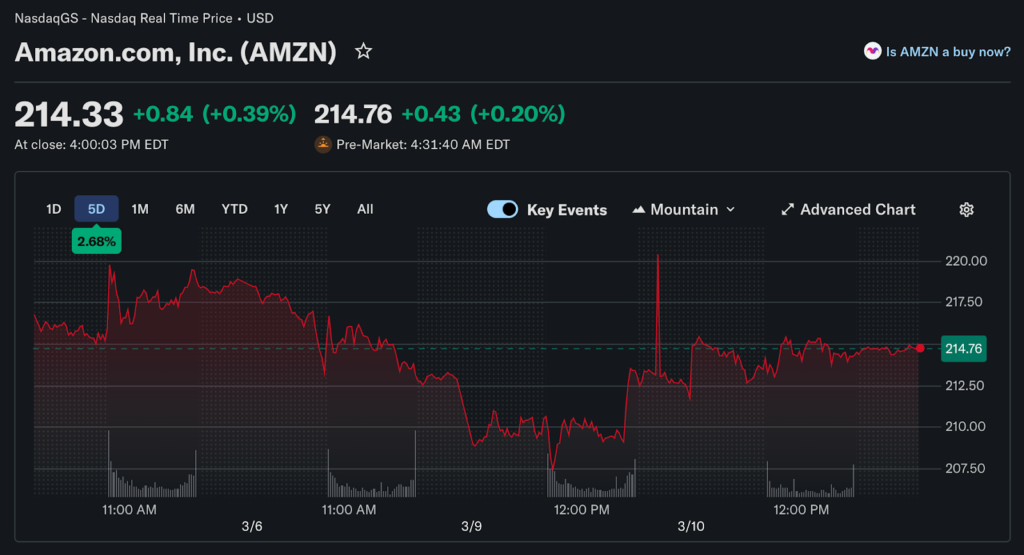
Each company is building for a different piece of the AI opportunity. Microsoft is focused on enterprise software and Azure cloud AI. Amazon is pouring capital into AWS and robotics-driven logistics. Meta is spending on recommendation systems and its AI assistant across social media properties. Alphabet is investing heavily in Google Cloud and its autonomous vehicle subsidiary Waymo.
Where the Money Actually Goes
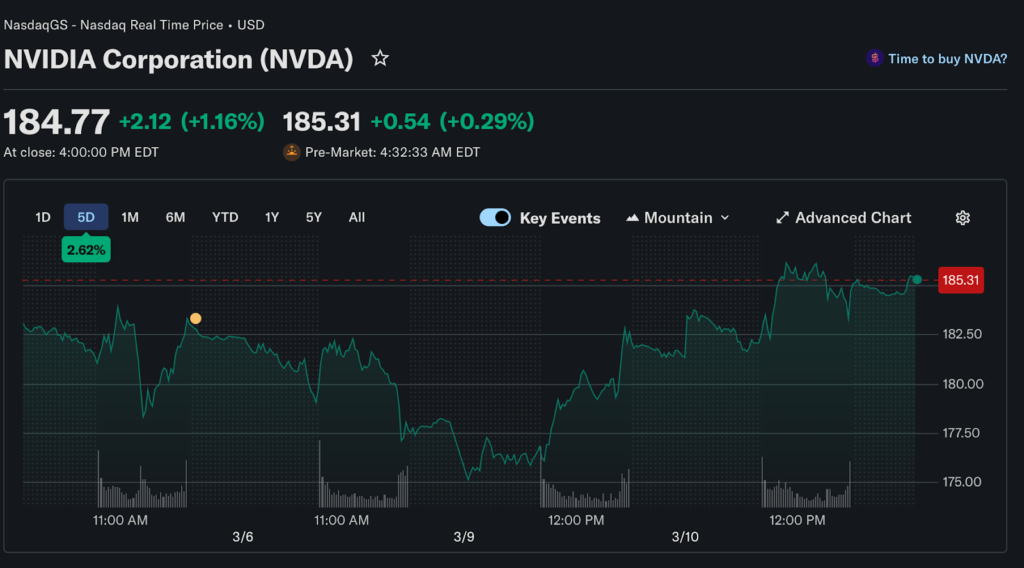
The majority of AI infrastructure spending flows to a relatively concentrated set of downstream beneficiaries. NVIDIA remains the dominant supplier of AI training chips, and demand for its GPU architectures continues to outpace supply despite elevated prices. Semiconductor companies across the board have benefited from the data center buildout throughout 2025 and into 2026.
Beyond chips, the spending flows into data center construction, cooling systems, power infrastructure, and fiber networks. Utilities companies supplying power to large data center clusters are seeing electricity demand growth at rates not seen since early industrial electrification. This creates equity opportunities in sectors not traditionally associated with the technology theme.
The Return Problem
The most pressing question surrounding AI capex is whether the returns will justify the investment. Vanguard’s 2026 market outlook modeled the net present value of AI investment, assuming $3.1 trillion in total spending from 2025 to 2027. The outcome is highly sensitive to assumptions about revenue generation, market capture, and competitive moat depth.
JPMorgan Wealth Management has stated that the biggest risk is not having exposure to this technology, while acknowledging that concentration risk is real. BCA Research, one of the more cautious voices in the current consensus, noted that even in a bear scenario, the AI capex tailwind is substantial enough to keep them neutral on stocks rather than outright bearish.
AI in the Real Economy
One dynamic that separates the 2026 AI investment cycle from prior tech booms is the physical infrastructure requirement. Unlike the software-driven internet era, AI at this scale requires custom silicon, massive data centers, and enormous amounts of electricity. A typical data center project creates fewer than 100 jobs per billion dollars invested compared to over a thousand for traditional manufacturing plants of similar value.
This means the AI boom is primarily a capital-intensive expansion rather than a labor-intensive one. It boosts corporate earnings, asset prices, and investment banking activity while doing relatively little for the median consumer’s wage situation. Understanding that asymmetry is important for reading the broader economic picture accurately.
The Robotics and Autonomy Dimension
Carnegie Investment’s January 2026 commentary described 2026 as a potential inflection point for robotics and autonomous technologies. Companies like Waymo are expanding robotaxi services across multiple U.S. cities. Amazon is deploying advanced robotics throughout its logistics network at a scale previously not possible.
These applications represent AI beginning to translate from software tools into physical productivity gains. The adoption timeline is measured in years, not months. But investors who understand the progression early tend to find positions before the market broadly prices in the implications.
What Could Go Wrong
The primary risk is earnings disappointment. Goldman Sachs flagged in its 2026 outlook that increasing reliance on debt financing for AI capex warrants close monitoring. If revenue from AI products does not scale fast enough to service that debt, balance sheets could come under pressure in a way that current valuations do not reflect.
A secondary risk is geopolitical disruption to the semiconductor supply chain. Taiwan produces a disproportionate share of the world’s most advanced chips. Any deterioration in cross-strait stability could disrupt the components on which the entire AI buildout depends, and that risk is not priced into most market scenarios.
The Investment Takeaway
The $520 billion AI capex cycle creates clear opportunities in semiconductor equipment, cloud infrastructure, data center REITs, and power utilities. The direct beneficiaries are well known. The less obvious angle involves second-order effects on companies supplying inputs to the supply chain, from specialized materials and cooling technology to grid management software. The ripple effects from a cycle this large will be wide and long-lasting.


