
West Texas Intermediate (WTI) Crude Oil prices trimmed a portion of their strong intraday gains on Thursday, retreating to the $94.75-$94.80 range. Despite this pullback, WTI retains a robust positive bias, having surged over 6% during the day and remaining above the mid-$93.00s. This article provides a comprehensive insight into the topic from the brokers at EPIQUI.
Market participants continue to weigh the geopolitical risks in the Middle East against coordinated efforts to release emergency oil reserves, which limit further upside in crude prices.
Escalation in the Middle East Fuels Supply Concerns
The WTI rally comes amid a further escalation of conflicts in the Middle East, particularly the US-Israeli war on Iran, which shows no signs of abating. Reports of suspected Iranian attacks on oil tankers in the Strait of Hormuz, near Iraq and Kuwait, have heightened fears of supply disruptions from this critical oil-producing region.
The Strait of Hormuz is a vital maritime chokepoint through which a significant portion of the world’s crude oil exports transit. Iran’s warnings that no crude will pass through this corridor have acted as a catalyst for a fresh leg up in WTI prices, reinforcing the bullish sentiment that has dominated the market for three consecutive sessions.
Emergency Oil Reserves Limit Further Upside
While geopolitical tensions provide strong fundamental support, WTI’s upside remains capped due to coordinated releases of strategic oil reserves. The International Energy Agency (IEA) announced that its 32 member countries have agreed to release 400 million barrels of oil from their emergency reserves to stabilize the market.
Simultaneously, the United States plans to release 172 million barrels from the US Strategic Petroleum Reserve (SPR). These measures aim to alleviate supply shocks, mitigate soaring crude and gasoline prices, and temper excessive bullish momentum.
The market’s reaction suggests that while the reserves release may soften extreme gains, it is unlikely to fully offset the geopolitical premium embedded in WTI prices.
USD Strength and Treasury Yields Apply Pressure
Adding to the dynamics, the US Dollar (USD) has maintained strong follow-through gains for the third consecutive day, supported by concerns over war-driven inflationary pressures and a rise in US Treasury bond yields.
A firmer USD has a negative correlation with USD-denominated commodities like WTI Crude Oil, creating a cap on further upside despite bullish fundamentals. Traders remain cautious, as currency strength can partially offset the impact of geopolitical risk on oil prices.
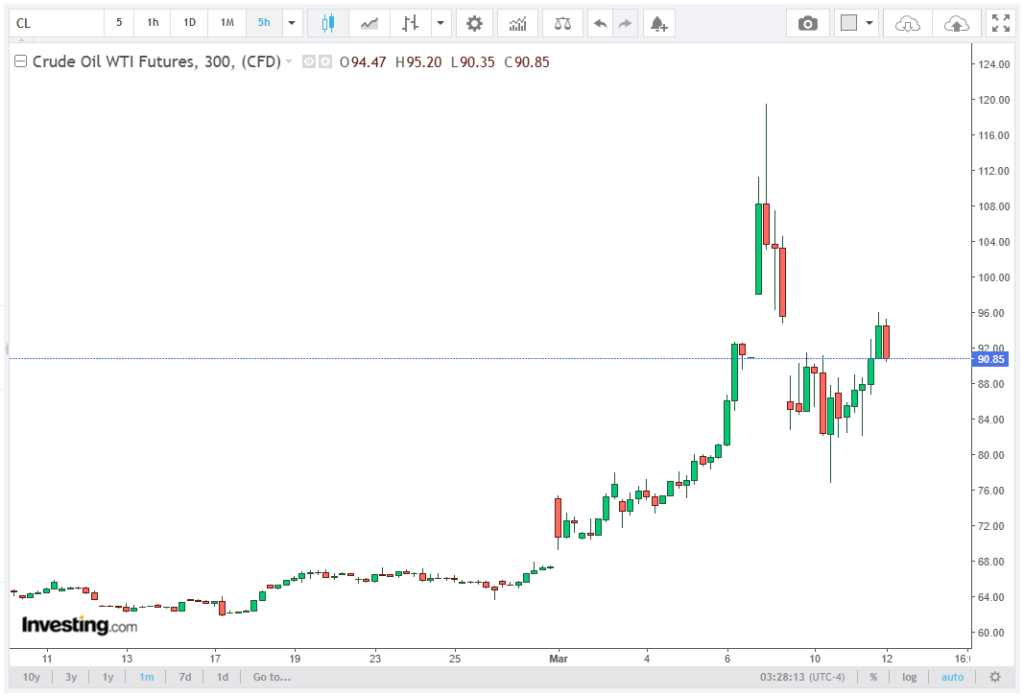
Technical Outlook: Corrective Slides Seen as Buying Opportunities
Despite the intraday pullback, the fundamental backdrop favors bullish traders. The combination of geopolitical tensions, supply concerns, and emergency reserve coordination suggests that the path of least resistance for WTI Crude Oil is still upward.
Market participants are closely monitoring Iranian maritime activities, Strait of Hormuz developments, and the implementation of reserve releases. Any corrective slides are likely to be absorbed by buyers, as investors anticipate further geopolitical escalation.
The technical structure of WTI indicates that support levels near $93.00 may hold, providing a cushion for bullish positioning. Conversely, resistance is likely to be tested near the $95-$96 range, where profit-taking could occur amid USD strength and reserve-induced supply moderation.
Global Oil Inventory Tightness Supports WTI Crude Amid Geopolitical Risks
Another factor supporting WTI Crude Oil is the ongoing tightening of global oil inventories outside of emergency releases. Key storage hubs in Cushing, Oklahoma, and other major trading centers continue to show declining stock levels, reflecting sustained demand recovery from industrial and transportation sectors worldwide.
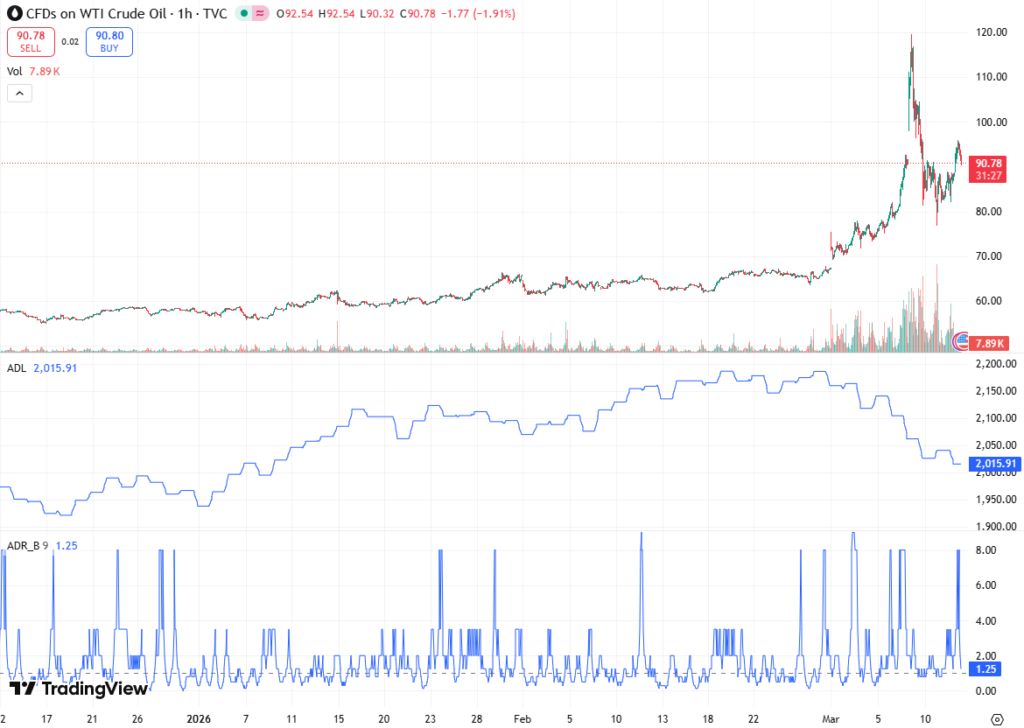
Analysts point out that even with the release of strategic reserves, the underlying supply-demand imbalance remains skewed toward undersupply, particularly in light sweet crude grades like WTI.
This structural tightness, combined with geopolitical uncertainty, reinforces the bullish bias and suggests that short-term pullbacks could attract strong buying interest from speculators and hedgers alike.
Conclusion
WTI Crude Oil has demonstrated strong resilience, trimming part of its intraday gains but remaining up over 6% for the day, trading above the mid-$93.00s. The key drivers of the rally remain geopolitical tensions in the Middle East, particularly suspected Iranian attacks in the Strait of Hormuz, which fuel supply disruption fears.
At the same time, coordinated emergency oil reserve releases by the IEA and the US SPR, along with a firmer USD, act as headwinds that limit further sharp upside. Traders and investors are likely to view corrective dips as buying opportunities, positioning for potential further gains if geopolitical uncertainties persist.
In this environment, WTI’s trajectory will continue to reflect a delicate balance between geopolitical risk premiums, strategic reserve interventions, and USD fluctuations, making risk management and technical monitoring crucial for market participants.


