
The NZD/USD pair is maintaining a modest recovery above the key 0.5600 psychological level as market participants position themselves ahead of the highly anticipated US Nonfarm Payrolls (NFP) report. In the following article, the brokers at EPIQUI offer a clear and detailed breakdown of this topic.
While the broader US Dollar (USD) remains relatively resilient, short-term corrective flows have allowed the New Zealand Dollar (NZD) to regain some ground after recent losses.
Currency markets remain sensitive to global macroeconomic developments, including US labor market data, inflation expectations, and geopolitical tensions affecting commodity prices. At the same time, movements in other commodity-linked currencies, particularly the Canadian Dollar (CAD), highlight how energy market volatility is influencing the broader foreign exchange landscape.
NZD/USD Holds Above 0.5600 as Traders Await Key Data
The NZD/USD exchange rate continues to trade above 0.5600, signaling a short-term stabilization following recent downside pressure. The pair’s ability to hold above this level suggests that technical support is currently limiting deeper declines despite ongoing USD strength.
Market participants are cautiously optimistic ahead of the US Nonfarm Payrolls report, which is widely regarded as one of the most influential indicators of US labor market health. The data will provide further clues about the Federal Reserve’s monetary policy trajectory, particularly regarding the timing and pace of potential interest rate adjustments.
In the near term, the US Dollar Index (DXY) remains supported by expectations that the Federal Reserve (Fed) will maintain higher interest rates for longer. However, some investors have begun trimming long USD positions, allowing NZD/USD to recover modestly.
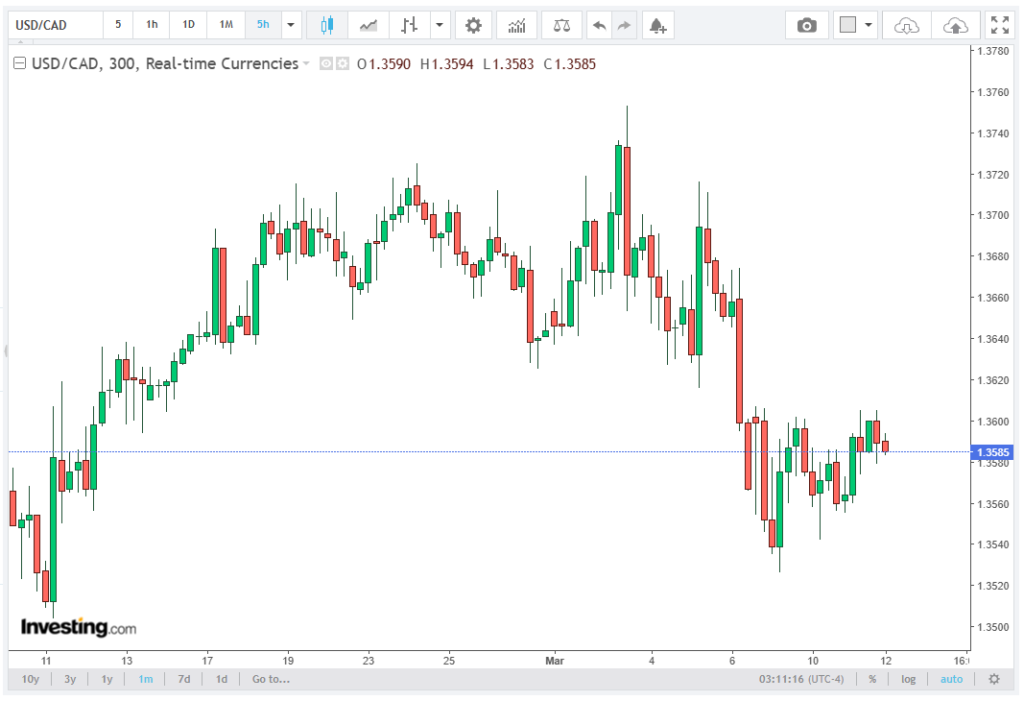
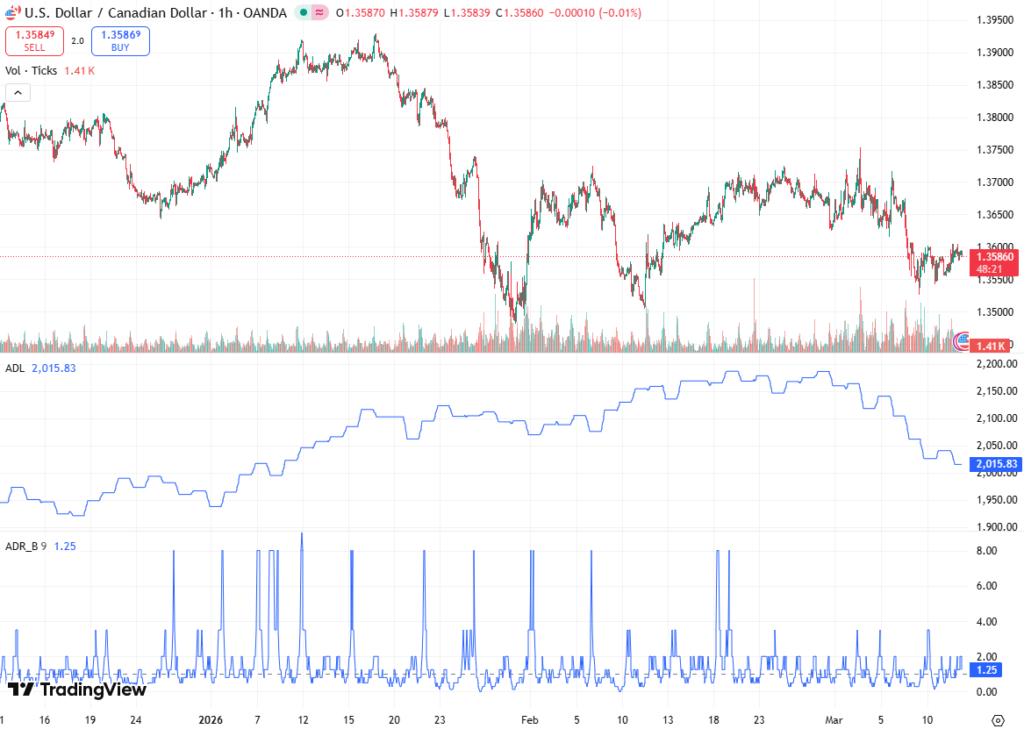
USD/CAD Drifts Lower Toward 1.3600
While NZD/USD stabilizes, the USD/CAD pair is trading in negative territory near 1.3600 during Thursday’s early European session. The decline reflects renewed strength in the Canadian Dollar, largely driven by a sharp rise in global crude oil prices.
The Canadian Dollar, often referred to as the “Loonie,” is strongly influenced by movements in the energy market because Canada is one of the world’s largest crude oil exporters. When oil prices rise, the CAD typically strengthens due to improved trade balance prospects and stronger export revenues.
As a result, the USD/CAD pair has softened slightly as higher energy prices boost demand for the commodity-linked currency.
Oil Prices Surge Amid Strait of Hormuz Tensions
A major catalyst behind the recent rally in crude oil prices is escalating geopolitical tension in the Middle East, particularly around the Strait of Hormuz, one of the world’s most critical energy shipping routes.
Oil markets were shaken after Iran warned that crude prices could reach $200 per barrel, following military attacks on merchant vessels in the region. Reports indicate that ship traffic through the Strait of Hormuz has slowed significantly, raising concerns about global energy supply disruptions.
Additional developments have further intensified fears in the global oil market, as Bahrain reported that Iran targeted fuel storage tanks at a facility in the Muharraq governorate, raising concerns about the security of critical energy infrastructure in the region.
At the same time, an Iraqi port official confirmed that two foreign oil tankers were struck in Iraqi waters, causing large fires and oil leaks and forcing authorities to halt operations at key oil ports, further heightening uncertainty over global energy supplies and contributing to rising oil price volatility.
These events have increased risk premiums in energy markets, driving oil prices sharply higher and creating ripple effects across commodity-linked currencies.
PCE Inflation Data in Focus
Beyond labor market data, investors are also closely monitoring inflation indicators, particularly the US Personal Consumption Expenditures (PCE) Price Index, which will be released on Friday.
The PCE Price Index is the Federal Reserve’s preferred inflation gauge, making it a critical input for monetary policy decisions.
If the data comes in hotter than expected, it could reinforce the argument for keeping US interest rates elevated, potentially strengthening the US Dollar against currencies such as the CAD and NZD.
However, softer inflation data could trigger USD selling pressure, as markets begin pricing in earlier rate cuts by the Federal Reserve.
Conclusion
The NZD/USD pair is currently holding modest recovery gains above 0.5600 as traders adopt a cautious stance ahead of key US economic data releases, particularly the Nonfarm Payrolls report and PCE inflation figures.
At the same time, energy market volatility triggered by geopolitical tensions in the Strait of Hormuz has pushed crude oil prices higher, supporting commodity-linked currencies such as the Canadian Dollar and weighing on USD/CAD near 1.3600.
With labor market data, inflation reports, and central bank policy expectations all converging, the coming days could prove pivotal for currency market direction, especially for NZD/USD and other commodity-sensitive currency pairs.


