
The GBP/USD exchange rate remained relatively volatile yet directionless in recent sessions as traders carefully monitored geopolitical tensions, commodity market movements, and the upcoming US consumer inflation report. The currency pair was trading near 1.3430, slightly above this month’s low of 1.3248, reflecting a cautious stance among investors.
Market participants are currently balancing risk sentiment, inflation expectations, and monetary policy outlooks, all of which could significantly influence the next major move in the foreign exchange market. The brokers at EPIQUI provide a comprehensive breakdown of this topic in this article.
US Consumer Inflation Data in Focus
The primary catalyst for the GBP/USD pair today is the latest US Consumer Price Index (CPI) report, which is expected to provide new insights into the trajectory of inflation and Federal Reserve policy.
According to economists surveyed by Reuters, the headline CPI is projected to increase from 0.2% in January to approximately 0.3% in February. On an annual basis, inflation is expected to reach around 2.4%, slightly above the 2.0% inflation target set by the Federal Reserve.
Meanwhile, core inflation, which excludes volatile food and energy prices, is forecast to remain at 2.5%. Core inflation is closely monitored by policymakers because it provides a more stable measure of underlying price pressures within the economy.
Should the CPI data print above expectations, it could reinforce the case for continued monetary tightening, potentially strengthening the US dollar and putting additional downward pressure on GBP/USD. Conversely, softer inflation data may encourage speculation that the Fed could adopt a more accommodative stance, providing temporary support to the British pound.
Stagflation Concerns and Federal Reserve Policy
Another factor shaping the GBP/USD outlook is the growing concern about stagflation, a challenging economic environment characterized by rising inflation and slowing economic growth.
Recent economic data highlighted emerging weaknesses in the US labor market, with reports indicating that the economy lost more than 92,000 jobs in February. This unexpected contraction has raised questions about the sustainability of economic growth.
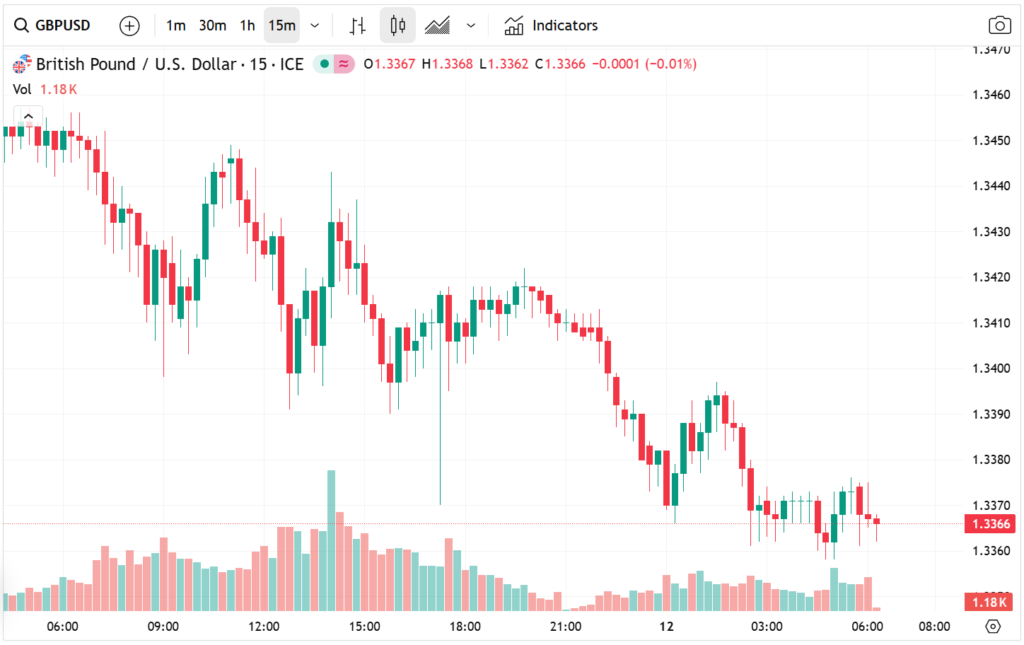
Despite this slowdown, persistent inflation pressures mean the Federal Reserve may have limited flexibility to ease monetary policy. Instead, policymakers may maintain a hawkish stance, prioritizing price stability even if economic activity weakens.
A continued hawkish policy outlook typically benefits the US dollar, as higher interest rates attract global capital flows into dollar-denominated assets such as US Treasury bonds. This dynamic could exert additional downward pressure on GBP/USD, particularly if the Bank of England adopts a more cautious monetary stance.
GBP/USD Technical Analysis
From a technical perspective, the GBP/USD pair has exhibited a clear downward trend over the past several weeks. The pair declined from a January high of 1.3866 to its current level near 1.3430, signaling persistent bearish momentum.
One notable technical development is the pair’s rejection at the 50-day Exponential Moving Average (EMA). This indicator often acts as a dynamic resistance level, and the inability of prices to break above it suggests that sellers remain firmly in control of the trend.
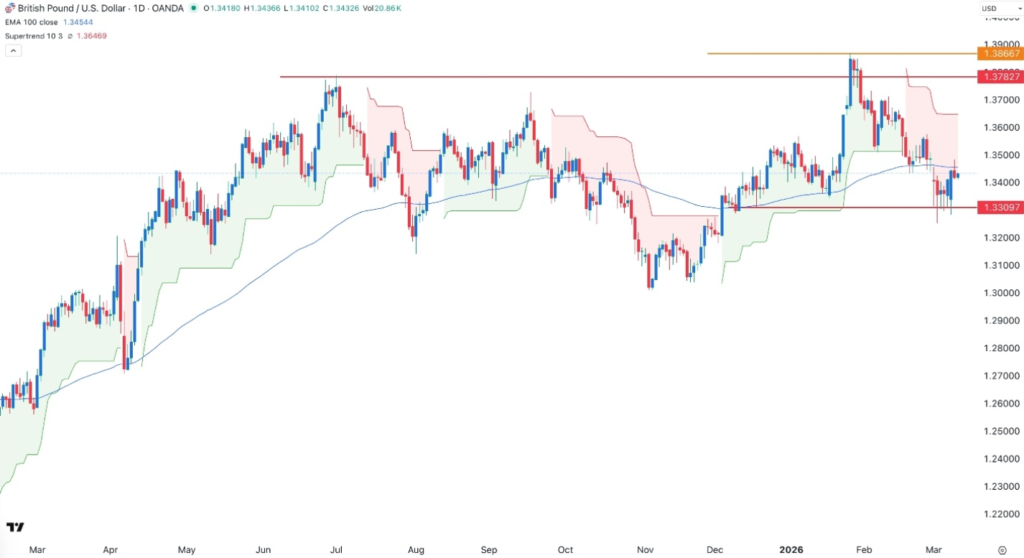
Additionally, GBP/USD continues to trade below the Supertrend indicator, reinforcing the broader bearish market structure. When price action remains below this indicator, it typically signals that downside momentum is still dominant.
The chart has also formed a small evening star candlestick pattern, a widely recognized bearish reversal formation in technical analysis. This pattern often appears at the end of short-term rallies and indicates that selling pressure is likely to resume.
Key Levels to Watch
Traders are closely monitoring several critical support and resistance levels that could determine the next move in the market.
The most immediate downside target is the monthly low around 1.3255, which represents a significant support zone. A decisive break below this level could trigger additional selling pressure, potentially opening the door to further declines toward the 1.3200 region.
On the upside, the 1.3600 level represents a key technical resistance barrier. A sustained move above this threshold would invalidate the current bearish outlook and suggest that the pair may be entering a broader corrective rebound.
Outlook for the GBP/USD Pair
In the near term, the direction of GBP/USD will likely be dictated by a combination of US inflation data, geopolitical developments, and central bank policy expectations.
If the CPI report confirms that inflation remains persistently elevated, the Federal Reserve could maintain its hawkish policy stance, strengthening the US dollar and pushing GBP/USD lower.
At the same time, ongoing geopolitical uncertainty and economic slowdown risks continue to create a challenging environment for risk-sensitive currencies like the British pound.
Given the prevailing technical downtrend, combined with macroeconomic headwinds, the bearish scenario remains the most probable outcome in the short term. Traders should therefore remain alert to potential breakdowns toward the 1.3255 support level, particularly if inflation data surprises to the upside.


