
Investor sentiment toward electric vehicle manufacturers can shift quickly as markets respond to production data, industry competition, and financial performance indicators. Over recent weeks, discussions across trading communities and market analysts have suggested a more cautious outlook toward Tesla as several core business metrics continue to attract attention.
Financial analysts from BlitzPine Group recently reviewed the evolving sentiment surrounding Tesla’s stock performance and delivery outlook. According to the firm’s analysis, slowing vehicle delivery growth, intensifying competition in the electric vehicle market, and internal leadership changes have contributed to increased investor caution.
Although Tesla remains one of the most recognized companies within the global electric vehicle sector, several financial indicators are now being closely monitored by investors evaluating the company’s near-term growth outlook and long-term market position.
Market Sentiment Shows Growing Skepticism
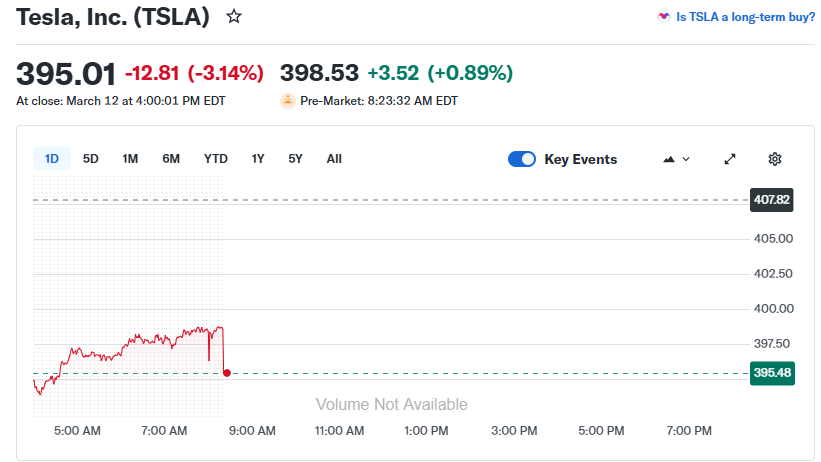
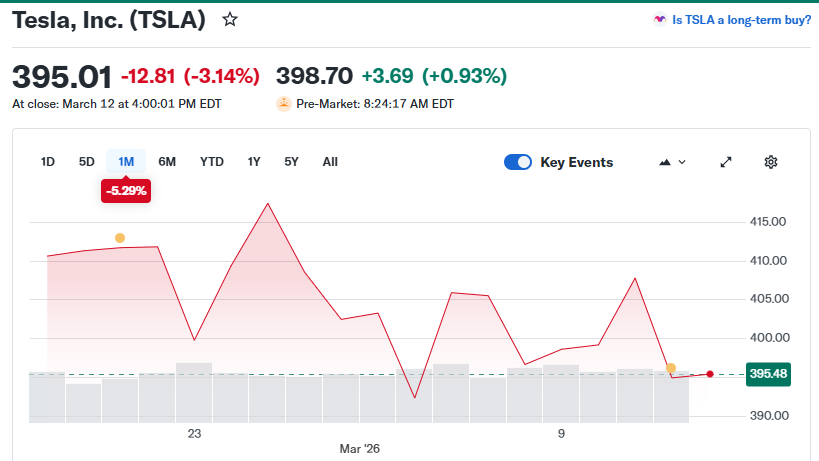
Tesla shares have experienced noticeable volatility in recent trading sessions. The stock has declined more than 9% since the start of the year, with shares recently trading below $400, reflecting a shift in investor confidence.
Investor sentiment across several online market communities has also moved toward a more negative outlook. Data tracking retail investor discussions shows Tesla’s sentiment score recently fell to 28 out of 100, indicating a strongly bearish tone among retail traders.
While retail sentiment does not always determine market direction, such discussions often reflect broader concerns already being evaluated by institutional investors and financial analysts.
One of the most widely discussed concerns centers on Tesla’s vehicle delivery outlook, which remains one of the most important indicators of the company’s operational health.
Vehicle Deliveries Remain A Key Indicator
Tesla’s vehicle deliveries have historically served as one of the most closely monitored metrics for evaluating the company’s growth trajectory and production performance.
Recent reports indicate that Tesla’s full-year 2025 vehicle deliveries declined by approximately 9% compared with the previous year. At the same time, the company’s net income fell by roughly 47%, reflecting increasing pressure on profitability.
Forecast data from prediction markets suggests there is currently a 78.5 % probability that Tesla’s first-quarter 2026 deliveries will fall below 350,000 vehicles.
If that projection proves accurate, it would represent the third consecutive year of declining delivery growth, marking a notable shift from Tesla’s earlier phase of rapid expansion.
For investors, vehicle delivery numbers serve as a direct measure of market demand, production efficiency, and the company’s ability to scale operations within the competitive electric vehicle market.
Increasing Competition In Electric Vehicles
Competition within the global electric vehicle industry has intensified significantly as automakers race to improve battery technology, charging infrastructure, and manufacturing efficiency.
One development attracting investor attention involves ultra-fast charging technology capable of recharging electric vehicles in approximately five minutes. Breakthroughs such as this have increased investor focus on whether Tesla can maintain its technological advantage within the EV sector.
The global electric vehicle market is evolving rapidly, with manufacturers introducing new battery innovations, charging solutions, and cost-reduction strategies designed to accelerate EV adoption.
As competition grows, investors are paying closer attention to whether Tesla can continue delivering technological innovation while defending its market share.
Leadership Changes Add Uncertainty
Tesla has also experienced several executive departures in recent months.
One notable development involved the departure of a senior finance executive who had worked with the company for more than 17 years, raising questions about leadership continuity and strategic stability.
Leadership transitions can introduce uncertainty for investors because executive teams play a central role in shaping financial planning, corporate strategy, and long-term operational decisions.
Energy Division Continues To Expand
Despite challenges within the automotive segment, Tesla’s energy division has demonstrated strong growth.
The company reported record energy storage deployments totaling 14.2 gigawatt-hours during the fourth quarter, reflecting growing demand for battery storage systems used in residential, commercial, and grid-scale applications.
Revenue from the energy segment increased approximately 25% year over year, highlighting the expanding role of renewable energy storage technologies within the company’s broader business model.
However, the energy segment currently represents a smaller portion of Tesla’s total revenue compared with its automotive operations, meaning its growth has not yet fully offset the slowdown in vehicle deliveries.
What Industry Analysts Are Watching Next
Industry analysts will closely monitor how the leadership transition process unfolds in the coming months. The appointment of a new chief executive could influence the company’s strategic direction, artificial intelligence roadmap, and product development priorities.
At the same time, the company’s strong subscription revenue growth, expanding artificial intelligence capabilities, and large recurring revenue base continue to support its position as a major player in the global software industry.
The key focus will be whether the leadership transition strengthens the company’s current growth strategy or introduces new initiatives within the rapidly evolving digital technology landscape.


