
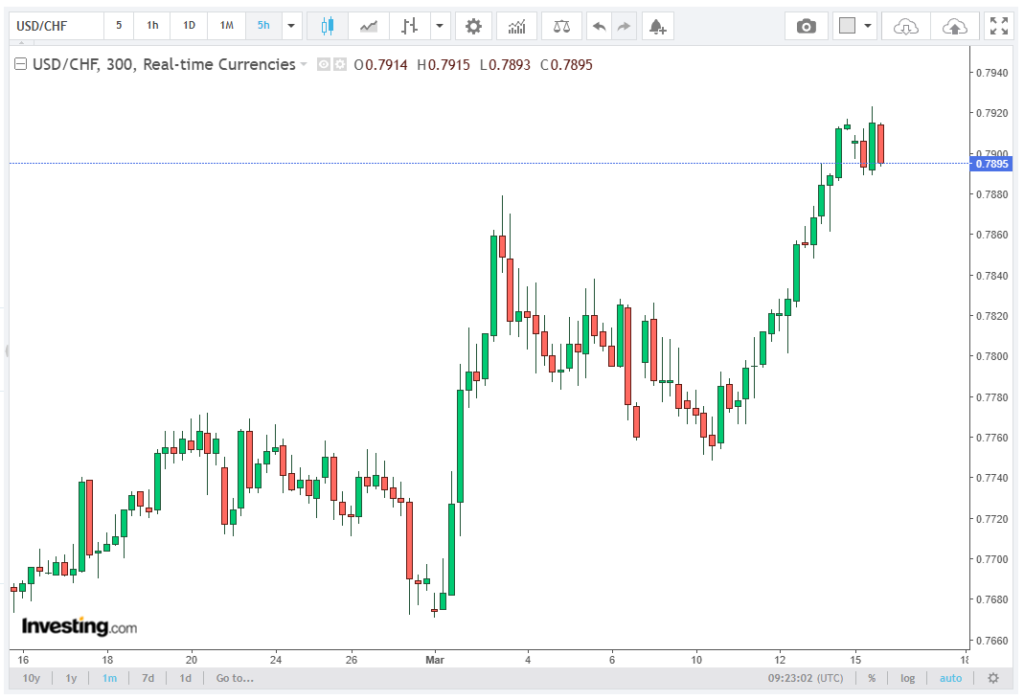
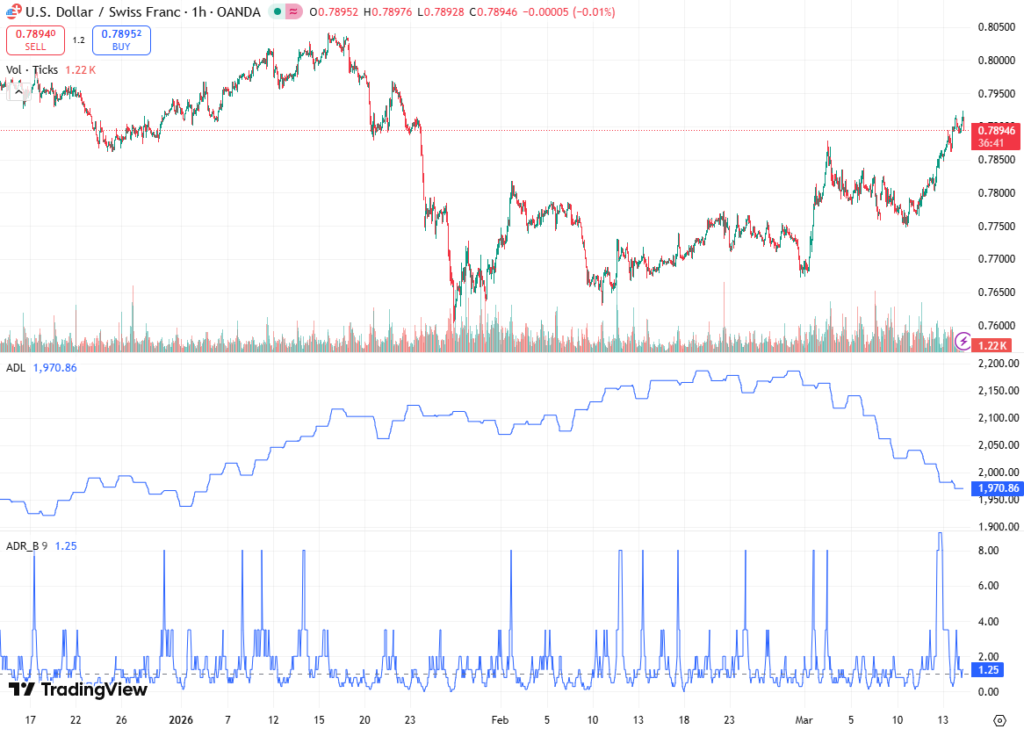
The USD/CHF currency pair fell below the 0.7900 level on Monday, reversing four consecutive days of gains. During Asian trading hours, the pair hovered around 0.7890, reflecting a weakening US Dollar (USD) as risk aversion in the markets eased.
Reports that the United States (US) may announce a coalition to escort ships through the Strait of Hormuz contributed to the decline in the greenback against the Swiss Franc (CHF). Noxi Rise’s brokers deliver a detailed and comprehensive look at this subject in this article.
US Dollar Weakens Amid Geopolitical Developments
The US Dollar has been under pressure as global traders reassess geopolitical risks in the Middle East. Market sentiment shifted following news that the US might form an international coalition to secure maritime traffic in the strategically vital Strait of Hormuz, easing concerns over potential disruptions to oil supplies.
USD/CHF reflects this shift, as a softer risk aversion environment typically reduces demand for the USD, traditionally viewed as a safe-haven currency. After gaining momentum in the previous four sessions, the pair’s retreat to 0.7890 signals traders’ cautious optimism regarding the potential stabilization of regional tensions.
US Energy Secretary Signals Potential End to US-Israel Conflict
Adding to market dynamics, US Energy Secretary Chris Wright stated that he expects the US-Israel conflict with Iran to conclude within “the next few weeks.” This development could allow oil supplies to normalize and potentially reduce energy prices, which have been under pressure due to regional tensions.
Such comments from senior US officials tend to have a direct impact on currency pairs tied to global risk sentiment, including USD/CHF. A decline in oil price volatility may reduce the need for risk-averse positioning, further weakening the US Dollar as investors rotate towards riskier assets.
Middle East Tensions Keep Traders Cautious
Despite easing sentiment, traders remain wary due to recent military activity in the region. Reports indicate that US forces targeted every military site on Kharg Island over the weekend, a critical hub responsible for nearly 90% of Iran’s oil exports. While the US President asserted that oil infrastructure was not struck, Iran has threatened retaliatory measures against any US-linked oil facilities.
These developments maintain a level of geopolitical risk premium in the market, supporting CHF’s appeal as a safe-haven currency. Consequently, while the USD/CHF may trend lower, the Swiss Franc’s upside could be partially capped by broader global risk dynamics.
Potential Coalition to Secure Strait of Hormuz
The US President has called on allied nations, including the UK, France, China, and Japan, to assist in securing the Strait of Hormuz, a critical chokepoint for global oil shipments. Speculation about a potential White House announcement regarding the coalition has bolstered market optimism, prompting a retreat in risk-averse positions.
Meanwhile, European Union (EU) foreign ministers convened in Brussels to discuss a possible naval response to the effective closure of the Strait. The combination of US-led and EU-led initiatives could ease shipping tensions, further influencing USD/CHF and broader FX market sentiment.
Swiss Franc Gains Support Amid Safe-Haven Demand
The Swiss Franc (CHF) continues to benefit from its safe-haven status, as traders remain cautious amid persistent geopolitical risks. USD/CHF could see further downside pressure as CHF buying interest persists, particularly during periods of regional tension.
However, the Swiss National Bank (SNB) has indicated a readiness to intervene in FX markets, which may limit CHF’s upside potential. Investors are therefore balancing risk-averse flows into the Swiss Franc against potential central bank action, keeping the pair within a defined trading range.
Technical Outlook for USD/CHF
From a technical perspective, the USD/CHF has lost momentum after its recent rally, with the 0.7900 level acting as immediate support. A sustained break below this mark could open the door for further declines towards 0.7850, where the next technical support zone lies.
Conversely, a rebound could see the pair test 0.7950–0.7970, which has previously acted as a resistance area. Traders should also watch for volatility spikes in response to geopolitical headlines or central bank announcements, which could trigger rapid short-term movements in the FX market.
Conclusion
In summary, the USD/CHF pair has weakened to around 0.7890 as the US Dollar retreats amid easing risk aversion. Comments from US Energy Secretary Chris Wright and potential coalition announcements regarding the Strait of Hormuz have fueled optimism, while persistent Middle East tensions continue to support the Swiss Franc.
With the Federal Reserve expected to maintain its policy stance and the SNB signaling readiness to intervene, USD/CHF is likely to remain sensitive to geopolitical developments and energy market dynamics. Traders should monitor key levels and headlines closely, as risk sentiment continues to shape the trajectory of the pair in the coming weeks.


