
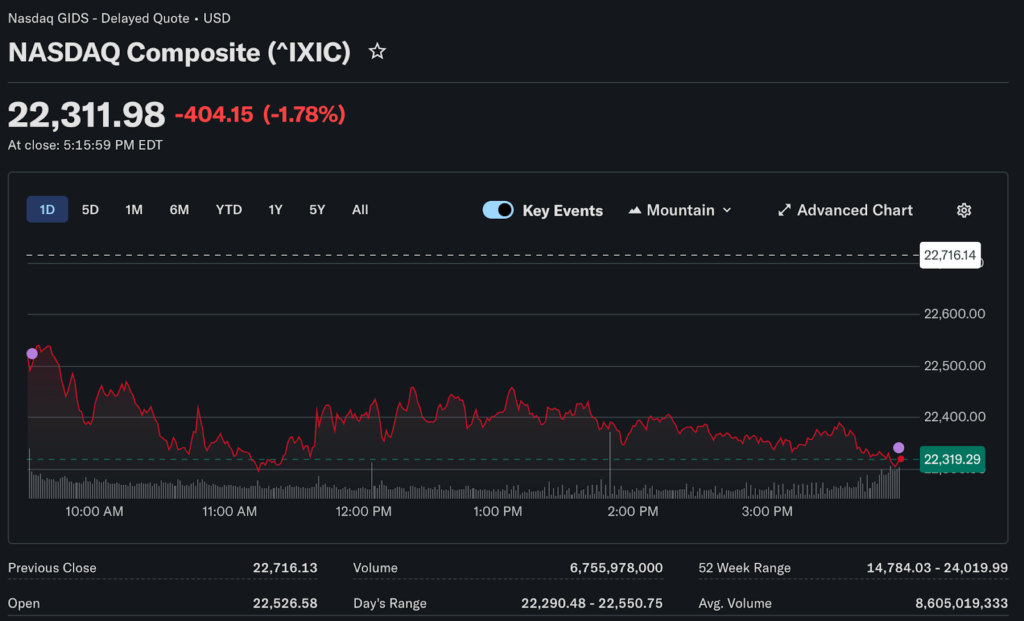
The brief calm in oil markets on Wednesday did not survive the week. By Thursday, Brent and WTI were hovering just under $100 per barrel as fresh evidence of a widening Middle East conflict erased the prior session’s modest pullback and sent the S&P 500 down 1.52%, the Dow down 1.6%, and the Nasdaq down 1.78%.
What shifted in the market’s thinking was not just the price level but the framing; analysts and portfolio managers are no longer treating this as a short, sharp disruption with a predictable endpoint. Lead financial expert at TibiPro examines what an open-ended conflict scenario means for asset pricing, the economic data still arriving, and which market signals are telling a more complete story than equity indexes alone.
When the Oil Relief Rally Lasts Less Than 24 Hours
Wednesday looked briefly constructive. Oil pulled back from its highs, and the IEA’s formal announcement of a 400 million barrel coordinated reserve release gave investors a tangible policy response to point to. The relief lasted one trading session.
By Thursday morning, Brent and WTI were back near $100 as conflict headlines expanded rather than contracted. A record intervention failing to hold prices down for even a full day is a specific market signal. The fear premium in crude is not driven by inventory concerns that releases can address; it is driven by uncertainty about duration and geographic scope.
The Strategic Reserve Math Is Uncomfortable
Tapping US strategic reserves at the scale proposed takes the country to approximately 240 million barrels, the lowest level since the 1980s. The percentage draw required is roughly 40% of current holdings. For context, the release at the start of the Ukraine-Russia conflict in 2022 was larger in political visibility but smaller proportionally.
The strategic petroleum reserve was designed to cover a finite gap between supply disruption and market normalization. Using it at this pace works through the buffer faster than the situation is resolving. If the Strait stays constrained through April, reserve adequacy becomes a separate market concern layered on top of the oil price risk.
Bond Markets Are Saying Something Stocks Are Not
While equity indexes provide a convenient daily barometer for sentiment, the bond market is offering a more nuanced read on where the real economic stress is building. The 10-year Treasury yield climbed through the week, and the long end of the curve is bearing the brunt of the adjustment, with the 30-year yield approaching 4.9%. That move is not just about inflation expectations responding to oil prices; it also reflects a reassessment of the US fiscal position at a moment when emergency reserve releases and potential defense spending increases are both heading in the same direction.
Higher long-term rates pressure mortgage markets, corporate borrowing costs, and equity valuations simultaneously. The 30-year fixed mortgage rate already posted its biggest weekly increase since the Liberation Day tariff shock. If long rates keep climbing, housing headwinds arrive well before any direct oil-price impact on consumer budgets.
The Inflation Data Still Matters, Even If the Numbers Look Dated
The Personal Consumption Expenditures index for January is due Friday morning, and the Job Openings and Labor Turnover Survey for the same month will provide the clearest pre-conflict snapshot of consumer spending and labor market conditions available. There is a reasonable argument that January data feels several news cycles removed from the current reality, given how dramatically oil prices have moved since that period.
January PCE sets the baseline from which the oil shock’s inflationary pass-through will be measured. If the underlying trend was already running warm before the disruption, the combined trajectory becomes more concerning for the Fed. One full rate cut is currently priced for all of 2026, down from two earlier in the year, and a hot PCE print could narrow even that expectation.
Tech Stocks Quietly Near Correction Territory
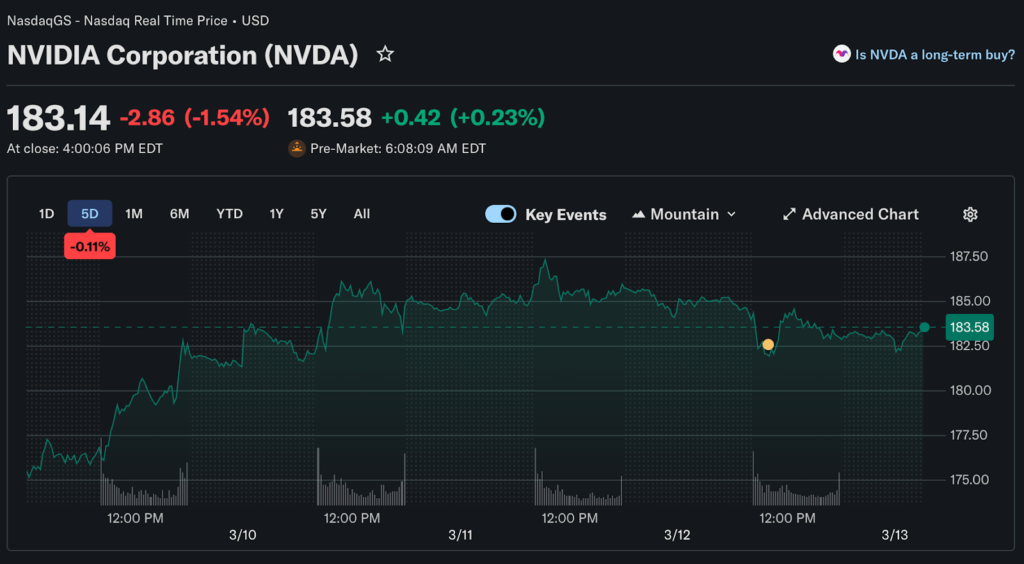
A slower-moving story is building in large-cap technology. NVIDIA, Apple, and Tesla are each approaching 10% below their October 2024 highs, near the conventional correction threshold. These names carry disproportionate index weight, so their trajectories matter regardless of energy market developments.
NVIDIA’s GTC conference and Micron Technology’s March 18 earnings are the two near-term catalysts that could stabilize or accelerate the sector’s slide. A strong Micron print alongside positive Nvidia guidance would provide the earnings anchor the AI sector needs. A miss from either, arriving with continued oil-driven macro pressure, shortens the path to an actual correction.
The Market Is Asking a Question Nobody Can Answer Yet
All of Thursday’s market moves reduce to one variable: duration. A conflict resolved in weeks produces one set of outcomes for inflation, rates, and equity valuations. A conflict extending through the second quarter produces a substantially different one. Wall Street is not positioned confidently for either, which is why indexes are grinding lower without conviction. The JOLT data, Friday’s PCE, and any Strait of Hormuz operational updates will provide more actionable information than any single day’s price movement in stocks.


