
Two of the biggest names in private credit told investors this week they could not have their money back, at least not all of it. Morgan Stanley and Cliffwater each hit the ceiling on quarterly redemption limits after withdrawal requests arrived at volumes their funds were never built to handle.
Junior broker at TibiPro breaks down the mechanics behind the caps, what drove the rush for exits, and why the episode is exposing structural fault lines in a $1.8 trillion market that expanded rapidly with relatively little friction.
How the Caps Actually Work
Private credit interval funds are legally required to offer quarterly repurchase windows, but those windows come with hard limits on how much can be paid out. Cliffwater’s $33 billion Corporate Lending Fund received first-quarter redemption requests equal to 14% of its total shares, a record for the vehicle. SEC rules allowed the fund to pay out a maximum of 7%, which is what investors received, leaving the other half of their requests unfulfilled.
Morgan Stanley’s North Haven Private Income Fund ran into similar arithmetic. Investors requested withdrawals worth roughly 10.9% of net asset value, but the prospectus caps quarterly redemptions at 5%. The fund returned approximately $169 million, satisfying less than half of the total tender requests. BlackRock applied a similar cap to its HPS Corporate Lending Fund earlier that week, and Blackstone reported comparable first-quarter redemption pressure across its private credit vehicles.
The Equity Market Reaction Was Swift
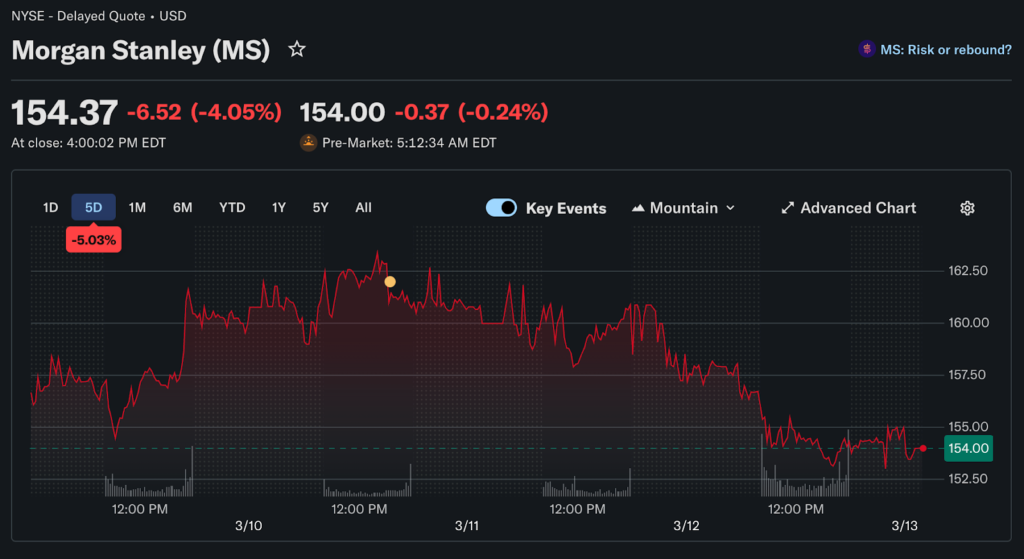
Morgan Stanley shares dropped 4.1% on Thursday following the redemption cap disclosure. Blue Owl Capital fell 4.6%, Blackstone shed 4.8%, and Apollo Global slid 5.5%. Those are single-session moves in publicly traded equities, not losses inside the funds themselves, but they reflect how quickly institutional investors repriced their exposure to alternative asset managers once the scale of the redemption pressure became clear.
Year-to-date losses put the single-session moves in context. Blue Owl Capital is down 42% in 2026, Blackstone has lost 34%, and Apollo Global Management has fallen roughly 31%. Thursday’s disclosures accelerated a repricing that the public equity market had already been building into alternative asset managers for months.
Software Loans Are the Pressure Point
The redemption surge traces to a specific concern about what is happening inside these loan portfolios. Private credit has substantial exposure to software and technology companies that borrowed against projected recurring revenue streams, now being revised downward as AI erodes the pricing power of legacy software businesses.
A Morgan Stanley research report from February 2026 flagged that roughly 50% of software sector loans held in private credit portfolios carry credit ratings of B- or below, indicating an elevated probability of default. More than 80% of those loans were originated to private, sponsor-backed companies that disclose limited financial data publicly, making an independent assessment of credit quality difficult for investors trying to evaluate their own risk exposure.
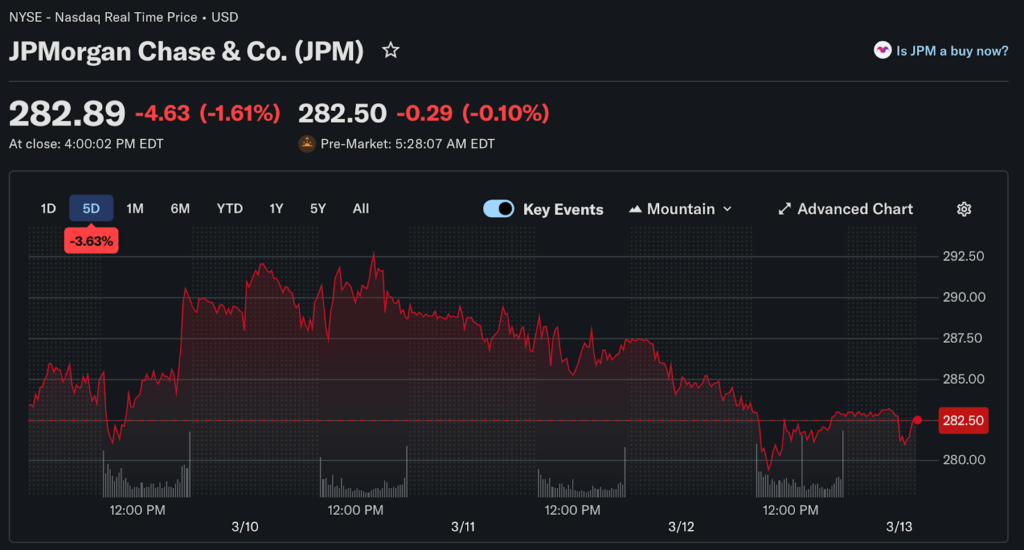
JPMorgan Chase responded to deteriorating software-linked loan valuations by marking down those assets and tightening lending terms for some private credit funds. The move has not triggered broad margin calls, but it set a precedent other lenders are now monitoring closely.
Why These Vehicles Were Not Built for This
The structural design of retail-accessible private credit vehicles creates a mismatch that functions smoothly in calm markets and breaks down under stress. The asset side consists of long-duration, illiquid corporate loans that cannot be sold quickly at fair value. The liability side carries a quarterly redemption feature, implying liquidity that the underlying assets do not support. When requests arrive near or above the regulatory cap, managers choose between selling assets at distressed prices or capping redemptions to protect the portfolio.
Cliffwater’s CEO noted in his investor letter that the fund honored a 7% redemption request during the pandemic in 2020. That comparison actually highlights the concern rather than easing it. Pandemic-driven redemptions were a temporary liquidity event.
What the Fund Managers Said
Both firms leaned on performance data in their investor letters. Cliffwater cited an annualized net return of approximately 9.4% since June 2019 and near-zero historical realized losses. Morgan Stanley referenced over $2.2 billion in available liquidity as of January 31 and an 8.9% three-year annualized net return for North Haven.
The numbers are real, but investors seeking redemptions are not doubting past performance. They are uncertain about what the next three years look like for portfolios with concentrated software loan exposure in an environment where AI is actively disrupting that sector’s economics.
The Wider Market Question
Private credit expanded from roughly $500 billion a decade ago to $1.8 trillion today, driven partly by retail access through interval funds and non-traded vehicles. The liquidity mismatch embedded in those structures was flagged by regulators and academics long before this week.
The industry’s standard response was that diversification across vintage years would prevent synchronized redemption pressure. When AI’s impact on software credit quality hits a large portion of multiple funds at once, that diversification argument has considerably less weight.


