
If you’re considering investing $4,000 in cryptocurrency, choosing between XRP (Ripple) and Dogecoin requires a clear understanding of what each asset represents. While both are well-known, they serve very different purposes. XRP is designed as a payments-focused digital asset, aiming to improve cross-border transactions by making them faster and more cost-efficient for financial institutions. Its value is closely tied to adoption, regulatory clarity, and real-world utility within the global payments system.
Dogecoin, on the other hand, began as a joke and remains largely community- and sentiment-driven. Its price movements are often influenced by social media trends and public figures rather than underlying fundamentals. While this can lead to sharp short-term gains, it also introduces higher unpredictability.
According to SkylineSFO brokers, investors should look beyond hype and assess use cases, growth potential, market stability, and long-term viability. Aligning your choice with your risk tolerance and investment goals is key when deciding between these two very different cryptocurrencies.
XRP: A Tech-Driven Financial Tool with Tangible Use Cases
XRP is the native coin of the XRP Ledger (XRPL), which was designed by Ripple to facilitate rapid transactions with minimal fees. In the September 2025 quarter, Ripple reported continued progress with its core business model, aiming to modernize global financial transactions. Unlike Dogecoin, which lacks a specific use case, XRP has a clear and growing role in cross-border payments, merchant transaction settlement, and financial compliance.
The XRPL is already supporting tokenized real-world assets, such as stocks and bonds, with over $212 million currently traded. Ripple continues to expand its services for financial institutions, strengthening real-world adoption and utility.
In April 2025, Ripple made a $1.2 billion acquisition of the prime broker Hidden Road, further solidifying its push to modernize financial workflows. Ripple’s launch of Ripple USD stablecoin is another indication that it’s working to create a complete suite of services for the financial sector.
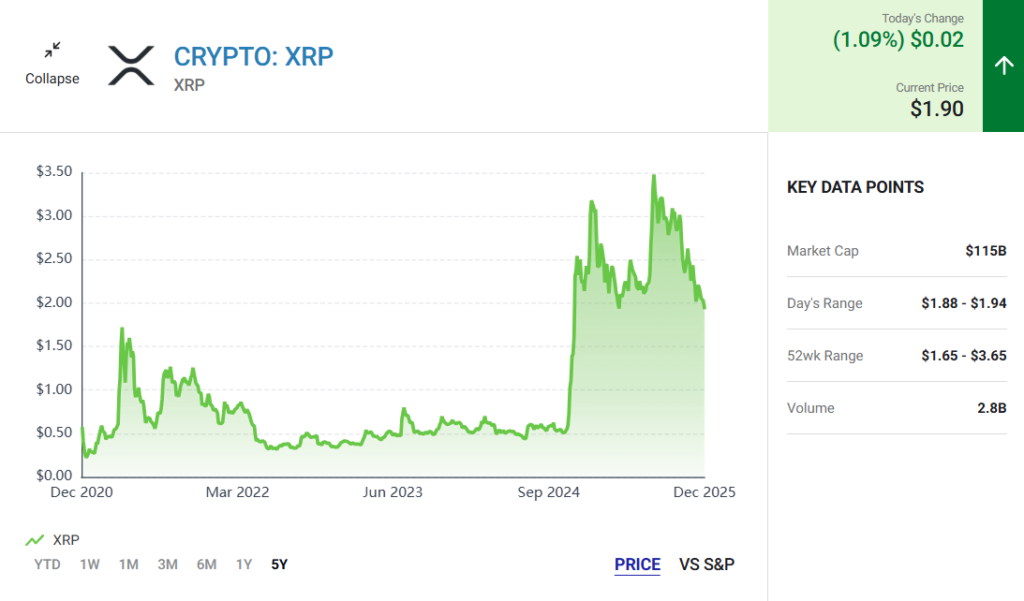
The big win for XRP is that Ripple has a strong incentive to grow the coin’s value, as more financial institutions using the XRP Ledger would drive up demand for XRP itself. XRP is actively marketed, with a business model that solves real-world problems in finance, making it a compelling investment for those who believe in its growth trajectory.
Dogecoin: Popular, but Lacking Long-Term Value Capture
On the other hand, Dogecoin is the first dog-themed cryptocurrency, often associated with the meme culture of the crypto world. While Dogecoin’s community is loyal and it has enjoyed periods of market hype, the coin lacks any real utility or value capture mechanism.
Despite being included in an ETF like XRP, Dogecoin faces a fundamental flaw: its unlimited supply. Unlike other cryptocurrencies like Bitcoin, which have a fixed supply, Dogecoin’s ongoing issuance of new coins dilutes the value of existing ones.
This makes it difficult for Dogecoin to build long-term value unless it sees constant new demand. As it stands, Dogecoin’s price is driven by attention, and like the weather, that attention can shift unexpectedly.
While Dogecoin can gain in value during periods of cultural momentum (often fueled by celebrities or viral trends), it doesn’t have a clear value proposition to sustain its price in the long run. Investors seeking long-term stability are likely to find Dogecoin a risky and volatile choice.
The Verdict: Why XRP Deserves Your $4,000 Over Dogecoin
If you are looking for an investment with long-term potential and real utility, XRP is the better choice. Unlike Dogecoin, which depends on external factors like market hype and attention, XRP offers clear use cases in the financial sector, especially with its cloud and AI initiatives.
Ripple’s focus on modernizing cross-border payments and financial systems positions XRP for consistent growth, while its ongoing business developments and partnerships, like those with Amazon and Fluidstack, continue to boost its market presence.
While Dogecoin may benefit from periodic hype and cultural trends, it lacks the same structural growth and value capture mechanisms that make XRP a more reliable, tech-driven investment. Additionally, XRP is supported by Ripple’s ongoing initiatives, which create an upward demand cycle for the coin, unlike Dogecoin, which is largely driven by sentiment.
For long-term investors, XRP is the superior choice. It’s a growing cryptocurrency with real-world applications and a solid growth strategy, whereas Dogecoin is more of a meme coin with little to no long-term value creation strategy.
Conclusion
In conclusion, XRP is the clear winner for investors looking to make a meaningful impact with their $4,000 investment. Many trading experts suggest that XRP offers both strong growth potential and real-world use cases in the financial sector, while Dogecoin remains a high-risk investment driven mainly by market sentiment and attention. For those seeking to invest in cryptocurrency with a solid long-term outlook, XRP presents a more compelling opportunity.


