
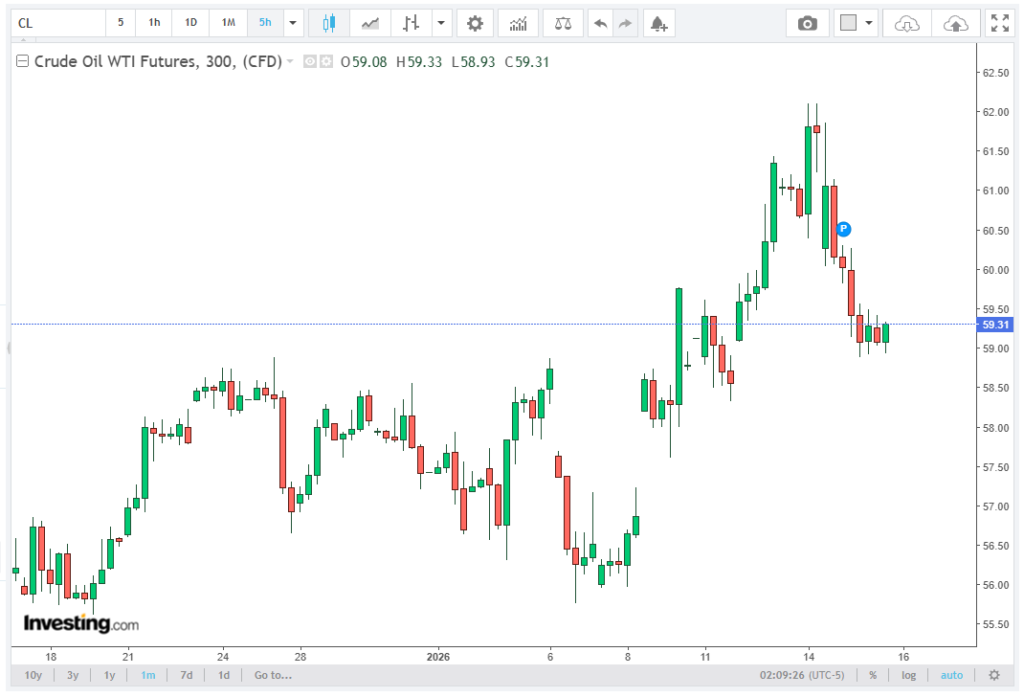
West Texas Intermediate (WTI) crude oil futures edged lower around the $58.80–$59.00 region on Friday morning, exhibiting subdued price action after sharp losses earlier in the week. The WTI benchmark, after posting three straight weeks of gains, is now positioned for a modest weekly decline as geopolitical risk premiums that had buoyed energy markets dissipate. This article from FlexFlume offers readers a clear and thorough explanation of the subject.
With the pervasive geopolitical risk component abating, oil markets have transitioned from fear‑driven trading to supply–demand fundamentals, culminating in a recalibration of crude values under persistent pressure from ample inventories and overhang concerns.
Geopolitical Risk Premiums Fade
Easing of Military Risk Narratives
Last week’s oil price rally, which saw WTI breach the $60 handle, was largely fueled by fears that escalating tensions between the United States and Iran, and the potential for military intervention, could disrupt global oil supply. However, recent statements by the US President, which signaled a reduction in the likelihood of imminent military action against Iran, helped reverse much of that risk‑driven premium.
The US President publicly indicated that reports of ongoing violent crackdowns inside Iran were diminishing, and that, at least in the near term, a broad military strike was not being pursued, thereby reducing suppliers’ perceived geopolitical risk. These remarks alleviated fears of direct disruption to Iranian crude exports and lowered the chance of constriction or closure of critical shipping lanes such as the Strait of Hormuz, a key conduit for approximately one‑fifth of the world’s seaborne oil.
Market Reaction
As a result, both WTI and Brent crude futures posted meaningful declines mid‑week, reversing earlier gains that had been underpinned by geopolitical speculation. Bloomberg and Reuters confirmed that prices slid as investor confidence in a peaceful near‑term outcome strengthened.
Technical and Sentiment Dynamics
Price Structure and Support Levels
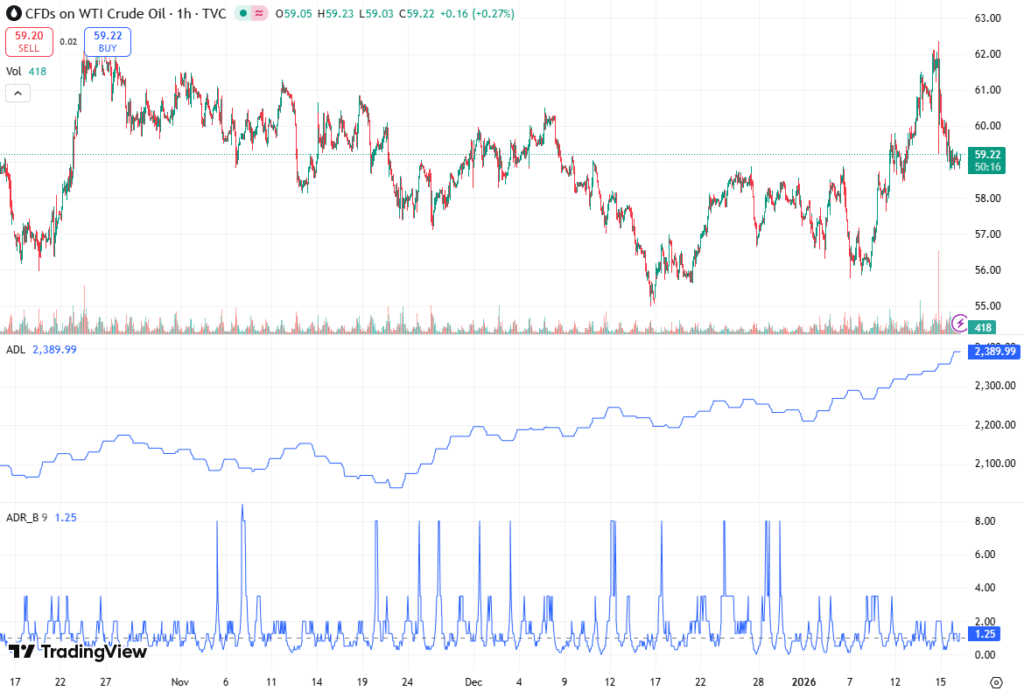
From a technical analysis perspective, WTI has struggled to hold above the psychologically significant $60.00 level, and the brief failure above this threshold has emboldened short positions. According to market technicians, near‑term support lies in the $58.50–$59.30 band, with a decisive break below this zone potentially exposing further downside toward lower support near $55–$56.00.
Sentiment Shift
Bullish sentiment that dominated earlier in the week has given way to caution. With the immediate risk premium unwinding, traders are refocusing on inventory data, OPEC+ output forecasts, and demand signals from major consuming nations such as China and the United States.
Fundamental Factors: Supply and Demand Considerations
Inventory Pressures
Despite geopolitical narratives dominating headlines for much of the week, U.S. crude inventory builds, reported higher than expectations, have weighed on prices. This reinforces a core bearish supply narrative that has reemerged as geopolitical risk premiums recede.
OPEC and Global Supply Outlook
Broader market analysis suggests that even though organizations like OPEC have projected movement toward a more balanced market, ample global supply remains a dominant theme for 2026. Analysts continue to factor in strong production from non‑OPEC sources, including U.S. shale and offshore projects, which could counterbalance any marginal supply disruptions elsewhere.
Shell’s Long‑Term Demand Outlook
In a separate development that underscores the diversity of perspectives on energy markets, Shell’s 2026 Energy Security Scenarios report outlined a bullish long‑term outlook for global energy demand, projecting significantly higher primary energy needs by 2050. While this does not directly impact short‑term crude pricing, it highlights the contrasting long‑term demand trajectory versus current near‑term pricing pressures.
Geopolitical Enforcement and Sanctions Impact
U.S. Seizure of Venezuela‑Linked Tanker
Compounding geopolitical narratives, the United States recently seized another Venezuela‑linked oil tanker in the Caribbean, identified as the Veronica, ahead of a scheduled meeting between the US President and Venezuelan opposition leader María Corina Machado. This marks at least the sixth vessel seized under U.S. sanctions targeting Venezuelan oil shipments, emphasizing continued enforcement against sanctioned crude flows.
Implications for Venezuelan Supply
The persistent enforcement actions against Venezuela’s oil trade complicate supply patterns from a nation that historically has been a significant exporter. These sanctions and associated vessel seizures may create dispersion effects in the medium term, potentially supporting higher premiums in select crude grades or delivery points.
Outlook: Short‑Term Risks Amid Broader Uncertainty
In the short term, WTI remains highly sensitive to headline risk. Even as the immediate threat of a U.S.–Iran military clash has receded, markets are still poised for volatility should tensions re‑escalate or new data alter the supply–demand balance.
From a fundamental standpoint, the interplay between geopolitical developments, inventory trends, sanctions enforcement, and demand expectations will continue to shape crude price action. Traders should prepare for range‑bound trading, as significant catalyst events remain scarce but could emerge at any time.


