
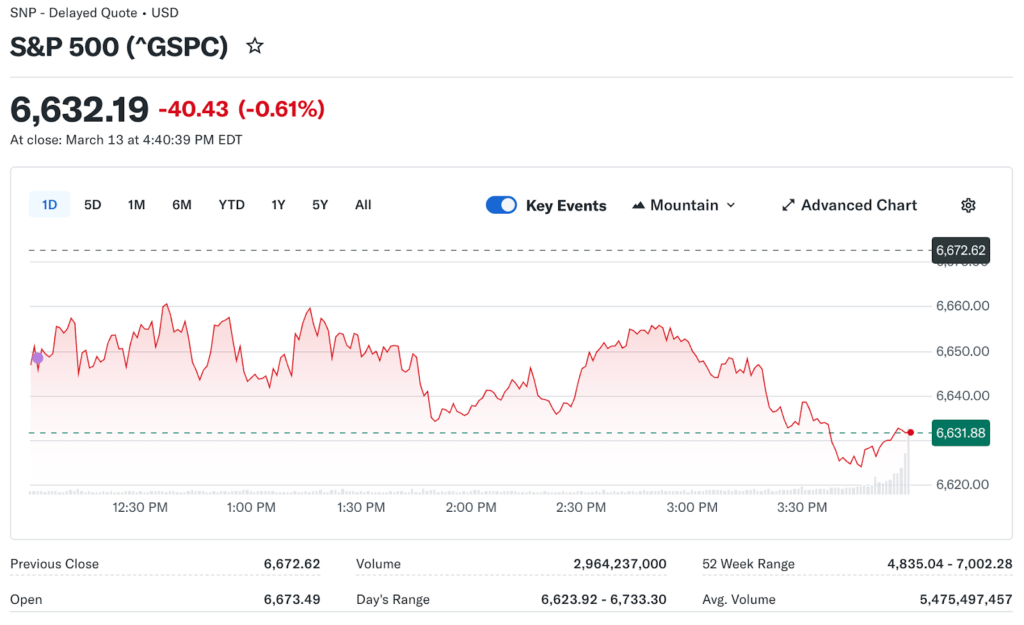
Capital has been quietly rotating into the least exciting corners of the stock market for the past three weeks. Utilities and consumer staples have outperformed the broader US market consistently since the Iran conflict began escalating in late February. Junior brokers at Noxi Rise say this kind of rotation is not about finding growth. It is about protecting what already exists, and that behavioral shift carries more information about institutional sentiment than any single earnings report.
The pattern is recognizable. It is the same rotation that showed up in 2022, in 2018, and in late 2015. When fund managers are genuinely uncertain about the macro environment, they reduce exposure to economically sensitive sectors and concentrate in industries that generate predictable cash flows regardless of GDP growth.
What the Sector Performance Data Confirms
The energy sector is leading the S&P 500 year to date, but that outperformance is supply-disruption driven rather than demand-driven. Strip that out, and the defensive orientation of the broader market becomes even clearer. Consumer staples and utilities are the two most consistent performers outside energy over the past month.
Utilities make money whether the economy grows quickly or barely at all. People pay electricity bills in recessions. Regulated utility rates provide earnings predictability that software and consumer discretionary companies simply cannot match when demand slows. That predictability commands a premium in uncertain environments even when the absolute return is modest.
Consumer staples exhibit the same logic. Household goods, food products, and personal care items see relatively stable demand across economic cycles. The volatility profile is lower. The dividend yields are competitive. For institutional investors managing liability-driven portfolios, those characteristics matter far more than upside potential during risk-off periods.
The Starbucks vs McDonald’s Split Reveals Something Deeper
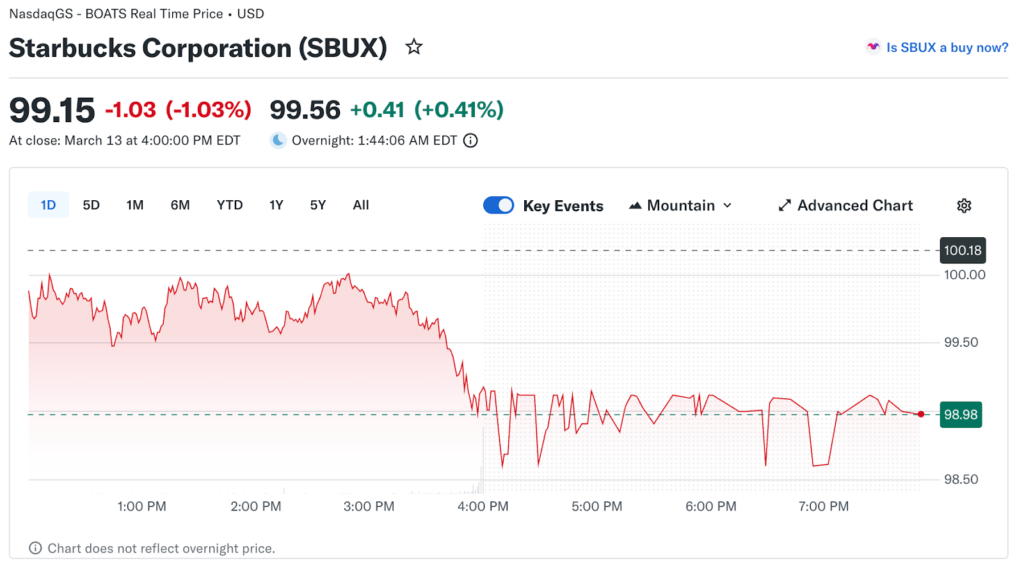
Starbucks is up 18% year to date, with the stock gaining 1.8% in March alone. McDonald’s is down more than 4% month to date, with management planning a $4 breakfast bundle launch in April as a value response to tightening consumer budgets.
That divergence is more informative than it first appears. Starbucks customers tend to be higher-income, less sensitive to minor price increases, and more habitual in their purchasing behavior. McDonald’s customer base overlaps significantly with wage-sensitive households that cut back on dining frequency when budgets tighten.
The split suggests that consumer spending stress is concentrated in the lower and middle income segments of the market, while higher-income consumers are maintaining their habits. That pattern typically shows up in retail sales data and credit card spending reports before it appears in GDP figures.
What Defensive Rotation Does Not Protect Against
It is worth being clear about what moving into defensive sectors actually accomplishes and what it does not. Defensive positioning reduces volatility and provides dividend income. It does not prevent losses if the market falls sharply across all sectors, as it did in 2022 when both equities and bonds declined simultaneously.
In a genuine stagflation environment where earnings disappointments begin to accumulate across the economy, even defensive sectors reprice lower. The protection they offer is relative, not absolute. Investors who treat utilities and consumer staples as safe havens without understanding the conditions under which they still decline are making a partial risk assessment.
The Dividend Story in a World of Stubborn Inflation
One nuance worth tracking is the interaction between utility dividends and a higher-for-longer rate environment. Utilities are typically valued using dividend discount models that are sensitive to the risk-free rate. When long-term Treasury yields rise, the present value of future utility dividends falls, creating downward pressure on valuations even as the businesses themselves remain stable.
The current environment presents a mixed case for utilities specifically. The defensive appeal is genuine. But if the Federal Reserve signals zero rate cuts for 2026 on Wednesday, long-term yields could move higher, which would partially offset the defensive rotation benefit. That tension is something Noxi Rise junior brokers are monitoring closely in utility valuations this week.
The Defense Sector as a Separate Category
One sector that does not fit neatly into the traditional defensive rotation playbook is defense and aerospace. Boeing gained 2.56% in a single session last week, standing out clearly against broad index declines. Defense spending expectations have risen sharply since the Iran conflict began, with the US Secretary of Defense confirming the largest wave of airstrikes on Iranian targets.
Defense companies benefit directly from increased government procurement during active military engagements. Unlike utilities and consumer staples, which offer stability, defense stocks in active conflict environments can offer genuine upside. That combination of defensive characteristics with conflict-driven upside is creating a separate category of demand that institutional allocators are responding to.
The rotation playing out across markets right now is not a single uniform move. It is a collection of smaller portfolio adjustments all pointing in the same direction: away from growth and toward predictability.


