
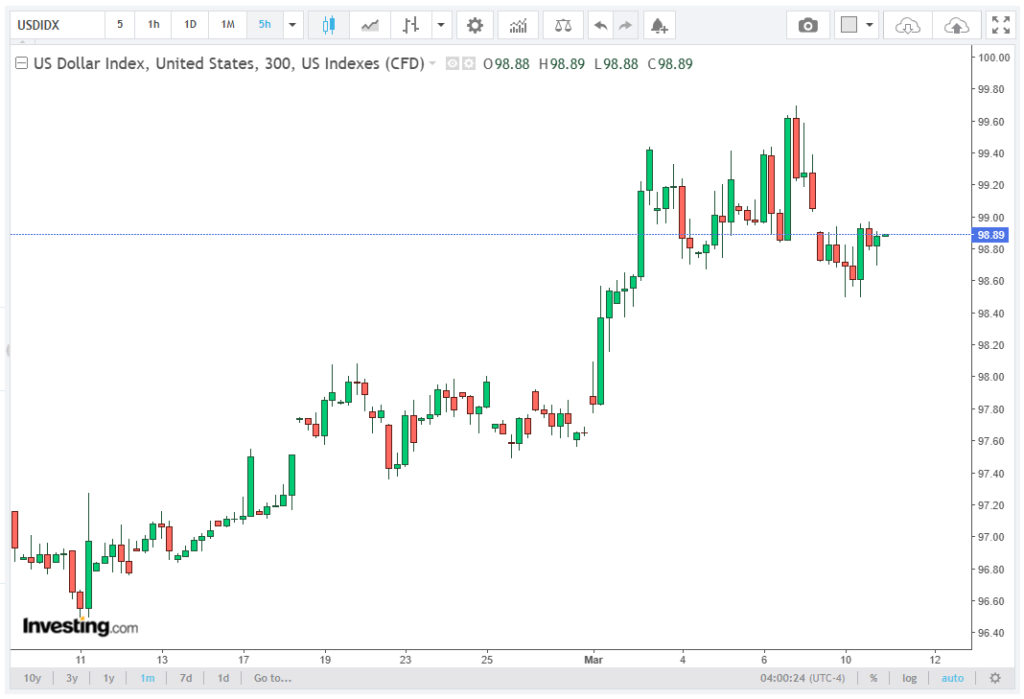
The US Dollar Index (DXY), which tracks the performance of the US Dollar (USD) against six major global currencies, edged lower to around 98.80 during the early European trading session on Wednesday. This decline follows remarks by the US President, who suggested that the ongoing Middle East conflict could end “very soon.” This article offers a detailed analysis of the topic from the experts at BlitzPine Group.
The US President’s comments triggered a risk-on sentiment in global markets, reducing demand for the USD as a safe-haven currency. Traders and analysts are now closely monitoring the upcoming US February Consumer Price Index (CPI) inflation report, which could provide further clues on the Federal Reserve’s interest rate trajectory.
US Signals Potential End to Middle East Conflict
During a press conference on Monday, the US President stated that the war against Iran may conclude “very soon,” while simultaneously suggesting that oil prices could decline in the near term. These statements came amid heightened geopolitical tensions that had previously supported safe-haven flows into the USD.
In addition, the US administration hinted at the possibility of seizing control of the Strait of Hormuz, a crucial maritime chokepoint, to safeguard global oil shipments. The prospect of increased security in the strait eased fears of an oil supply disruption, placing downward pressure on the DXY.
Despite these comments, the US President did not provide a clear timeline for halting attacks, leaving uncertainty in the markets. The Israeli military recently launched a new wave of strikes targeting Iran and Lebanon, underscoring the ongoing volatility in the Middle East. Such geopolitical risks can act as a support mechanism for the US Dollar, suggesting that the DXY may remain sensitive to further developments.
Geopolitical Risks and Market Implications
The US President emphasized that the war would continue until Iran loses its capacity to threaten Washington, Tel Aviv, and allied nations. Concurrently, the Islamic Revolutionary Guard Corps (IRGC) escalated operations against US and Israeli assets, announcing targeted actions against the enemy’s technological infrastructure.
These developments create a complex backdrop for currency markets. On one hand, the US President’s optimistic remarks about a potential end to the conflict have reduced safe-haven demand, weighing on the DXY. On the other hand, continued hostilities in the Middle East and military escalations could reignite risk aversion, potentially supporting the US Dollar in the near term.
Analysts note that such geopolitical uncertainty often results in short-term volatility for the USD, especially against currencies like the Japanese Yen (JPY) and Swiss Franc (CHF), which traditionally benefit from risk-off flows.
Focus Shifts to US February CPI Data
As geopolitical tensions fluctuate, investors are turning attention to domestic economic indicators, most notably the US February Consumer Price Index (CPI). The headline CPI is forecasted to increase by 2.4% year-over-year, reflecting moderate inflationary pressures. The core CPI, which strips out food and energy prices, is expected to rise by 2.5%, providing a clearer picture of underlying inflation trends.
The CPI report is widely regarded as a key gauge of the US economy’s inflationary environment, and its results could influence expectations for Federal Reserve policy. A softer-than-expected reading may prompt speculation about a pause or slowdown in interest rate hikes, potentially weakening the USD. Conversely, higher-than-expected inflation could support further tightening, boosting the DXY.
Implications for Traders and Investors
For traders, the combination of geopolitical developments and upcoming economic data makes the current market environment particularly dynamic. Short-term movements in the US Dollar Index are likely to be influenced by both the US President’s statements and the CPI outcomes.
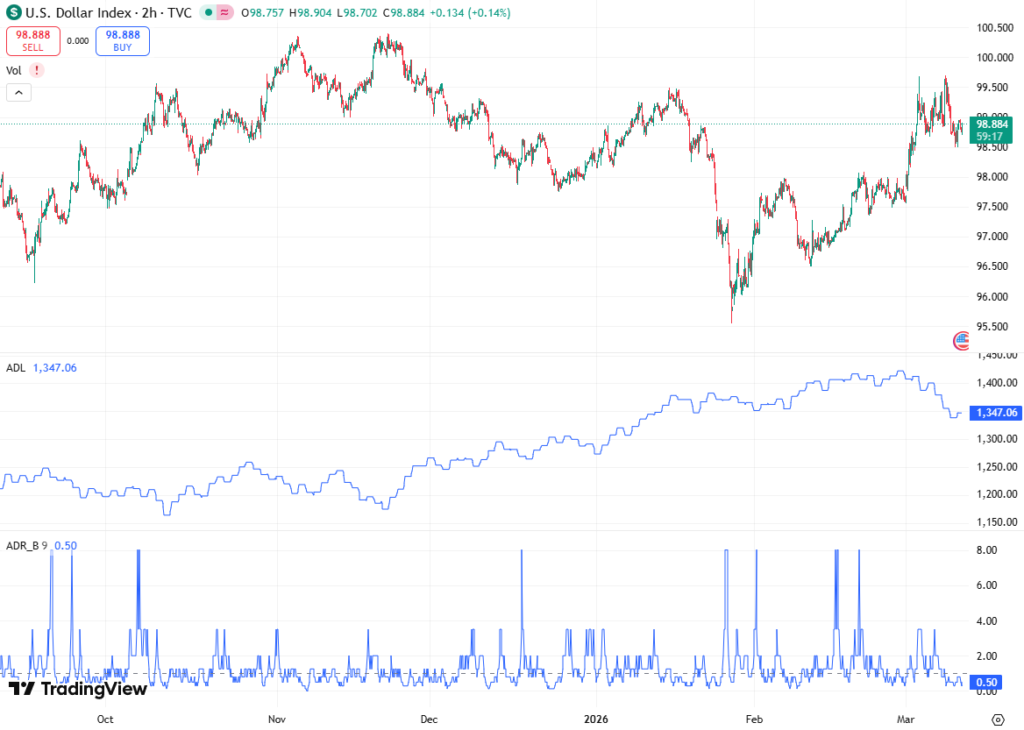
Currency strategists highlight that the DXY’s decline below 99.00 reflects market sensitivity to perceived improvements in Middle East stability. At the same time, investors remain cautious, as any sudden escalation or unexpected CPI data could reverse these trends.
For portfolio managers, these conditions underscore the importance of risk management and hedging strategies. Exposure to USD-denominated assets could be affected by both geopolitical shocks and domestic inflation surprises, highlighting the need for dynamic allocation in currency, bond, and equity markets.
Conclusion
The US Dollar Index continues to face headwinds following the US President’s optimistic war comments, with the DXY sliding to around 98.80. While a potential easing of Middle East tensions has temporarily reduced safe-haven demand, lingering uncertainties and ongoing military actions could provide intermittent support for the USD.
Investors and traders are now eagerly awaiting the US February CPI report, which will be a critical signal for inflation trends and the Federal Reserve’s policy path. Combined, geopolitical developments and domestic economic data are likely to dictate short-term USD movements, emphasizing the importance of strategic positioning and market vigilance.


