
U.S. Treasury markets are exhibiting an unusual degree of calm, with benchmark yields trading inside an exceptionally narrow range that is approaching historical extremes. The lack of movement has drawn growing attention from bond investors, particularly as similar periods of prolonged stability in the past have often preceded sharp repricing events rather than gradual adjustments.
Market specialists from PrimeLuno are closely examining this extended yield inertia, noting that firmly anchored policy expectations may be masking rising underlying tension within the fixed-income market. While near-term guidance appears stable, the widening disconnect between rate immobility and volatility across other asset classes is becoming increasingly difficult for investors to ignore.
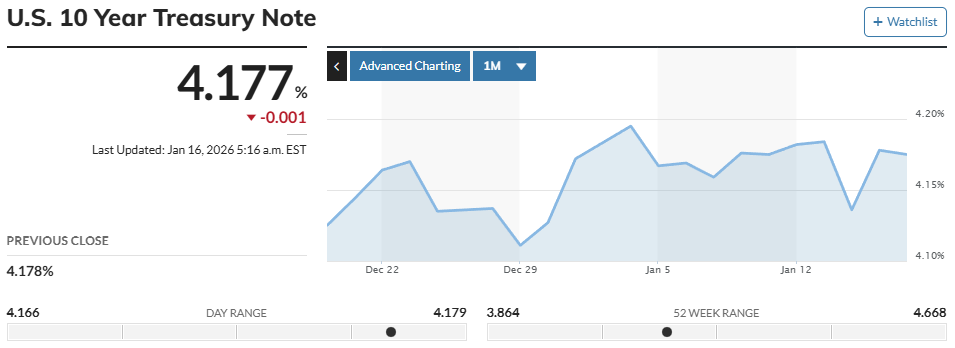
The yield on the 10-year U.S. Treasury note is on track for a fifth consecutive week of minimal fluctuation. Since 2006, the median weekly range for the benchmark yield has been around 16 basis points, yet over the past five weeks the range has remained below 10 basis points, marking the longest comparable stretch since 2020.
Policy Expectations Anchor the Yield Curve
The persistence of this compressed trading range reflects strong market conviction that U.S. monetary policy will remain steady in the near term. Investors appear comfortable with existing guidance, resulting in subdued trading activity despite a series of macroeconomic and geopolitical developments that would typically provoke stronger reactions in interest rates.
Since mid-December, the 10-year yield has oscillated within a tight corridor between 4.1% and 4.2%, a range that has endured through key economic releases, legal developments involving senior monetary officials, and rising geopolitical risks. During early London trading on Friday, benchmark yields hovered near 4.17%, underscoring the durability of this compression.
Market participants continue to question what catalyst might be required to force a decisive break from this range. Historically, such extended periods of yield inertia have rarely resolved without a pronounced directional move.
Why Low Volatility Raises Concern
Unusually low volatility in Treasury yields often unsettles fixed-income investors. While stability can indicate confidence, it may also signal complacency. Analysts warn that when yield ranges become excessively narrow, the eventual adjustment tends to be abrupt rather than orderly.
Historical precedent supports this caution. In late 2020, the 10-year yield traded between 0.64% and 0.80% for roughly six weeks, one of the most compressed ranges on record. That calm was followed by a sharp reprice, with yields more than doubling over the following four months as economic recovery accelerated and large-scale fiscal spending plans took shape.
Although current yield levels are materially higher, the underlying dynamic remains relevant. When volatility is suppressed for extended periods, even modest changes in expectations can produce outsized market responses.
Alternative Measures Reinforce the Signal
Other volatility indicators convey a similar message. The 10-year Treasury’s rolling one-month range has narrowed to roughly 8 basis points, placing it in the 99th percentile of the lowest readings recorded since 2000. This highlights how unusually constrained current market conditions have become by long-term historical standards.
Options markets echo this assessment. Pricing for interest-rate futures implies significantly smaller expected swings compared with previous tightening or easing cycles. In 2023, comparable contracts priced in movements of around 100 basis points, whereas current pricing suggests expectations closer to half that range, indicating reduced demand for volatility protection.
A Market Out of Sync With Other Assets
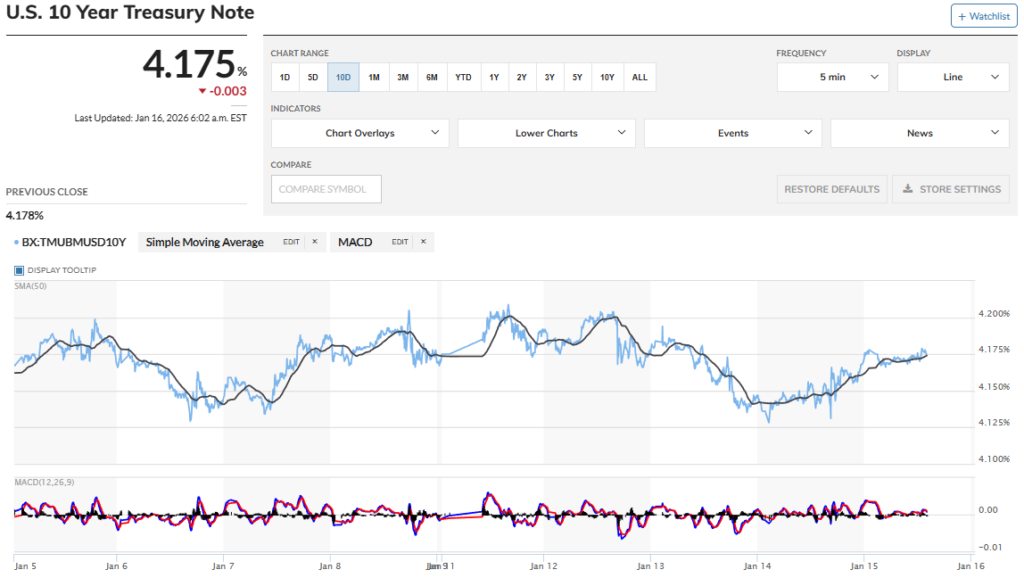
What makes the Treasury market’s calm particularly striking is its divergence from other asset classes. Commodities, equities, and precious metals have all experienced sharp swings in recent weeks, reflecting shifting risk sentiment and macro uncertainty. In contrast, interest-rate futures remain largely unmoved.
This divergence has raised concerns that bond markets may be underpricing potential shocks or that entrenched policy assumptions are overwhelming other risk signals. Some strategists argue that the longer yields remain pinned, the greater the risk that the eventual breakout will be disorderly.
Implications for Bond Investors
For fixed-income investors, the current environment presents a strategic challenge. Stable yields reduce short-term risk and support carry-focused strategies, but compressed volatility limits opportunity while increasing exposure to sudden repricing events.
Portfolio managers are increasingly weighing whether to position defensively ahead of a potential breakout or to maintain exposure in anticipation that policy stability will persist longer than expected. The absence of meaningful movement has complicated timing decisions, particularly for traders reliant on momentum or volatility signals.
Outlook for Treasury Markets
Looking ahead, the sustainability of this yield compression will depend on shifts in economic data, fiscal developments, and confidence in monetary governance.
If history is a guide, extended inertia in Treasury yields rarely lasts indefinitely. When it ends, the adjustment often favors higher yields, reflecting renewed risk premiums rather than gradual normalization.
For now, the bond market remains locked in a holding pattern. Whether this calm represents genuine stability or the prelude to turbulence is likely to become clearer as the year progresses.


