
Financial markets experienced a wave of caution this week as investors reassessed risk exposure following sudden disruptions in global oil supply chains. Rising energy prices and concerns over inflation pushed many fund managers to rebalance portfolios, leading to a noticeable shift in capital flows across global equity funds.
Financial experts from BlitzPine Group recently analyzed how these developments are influencing global investment trends. According to their analysis, the surge in oil prices combined with geopolitical tensions has increased uncertainty among portfolio managers, prompting several institutional investors to reduce exposure to equities while reallocating capital toward safer assets.
Although global stock markets have demonstrated resilience over the past year, the recent shift in capital flows suggests that many participants are beginning to adopt a more defensive investment stance as energy volatility introduces new risks to economic stability.
Global Equity Funds Record Significant Withdrawals
Recent data indicates that global equity funds experienced net outflows of approximately $7.05 billion during the week ending March 11. This represents the largest weekly withdrawal since December, highlighting a notable change in sentiment among institutional investors.
Large capital withdrawals from equity funds often signal increased caution among portfolio managers who may be preparing for potential economic turbulence. Such movements are frequently linked to macroeconomic factors including inflation concerns, commodity price volatility, and global supply disruptions.
Analysts note that when uncertainty increases in energy markets, equity markets often react quickly as investors attempt to adjust portfolio risk exposure.
Oil Prices Rise As Supply Disruptions Intensify
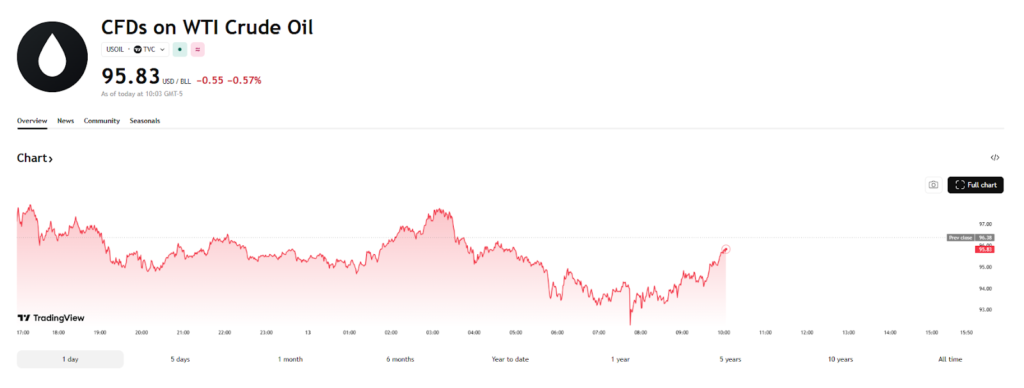
Energy markets have been under significant pressure following disruptions to oil shipping routes in the Gulf region. Brent crude prices recently climbed above $100 per barrel, reflecting one of the largest supply disruptions reported by traders in recent years.
Shipping activity through the Strait of Hormuz, one of the world’s most critical oil transit routes, has reportedly slowed significantly, creating additional pressure on global supply chains. As a result, energy traders have begun pricing in the possibility of prolonged supply constraints.
Higher oil prices can contribute to inflationary pressures across the global economy because energy costs influence transportation, manufacturing, and logistics expenses. When oil prices surge, companies often face higher operating costs, which can ultimately affect corporate profitability and consumer spending power.
Volatility Indicators Reflect Growing Uncertainty
Market uncertainty has also become visible through volatility indicators commonly used by financial analysts. The CBOE Volatility Index, often considered a measure of financial market uncertainty, recently climbed to 28.15, marking its highest level since November.
Elevated volatility levels generally signal that investors are anticipating larger price movements in equity markets. During periods of heightened uncertainty, traders often increase hedging strategies or reduce exposure to risk-sensitive assets.
While volatility spikes do not necessarily predict long-term market declines, they frequently coincide with portfolio adjustments by institutional investors attempting to manage downside risk.
Regional Investment Flows Show Diverging Trends
Capital flows across global regions also revealed contrasting investment strategies.
Equity funds focused on the United States recorded approximately $7.77 billion in withdrawals during the week. European equity funds also experienced significant redemptions totaling $7.71 billion.
In contrast, Asian equity funds attracted inflows of roughly $6.15 billion, suggesting that some investors see stronger growth potential in certain Asian markets despite broader global uncertainty.
Sector Allocation Reflects Defensive Positioning
Sector-based investment flows also revealed changes in portfolio allocation strategies.
Financial sector funds experienced withdrawals of approximately $2.31 billion, while healthcare funds recorded outflows of roughly $1.31 billion. These movements suggest that some investors are reducing exposure to sectors considered sensitive to economic uncertainty.
At the same time, industrial sector funds attracted inflows of approximately $1.31 billion, indicating continued interest in companies associated with infrastructure development, manufacturing expansion, and supply chain activity.
Bond And Cash Allocations Increase
While equity funds experienced capital withdrawals, fixed-income investments and liquidity-focused instruments saw stronger demand.
Global bond funds received approximately $5.72 billion in inflows, although this represented the lowest weekly inflow in ten weeks. Short-term bond funds recorded particularly strong demand with inflows reaching $5.75 billion, reflecting a growing preference for lower-risk debt instruments.
Key Trends Financial Analysts Are Watching Moving Forward
Financial analysts will continue monitoring developments in global energy markets and the potential impact on inflation, corporate earnings, and economic growth. Sustained increases in oil prices could influence transportation costs, supply chains, and consumer spending patterns.
At the same time, future capital flows into equities, bonds, and cash-equivalent instruments will provide insight into how institutional investors are adjusting portfolio strategies in response to changing economic conditions.
The direction of financial markets in the coming weeks may depend heavily on whether energy supply disruptions stabilize or continue to influence commodity prices and investor sentiment across major asset classes.


