
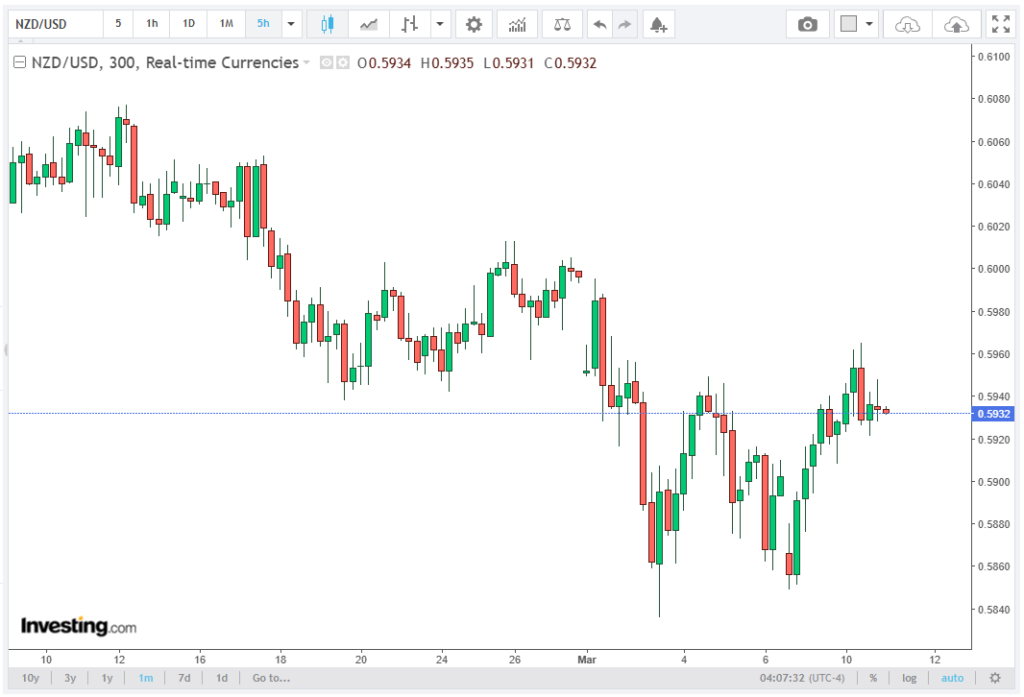
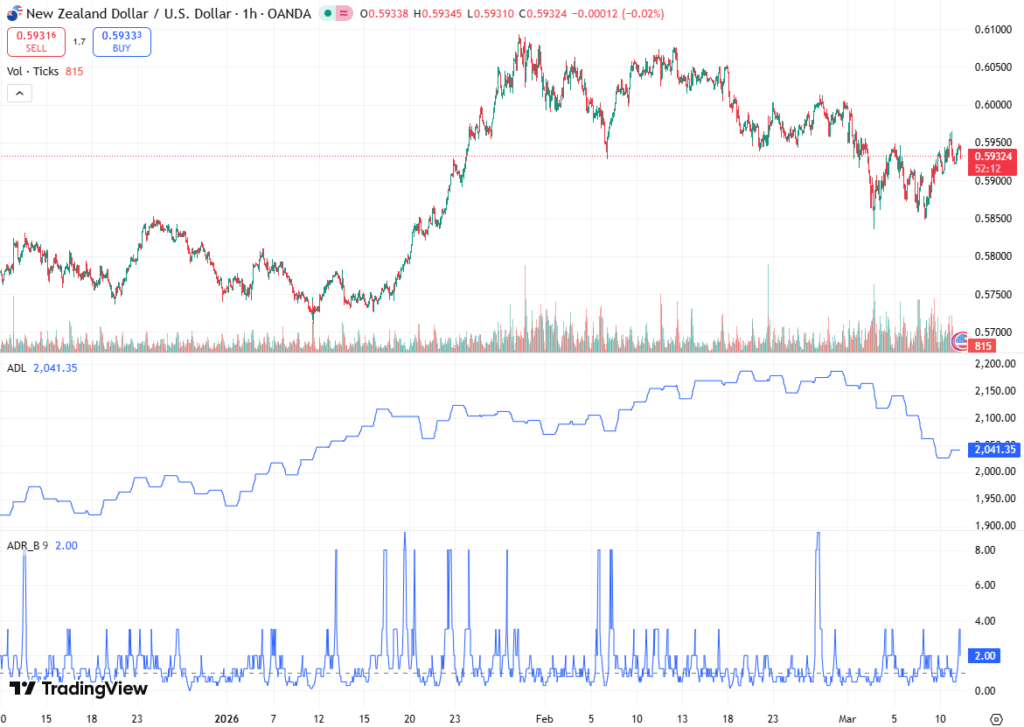
The NZD/USD currency pair continues to trade below 0.5950, reflecting ongoing risk aversion in global markets. During Asian trading hours on Wednesday, the pair hovered around 0.5930, after relinquishing earlier daily gains.
Market participants are closely monitoring the situation in the Middle East, where escalating geopolitical tensions continue to drive volatility in foreign exchange (FX) markets. The brokers at BlitzPine Group explore every aspect of this topic in the following article.
Despite the overall subdued trend, the New Zealand Dollar (NZD) has displayed intermittent strength due to rising expectations of Reserve Bank of New Zealand (RBNZ) rate hikes in 2026. Investors are increasingly concerned about domestic inflation pressures, particularly amid the surge in crude oil prices, which could compel the RBNZ to adopt a more aggressive monetary policy stance.
Rising Oil Prices and Domestic Inflation Concerns
Crude oil markets remain volatile, largely influenced by uncertainties surrounding the Iran conflict and disruptions to shipping through the Strait of Hormuz, a critical maritime chokepoint.
According to The Wall Street Journal, the International Energy Agency (IEA) is considering its largest-ever oil reserve release to stabilize global markets. However, these measures have yet to fully ease concerns, and oil price spikes continue to fuel inflation expectations in New Zealand.
Higher fuel costs are directly impacting transportation and energy prices, which, in turn, could exacerbate headline inflation and put additional pressure on the RBNZ to consider policy tightening. Analysts suggest that persistent inflation pressures may push the central bank toward interest-rate hikes sooner than previously anticipated.
Market Expectations of RBNZ Rate Hikes
Market participants are increasingly pricing in RBNZ interest-rate hikes in 2026, marking a notable shift from previous guidance. Only last month, the RBNZ indicated that the official cash rate (OCR) was likely to remain around 2.25% throughout the year.
The change in market sentiment is supported by robust inflation data and the ongoing oil price rally, which has heightened concerns about domestic cost pressures. Traders view a strengthening NZD as reflective of speculative positioning anticipating higher yields in the near term.
However, despite the NZD’s resilience, the pair remains in negative territory, as global risk sentiment is dominated by the Middle East conflict and broader geopolitical uncertainty.
US Dollar and Safe-Haven Flows
The US Dollar (USD) has edged lower following modest gains in the previous session. Safe-haven demand for the Greenback could re-emerge amid rising geopolitical tensions, particularly as concerns around Iran continue to escalate.
The US President commented late Monday that the Middle East conflict could end soon, providing some temporary optimism in the markets. Yet, according to Reuters, US officials reported on Tuesday that military operations in Iran are intensifying, limiting prospects for diplomatic resolution.
The contrasting narratives between political optimism and on-the-ground military developments are contributing to market volatility and ongoing risk aversion, directly influencing the NZD/USD trading dynamics.
Global Market Volatility Pressures NZD/USD
Ongoing risk aversion in global markets is also being influenced by heightened volatility in equity and bond markets, as investors reassess their risk exposure in light of the Middle East conflict. Safe-haven flows toward the US Dollar (USD) and Japanese Yen (JPY) are providing additional headwinds for the NZD, keeping it under pressure despite domestic inflation concerns.
Market participants are closely monitoring commodity-linked currencies like the NZD, as rising oil and energy costs could feed into broader inflation expectations, ultimately shaping the Reserve Bank of New Zealand’s (RBNZ) policy path.
Technical Outlook for NZD/USD
From a technical perspective, the NZD/USD is struggling to break above the 0.5950 resistance level, signaling continued bearish pressure. Support levels around 0.5920–0.5930 are currently being tested, reflecting investor caution in light of geopolitical risk and inflation uncertainty.
Short-term traders are closely monitoring risk sentiment, oil price movements, and RBNZ policy expectations, as these factors are likely to dictate the direction of the NZD/USD in the coming sessions. A decisive break above 0.5950 could signal temporary NZD strength, while a failure to hold the 0.5930 support may open the door for further downside toward 0.5900.
Conclusion
In summary, the NZD/USD remains subdued, trading below 0.5950, as risk aversion persists amid the Middle East conflict and rising oil prices. These developments have reinforced expectations for RBNZ rate hikes in 2026, supporting intermittent NZD strength.
Meanwhile, the USD continues to navigate safe-haven demand dynamics, influenced by geopolitical uncertainty and mixed signals from US political and military developments.
Traders and analysts will continue to monitor inflation trends, monetary policy expectations, and geopolitical risks to gauge the future trajectory of the NZD/USD pair, which remains sensitive to both domestic economic pressures and international risk factors.


