Thirty thousand attendees from 190 countries packed downtown San Jose on March 16, 2026, as NVIDIA’s annual GPU Technology Conference officially opened. The keynote at SAP Center drew more interest this year than any previous edition, and the timing could not be more loaded. Lead financial experts atNoxi Rise say the market is not just watching NVIDIA’s product announcements. It is watching for a signal about the health of the entire AI investment cycle.
With AI stocks losing momentum and geopolitical pressure weighing on markets, GTC carries more weight than a typical tech conference. Investors are treating it as a barometer for whether enterprise AI demand is still accelerating or beginning to plateau.
What the Conference Is Actually About This Year
GTC 2026 is built around the concept of AI as infrastructure. NVIDIA’s chief executive described the event as covering the full technology stack: energy, chips, infrastructure, models, and applications. That framing is deliberate. It positions NVIDIA not as a chipmaker riding a wave but as the connective layer holding the entire AI ecosystem together.
More than 1,000 sessions are scheduled across the four-day event. Topics range from physical AI and robotics to agentic AI systems and large-scale inference computing. The breadth of the program reflects how far AI deployment has moved beyond experimental use cases into core enterprise operations.
The Announcement Markets Are Watching Most Closely
Ahead of the keynote, NVIDIA circulated strong hints about an open-source AI agent platform called NemoClaw. If confirmed, NemoClaw would give enterprise clients a structured framework for building and deploying autonomous software agents without full dependence on cloud infrastructure.
The strategic logic is straightforward. Keeping developers building within NVIDIA’s software environment drives sustained demand for its hardware. It is less about competing with frontier AI labs and more about making NVIDIA the default platform that AI workflows run on. That stickiness, if achieved, has long-term margin implications that quarterly earnings reports do not fully capture.
NVIDIA is also expected to showcase its Isaac robotics platform and GR00T humanoid robot models, pushing into physical AI applications. Autonomous driving partnerships and further updates to its Alpamayo self-driving software stack are also on the agenda.
Why NVIDIA Became a Bellwether for the Whole Market
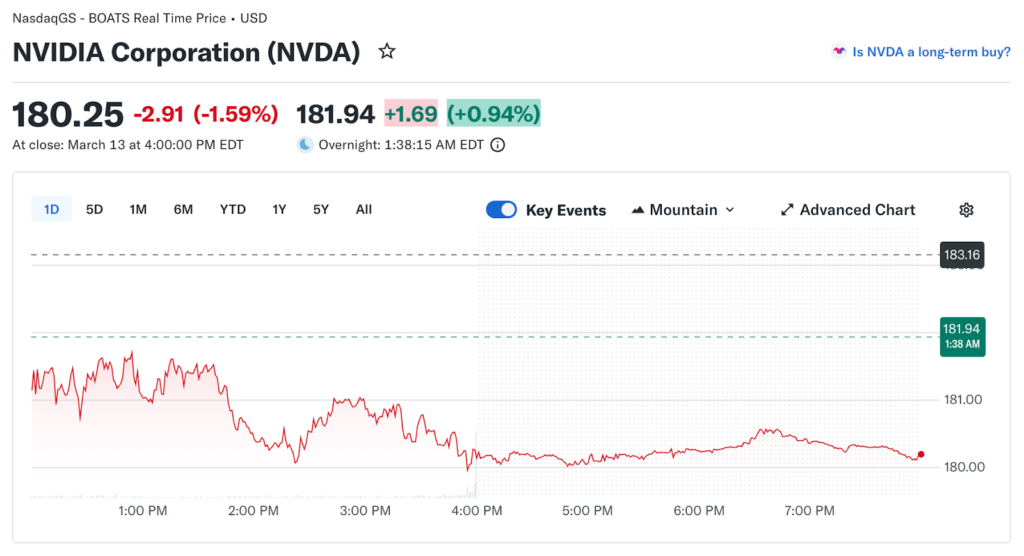
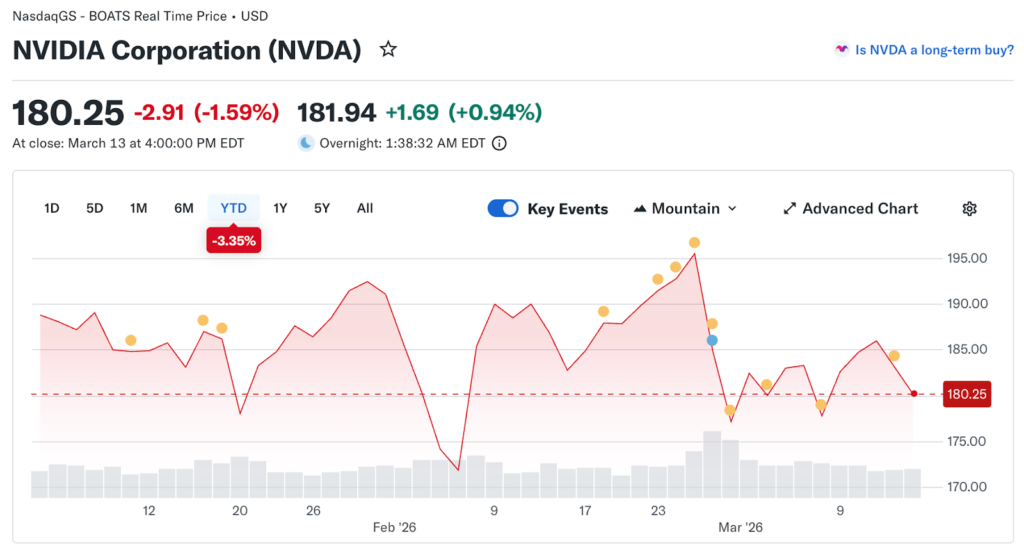
NVIDIA reported $215 billion in revenue for 2025, with $120 billion in profit. Those numbers place it in a category shared by very few companies in history. Its stock has risen more than 1,300% over five years, though it has traded relatively flat year to date amid the broader market pullback.
Bank of America reiterated a buy rating on NVIDIA, specifically heading into GTC, citing the conference as a positive catalyst. The firm’s bullish stance reflects the view that NVIDIA’s order backlog and customer commitments provide revenue visibility that most technology companies cannot match.
The broader concern among equity investors is whether AI spending growth will hold up if geopolitical disruption weighs on corporate budgets and energy costs keep rising. NVIDIA’s backlog data and any guidance updates shared during the conference will feed directly into how that question gets answered over the next quarter.
The Physical AI Push That Most Analysts Are Underweighting
Much of the pre-conference coverage has focused on chips and data centers. The robotics and physical AI story at GTC 2026 is drawing comparatively less attention, but Noxi Rise financial experts believe it deserves more.
NVIDIA’s investment in autonomous driving systems, humanoid robotics, and industrial automation represents a second growth curve that is largely separate from the AI cloud computing wave. GR00T, the company’s humanoid robot foundation model, is designed to sit at the center of that market. If enterprise robotics adoption follows a similar curve to AI software adoption, the addressable market expands well beyond what current valuation models are pricing in.
Huang’s keynote is expected to cover all five layers of the AI stack, with real-world deployment examples across healthcare, manufacturing, energy, and media. Those examples are not just demonstrations. They represent the commercial traction that justifies continued capital spending by NVIDIA’s largest customers.
What Investors Should Take Away from This Week
The GTC keynote is one of the few events where a single presentation has demonstrated the ability to move markets. Huang’s delivery tends to be dense with announcements, and the market typically processes them over several trading sessions rather than in a single reaction.
For investors watching from the sidelines, the most meaningful signal will not come from product reveals. It will come from how NVIDIA describes demand. Any language suggesting that AI infrastructure orders are accelerating or that the company is still supply-constrained on GPU capacity would be a strongly positive signal for the sector as a whole.
GTC 2026 runs through March 19. The keynote on March 16 sets the tone for everything that follows.


