
Indian equity markets lost nearly $240 billion in investor wealth within a single week as the US-Iran conflict intensified through early March 2026. The Sensex and Nifty 50 indices have been falling for three consecutive sessions. A senior financial analyst at Noxi Rise says the India story is the clearest illustration of how geopolitical shocks in one region create financial damage in economies far removed from the actual conflict.
India does not produce meaningful quantities of crude oil. It consumes enormous amounts of it. That asymmetry turns every oil price spike into a direct tax on the Indian economy, affecting everything from manufacturing costs to the trade balance to inflation management at the Reserve Bank of India.
The Transmission Mechanism from Strait to Sensex
India imports approximately 85% of its crude oil requirements. When Brent crude rises more than 11% in a single week, the cost increase flows through Indian supply chains within weeks. Fuel prices rise. Trucking and logistics costs go up. Manufacturers face higher input costs. Consumer goods become more expensive.
The Reserve Bank of India governor has warned publicly of ongoing risks from global instability. That warning signals that monetary easing, which the Indian economy was beginning to benefit from, could be disrupted if oil-driven inflation reaccelerates. Markets priced in that risk immediately. Capital flows that had been moving into Indian equities reversed as risk-off sentiment spread.
Aviation stocks and automobile sector shares were among the sharpest decliners, given their direct exposure to fuel cost increases. Banking stocks fell on concerns about credit quality if economic conditions deteriorate. The sell-off was broad rather than sector-specific.
The IPO Market Freeze
One of the more revealing consequences of the market turmoil is what has happened to India’s initial public offering calendar. Companies that had planned public listings are now delaying or withdrawing their applications. Investors in volatile markets demand higher risk premiums before committing capital to new issues, and the IPOs that would have cleared at favorable valuations two months ago no longer price attractively.
The IPO market functions as a leading indicator for broader risk appetite in emerging economies. When companies pull listings and investment bankers postpone roadshows, it signals that the capital markets window for new issuance has effectively closed. Recovery in IPO activity typically trails the broader equity market recovery by one to two quarters.
The Currency Pressure Compounding the Problem
Oil is priced in US dollars globally. When oil prices rise and emerging market currencies weaken simultaneously, the inflation impact on importing countries is multiplied. India’s rupee has been under pressure alongside other emerging market currencies as capital flows toward the dollar during risk-off periods.
A weaker rupee means that even if crude prices stabilize in dollar terms, Indian companies and consumers are paying more in local currency. That currency transmission effect is an additional layer of inflationary pressure on top of the underlying commodity price increase.
Bitcoin’s Brief Outperformance Tells a Broader Story
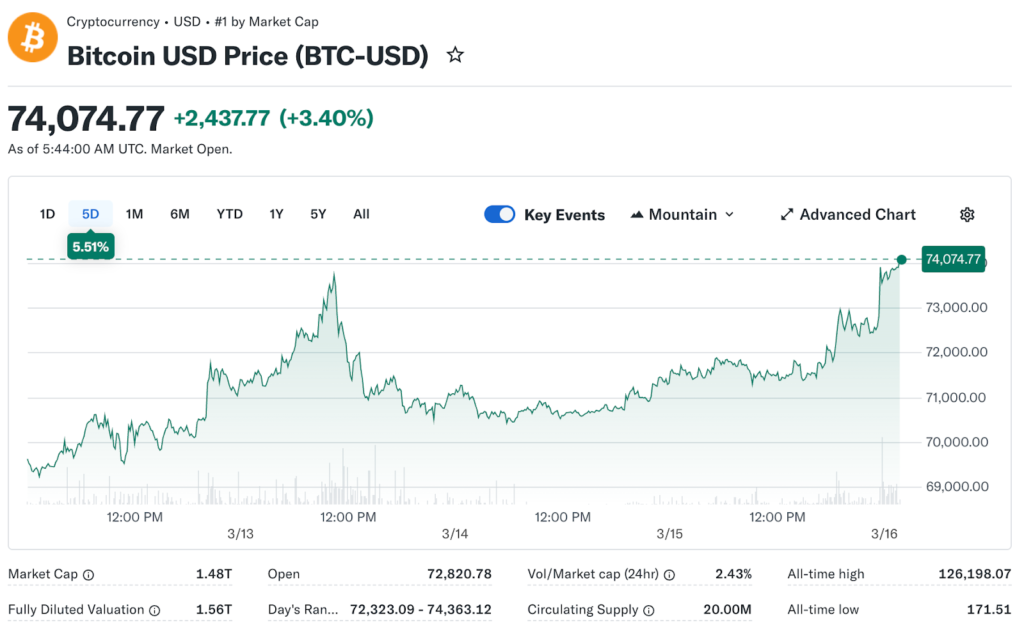
An interesting detail from early March was that Bitcoin briefly outperformed Indian and other emerging market equities when the conflict first escalated. On the first trading day following the initial strikes, Bitcoin recovered to $69,000 within 48 hours while the Sensex and other Asian benchmarks remained under pressure.
That relative performance difference illustrates a shift in how some institutional investors are thinking about digital assets in geopolitical stress environments. The correlation between Bitcoin and equities remains significant at 0.55 on a 30-day rolling basis, but the brief decoupling during a specific geopolitical shock was notable enough to attract analytical attention.
It does not mean Bitcoin is becoming the new gold. But it does suggest that in certain stress scenarios, the digital asset’s geopolitical neutrality, meaning it cannot be sanctioned, seized, or disrupted by trade route closures, is beginning to register as a meaningful characteristic in portfolio construction thinking.
What Emerging Market Investors Should Watch This Week
The Federal Reserve meeting on Wednesday is as relevant to emerging market investors as it is to US equity traders. A hawkish Fed signal that reduces rate cut expectations strengthens the dollar further, which increases capital outflow pressure from emerging economies and raises local currency borrowing costs.
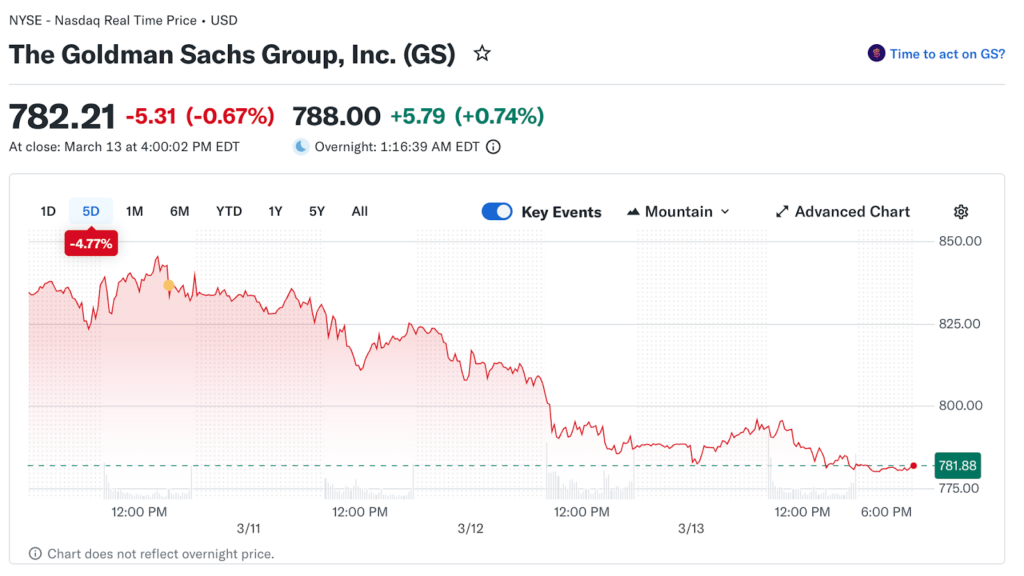
Goldman Sachs has warned that the energy shock could reduce global GDP by 0.3% and increase headline inflation by 0.6% if sustained. For emerging economies with less fiscal space to absorb shocks, those numbers hit harder than for developed markets.
The Noxi Rise senior financial analyst notes that the most vulnerable emerging markets in this environment are those with high oil import dependence, large current account deficits, and dollar-denominated external debt. That combination exists across several Asian and South American economies beyond India. The contagion risk from a prolonged energy shock has not been fully priced into emerging market indices yet.


