
Dogecoin’s 4.5% pullback cannot be explained solely by a broader crypto market sell-off or softer economic data. The move also reflects weakening fundamentals, including declining active user numbers and a significant drop in total value locked (TVL), both of which point to reduced engagement within the ecosystem.
Brokers from SkylineSFO highlight that while meme coins like Dogecoin can rebound quickly during periods of heightened speculation, sustained price stability requires consistent network participation and capital commitment. Without a meaningful recovery in user activity or renewed capital inflows, Dogecoin risks losing its status as a reliable market sentiment gauge.
If these trends continue, investors may increasingly reassess Dogecoin’s long-term relevance as the cryptocurrency market evolves and competition from utility-driven digital assets intensifies.
Broader Market Weakness Set the Stage
Part of Dogecoin’s decline can be attributed to a wider pullback across the crypto market, which fell roughly 2.9% over the same period. Risk assets broadly came under pressure following the release of a disappointing U.S. jobs report.
The data showed the U.S. unemployment rate rising to 4.6% in November, marking the sixth consecutive monthly increase and the highest level in years. This steady climb from 4% in January has raised concerns about slowing economic momentum and tighter conditions for speculative capital.
For assets like Dogecoin, which rely heavily on risk appetite rather than cash flows or utility, a weakening labor market can quickly dampen investor enthusiasm. Fewer disposable dollars and increased economic uncertainty often translate into reduced inflows into speculative tokens.
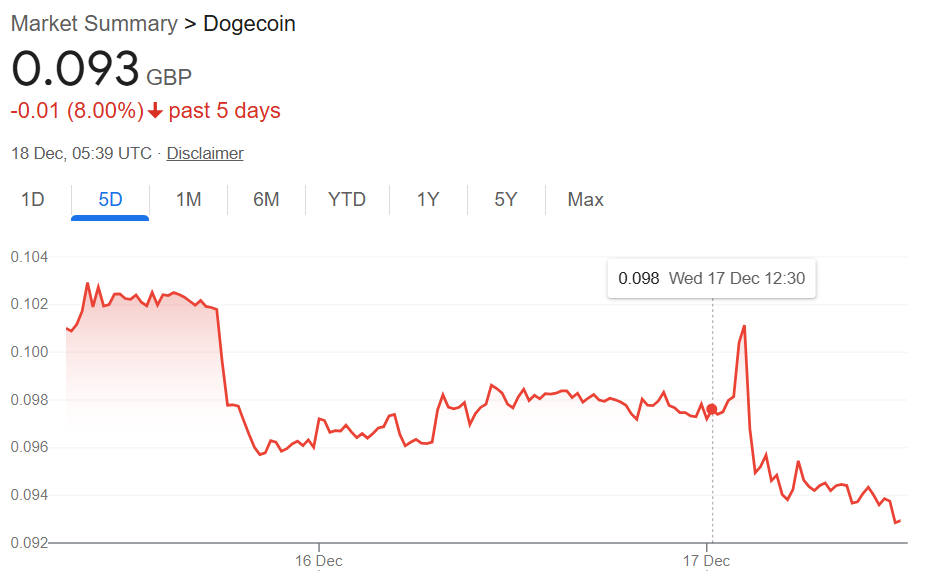
Dogecoin’s Own Metrics Are Flashing Warning Signs
What makes this move more notable is that Dogecoin’s decline appears to be driven not just by macro conditions, but also by deteriorating on-chain fundamentals.
Despite reports that large holders accumulated approximately 138 million DOGE tokens recently, key network indicators continue to trend lower. Monthly active users are near six-month lows, suggesting reduced engagement across the ecosystem. Even more concerning, Dogecoin’s total value locked (TVL) has dropped sharply.
TVL has fallen from around $26 million in September to under $13 million today, representing a decline of nearly 50% in just a few months. This metric reflects how much capital is actively deployed within Dogecoin-related applications, and its decline points to shrinking participation and reduced investor commitment.
These figures suggest that Dogecoin’s ecosystem is losing traction, even as broader crypto adoption continues elsewhere.
From Sentiment Gauge to Fundamental Question Mark
Dogecoin has long been viewed as a sentiment-driven asset, thriving during periods of market euphoria and fading when enthusiasm cools. While that narrative still holds, the current pullback highlights a more structural issue: Dogecoin lacks a strong mechanism for retaining capital.
Unlike utility-driven cryptocurrencies that benefit from network usage or application demand, Dogecoin’s value is largely tied to attention, community engagement, and speculative interest. When user activity declines and capital exits the ecosystem, price pressure can intensify quickly.
This dynamic may explain why Dogecoin underperformed the broader market during this downturn. While the overall crypto market slipped modestly, Dogecoin’s steeper drop reflects concerns specific to its network health.
What This Means for Investors
For investors, Dogecoin’s latest move highlights the clear divide between short-term trading and long-term investing. For short-term traders, sharp price swings are nothing new. Volatility has always been a defining feature of Dogecoin, and rapid declines are often followed by equally quick rebounds during periods of renewed market enthusiasm. Traders who thrive on momentum may continue to find opportunities in these fluctuations.
For long-term investors, however, the picture is more complex. Sustained price appreciation requires healthy fundamentals, including growing user activity, increasing capital deployment, and meaningful utility. At present, Dogecoin is struggling on those fronts. Declining engagement and shrinking total value locked suggest reduced participation within its ecosystem.
Even renewed whale accumulation may offer only temporary support if broader economic conditions tighten and speculative capital becomes scarcer. Without stronger adoption or new use cases, Dogecoin remains particularly exposed during periods of economic stress, making long-term conviction increasingly difficult to justify.
Final Take
Dogecoin’s 4.5% decline is not solely the result of a broader crypto sell-off or weak economic data. It also highlights deteriorating fundamentals, including declining active users and a sharp drop in total value locked (TVL).
Analysts note that while meme coins can experience quick rebounds during speculative rallies, long-term price stability depends on strong network participation. Without a recovery in user engagement or capital activity, Dogecoin’s position as a market sentiment indicator may weaken. If these trends persist, investors may increasingly question the coin’s long-term relevance in a rapidly evolving cryptocurrency ecosystem.


