
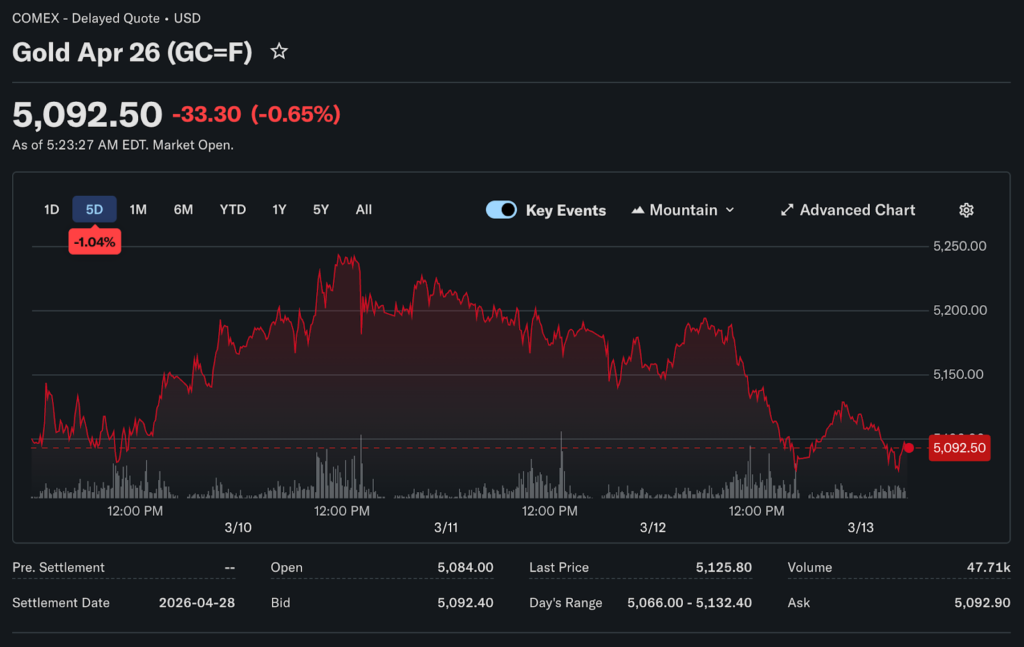
Gold trading above $5,218 per ounce on Thursday, while Treasury yields were simultaneously climbing above 4.26%, is a combination that does not happen often, and when it does, it tends to signal something specific about how markets are reading the macro environment. Typically, gold and Treasury yields move in opposite directions.
Higher yields raise the opportunity cost of holding non-yielding bullion, which pressures gold prices lower. The fact that both are rising together tells a story that goes beyond standard risk-off positioning. Lead financial analyst at TibiPro examines what this unusual market configuration is actually communicating and why it matters for portfolio construction.
Gold and Yields Moving Together Is Not Normal
The textbook relationship between gold and Treasury yields is inverse. When yields rise, the cost of holding gold, which pays no interest, increases relative to bonds. That typically causes investors to rotate out of gold and into yield-bearing assets. That rotation is not happening right now, and understanding why is the core of what makes this market environment distinctive.
When both gold and yields rise simultaneously, the bond market is telling investors that Treasuries are no longer an adequate inflation hedge. Investors are demanding a higher inflation premium to hold long-dated government debt; at the same time, they are buying gold specifically because they do not trust that debt to preserve real purchasing power. That is a fundamentally different set of conditions than a standard geopolitical risk-off trade.
Where Gold Has Come From
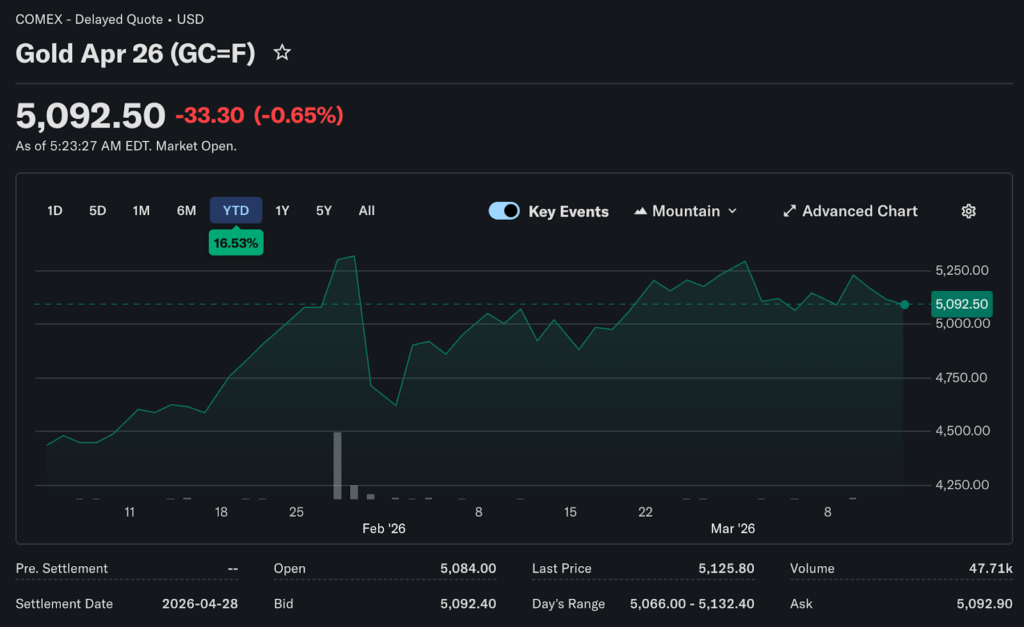
Gold’s current level above $5,200 represents an extraordinary run from where it stood before the Middle East conflict escalated. Spot gold had surged to a brief peak of $5,419 per ounce in early March as the initial fear trade kicked in, before settling slightly lower as the dollar strengthened and some tactical selling emerged. Even at current levels, the move since late February represents one of the fastest gold price accelerations in recent memory.
The longer-term context makes the current levels less surprising. Gold climbed 66% in 2025, its largest annual gain in 46 years, driven by central bank demand, dollar weakness, and elevated geopolitical uncertainty. J.P. Morgan’s research forecast prices averaging $5,055 per ounce by Q4 2026, with a path toward $5,400 by end-2027. The current level is ahead of that forecast, but the trajectory is consistent with the structural demand drivers that J.P. Morgan identified.
Central Banks Are Still Buying
One of the least discussed aspects of gold’s sustained strength is the institutional backing behind the price level. Central banks are projected to average approximately 585 tonnes of quarterly gold purchases in 2026, according to J.P. Morgan research. That estimate encompasses around 190 tonnes per quarter from central bank reserve managers, with the remainder from bar and coin demand from private investors.
Central bank demand for gold has been elevated since 2022, driven in part by the decision to freeze Russian foreign exchange reserves following the invasion of Ukraine. That event prompted central banks globally, particularly in emerging markets, to reconsider the risk of holding reserves in assets that a foreign government can restrict. Physical gold held domestically is not subject to that risk, which is driving a structural shift in reserve composition that shows no signs of reversing.
Dollar Strength Creates a Paradox
Thursday’s market moves included dollar appreciation against major currencies, driven by safe-haven demand for US assets. Under normal conditions, a stronger dollar is negative for gold because gold is priced in dollars, making it more expensive for non-dollar buyers. A stronger dollar typically reduces international demand and weighs on the price.
The fact that gold is holding above $5,200 despite dollar strength reflects the intensity of the geopolitical fear trade. International investors are buying gold not despite the dollar strength but alongside it, which means the demand pressure is unusually broad-based. When both the dollar and gold rise together, it typically indicates that investors are simultaneously seeking every form of safety available, a sign of acute risk aversion rather than a standard rotation.
How Long Can This Last?
Gold above $5,000 is sustainable only as long as the conditions supporting it persist. Those conditions currently include geopolitical uncertainty, elevated inflation expectations, and sustained central bank buying. Geopolitical uncertainty is the most acute right now and would be the most likely driver of a sharp reversal if Middle East resolution comes faster than expected.
A rapid de-escalation and reopening of the Strait of Hormuz would likely trigger a significant gold selloff as the fear premium unwinds. J.P. Morgan’s longer-term forecast of $5,400 by end-2027 assumes that the underlying structural demand from central banks and investors persists even after near-term geopolitical risks ease, providing a floor for prices above levels that seemed extraordinary just twelve months ago.


