
The GBP/USD currency pair edged slightly higher during the latest trading sessions as foreign exchange traders reacted to weak economic data from the United States. Despite broader geopolitical uncertainty and concerns surrounding the ongoing Iran war, the British pound (sterling) managed to stabilize against the US dollar.
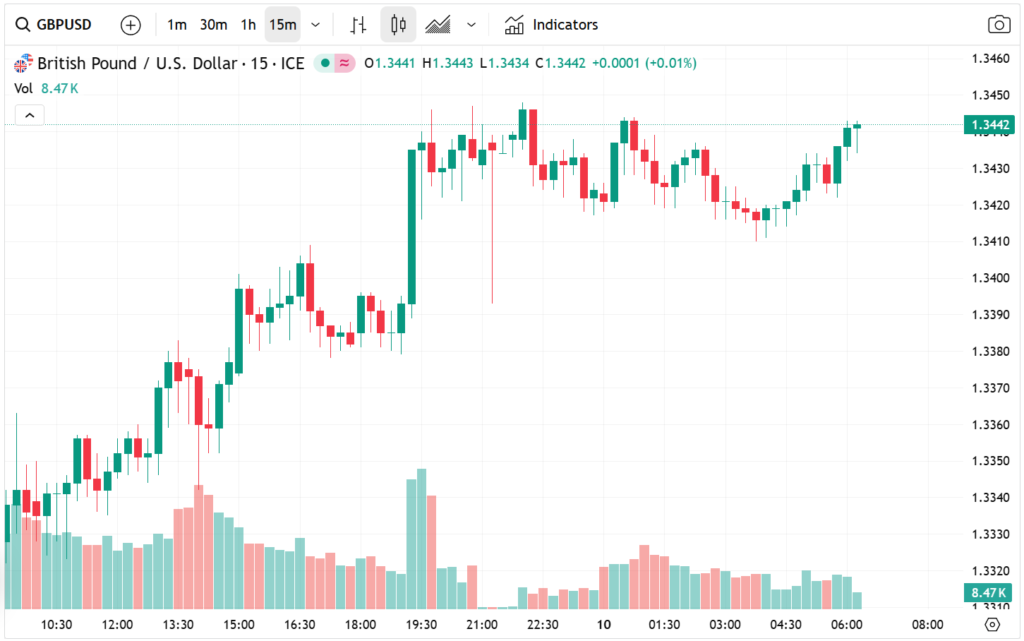
The pair was trading around 1.3410, representing a notable recovery from the monthly low of 1.3256. The brokers at TibiPro provide a comprehensive breakdown of this topic in this article.
This modest rebound highlights the fragile sentiment in global currency markets, where investors are balancing macroeconomic weakness in the US, rising energy prices, and the upcoming US Consumer Price Index (CPI) report. With volatility rising, the GBP/USD pair is likely to remain highly sensitive to both economic indicators and geopolitical developments.
Weak US Labor Market Data Supports Sterling
Recent data released by the US Bureau of Labor Statistics (BLS) painted a concerning picture of the US labor market. According to the report, the US economy lost more than 92,000 jobs, marking the largest decline since 2022. The unexpected contraction shocked analysts who had anticipated modest job growth.
As a result, the US unemployment rate climbed to 4.4%, reinforcing the view that economic momentum in the United States is weakening. Major corporations such as Amazon and Target have announced large-scale layoffs, contributing to the deterioration in labor market conditions.
Additional labor market data confirmed the slowdown. A separate report showed that the US private sector created only 68,000 jobs in February, far below historical averages. For currency traders, such figures raise concerns about economic growth prospects and increase speculation that the Federal Reserve may eventually adopt a more accommodative monetary policy stance.
A weaker labor market typically pressures the US dollar, which partly explains the recent stabilization of the GBP/USD exchange rate.
Focus Shifts to the US Consumer Inflation Report
The next major catalyst for the GBP/USD pair will be the upcoming US Consumer Price Index (CPI) report, scheduled for release on Wednesday. This report is closely monitored by investors, policymakers, and currency traders as it provides critical insight into inflation trends.
Economists expect headline inflation to rise to 2.4% in February, while core inflation, which excludes volatile food and energy prices, is forecast to increase to 2.5%. Although these figures remain relatively moderate, market participants are concerned that inflationary pressures could accelerate in the coming months.
A key driver behind these concerns is the ongoing war involving Iran, which has significantly disrupted global energy markets.
Additional Economic Data to Watch
Beyond the inflation report, investors will also focus on the latest US existing home sales data, which will be released on Tuesday. Economists forecast that existing home sales will decline slightly from 3.91 million in January to 3.90 million in February.
Although the expected decline is modest, it may reinforce the broader narrative of cooling economic activity in the United States. The housing market is particularly sensitive to interest rates, and the current environment of elevated borrowing costs continues to suppress housing demand.
If housing data disappoints alongside weak labor market indicators, the US dollar could face additional downward pressure in the forex market.
GBP/USD Technical Analysis
From a technical analysis perspective, the GBP/USD pair has staged a short-term recovery but remains within a broader bearish trend.
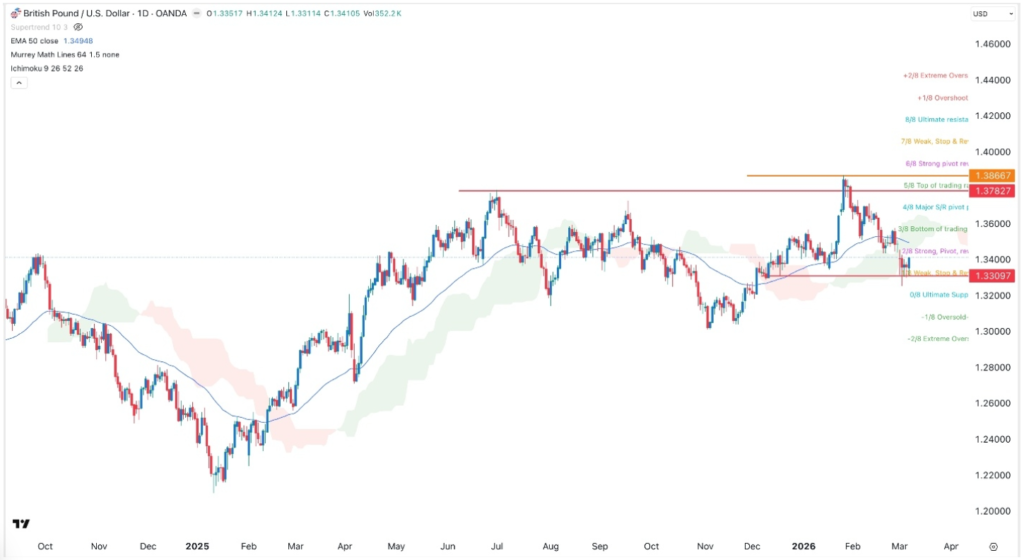
On the daily chart, the pair rebounded from a low of 1.3258 on March 3, climbing to around 1.3410. Importantly, the pair managed to break above the key resistance level at 1.3300, which previously acted as the lowest point recorded on December 17.
However, despite this recovery, several technical indicators suggest that downside risks remain.
The pair is still trading below the 50-day Exponential Moving Average (EMA), which often serves as a critical trend indicator for medium-term price direction. When prices remain below this level, it typically signals persistent bearish momentum.
Furthermore, the pair is positioned below the Ichimoku Cloud indicator, reinforcing the idea that sellers still dominate the broader trend. The price is also trading beneath the Strong Pivot Reverse level of the Murrey Math Lines tool, another signal indicating technical weakness.
GBP/USD Forecast
Given the current technical setup and fundamental backdrop, the GBP/USD pair may resume its downward trajectory in the coming sessions.
If bearish momentum returns, sellers are likely to target the Ultimate Support level at 1.3183. A decisive break below the key psychological support level of 1.3300 would further confirm the bearish outlook, potentially opening the door for additional declines.
For now, traders remain cautious as sterling sits on edge, navigating a market environment defined by economic uncertainty, geopolitical risks, and rising inflation pressures.


