
The International Energy Agency agreed to a staggered release of 400 million barrels of emergency oil reserves as of the week of March 16, 2026, responding to the supply disruption caused by the Strait of Hormuz closure. It is the largest coordinated reserve release in the agency’s history, more than double the volume released in 2022 following Russia’s invasion of Ukraine. Financial analysts at Noxi Rise say the scale of the release is genuinely significant, but the arithmetic surrounding it tells a more complicated story than the headline suggests.
That 400 million barrel figure represents less than four days of global oil consumption. The disruption it is meant to address has already been running for three weeks. The gap between the problem and the solution is measurable, and markets are measuring it carefully.
Why the Reserve Release Works Differently Than Most People Expect
Emergency reserve releases are frequently misunderstood as direct price fixes. They are not. The mechanism is more indirect. By signaling that coordinated supply is available and will be deployed in stages, the IEA aims to reduce the fear premium embedded in oil futures pricing. That fear premium can account for a significant portion of any geopolitical oil spike above the physical supply-demand balance.
The 2022 release, following the Ukraine invasion, provides the relevant comparison. That release helped moderate prices but did not reverse the spike entirely. Prices remained elevated for months afterward as the physical supply adjustment worked through the system. WTI crude briefly spiked to $119 per barrel before the current release was announced, then retreated below $100. Whether it holds below that level depends on whether the coalition escort plan for the Strait materializes alongside the reserve deployment.
The staggered nature of the release is also important. A lump-sum injection into the market typically produces a sharp but short-lived price effect. A staged release maintains price pressure relief over a longer window, which is more useful for businesses trying to plan procurement and hedge energy costs over the next quarter.
The Fertilizer Story That Connects Energy to Food Prices
Here is where the story moves well beyond oil market analysis. Fertilizer production is heavily dependent on natural gas as a feedstock, and natural gas prices in Europe and Asia have surged alongside oil in the wake of the Strait disruption. That energy cost increase is transmitted directly into fertilizer manufacturing costs within weeks.
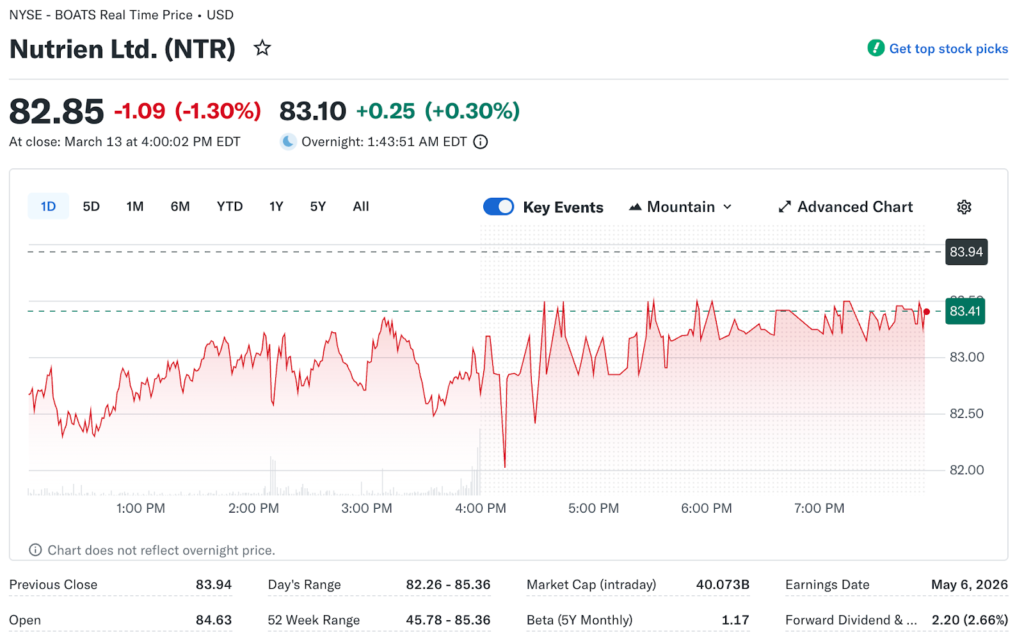
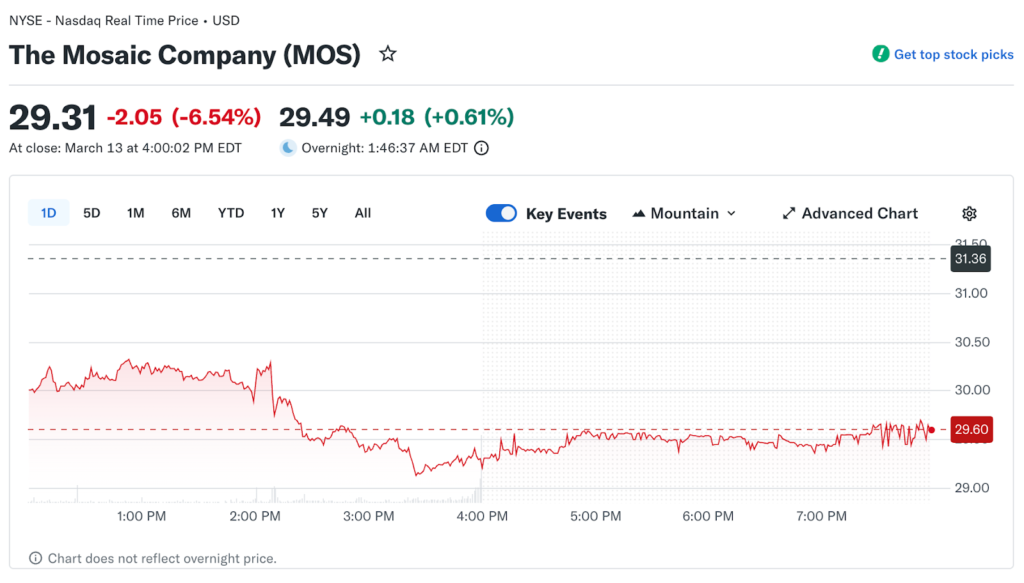
The market has already responded. Shares of Nutrien rose 10%, CF Industries gained 12%, and The Mosaic Company climbed 11% in a single week. Those are significant moves for agricultural commodity companies, and they are not primarily about earnings. They reflect the market pricing in a forward expectation of fertilizer shortages and higher product prices as energy costs remain elevated.
Fertilizer shortages feed into food production costs with a lag of roughly one growing season. Farmers who cannot source affordable fertilizer at current prices either reduce application rates, accept higher input costs and pass them on, or delay planting decisions. Each of those responses eventually shows up in food inflation data, typically with a six to twelve-month delay from the original energy shock.
The Bond Market Reaction That Often Gets Lost in the Oil Coverage
In bond markets, the Iran conflict has been pushing US and Canadian government bond prices lower and yields higher. That might seem counterintuitive given the defensive rotation in equities. The explanation is straightforward: when inflation expectations rise, bond investors demand higher yields to protect their real returns. Rising yields in this environment do not reflect economic confidence. They reflect anxiety about inflation persistence, and the transmission into mortgage rates and corporate borrowing costs is already underway.
What the German ZEW Data Is Signaling About Europe
The German ZEW Economic Sentiment Index for March is expected to fall sharply from its February reading of 58.3 toward a consensus of 38.9. Germany had been benefiting from defense-spending-driven optimism, but the Middle East conflict arrived before that momentum had time to flow into real economic activity.
A ZEW drop of that magnitude signals that European corporate confidence is deteriorating ahead of what macro data has yet to fully reflect. Business confidence leads investment decisions by one to two quarters. A drop now means reduced capital expenditure and hiring plans through the summer.
The Bigger Picture for Commodity Investors
Noxi Rise financial analysts note that the IEA release and the fertilizer rally together point to a market that is thinking about the energy shock in multi-dimensional terms. Oil price is the headline. Food inflation is the follow-on. Bond yield pressure is the structural consequence. Each feeds into the next with different timing.
Investors focused only on crude benchmarks are tracking one layer of a story that has at least three. The 400 million barrel release buys time. How that time is used, both diplomatically and logistically, will determine whether the downstream inflation pressures remain manageable or become the defining economic story of the second quarter.


