
Oil prices swung from $80 to $120 and back again in the span of 24 hours, and every asset class reacted. Bitcoin’s behavior through that period is worth examining carefully because it gets at the heart of an ongoing debate about what cryptocurrency actually represents during a genuine market stress event. Senior broker at BUCKSA goes over what this week’s oil-driven volatility revealed about Bitcoin’s role in institutional portfolios and whether the safe-haven narrative holds up under pressure.
Bitcoin During the Spike
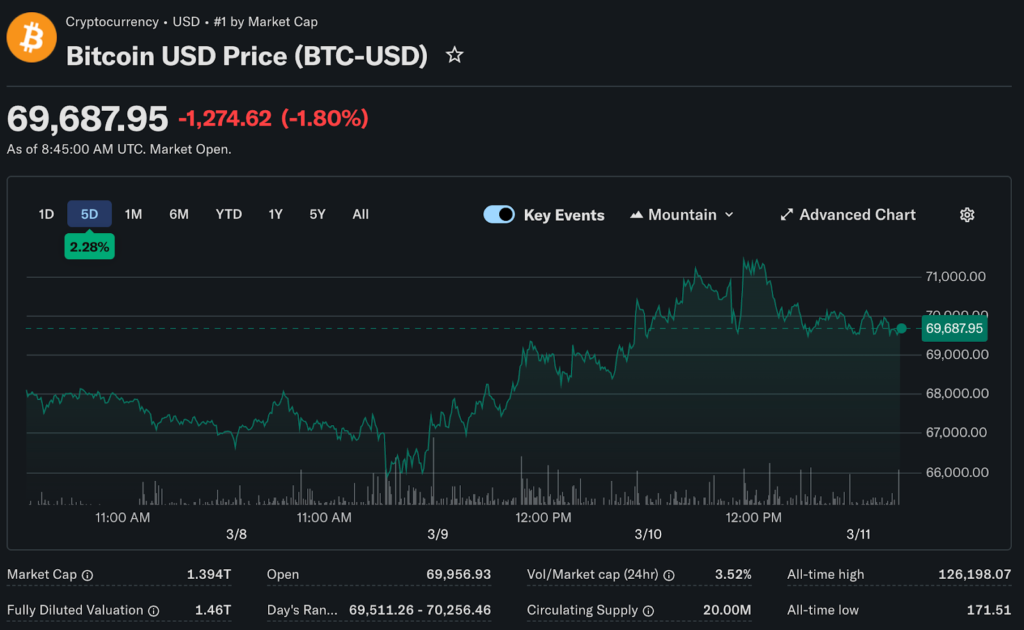
When crude oil briefly climbed above $100 per barrel due to concerns about possible disruptions in the Strait of Hormuz, Bitcoin fell closer to $66,000, declining by about 1.7% within a 24-hour period. This movement suggested that, at least in the near term, Bitcoin was behaving more like a traditional risk-sensitive asset rather than a defensive store of value such as gold.
During the same timeframe, US stock futures also experienced a sharp decline, with Dow futures dropping by more than 800 points at the height of the selloff. The simultaneous downturn in both cryptocurrencies and equities highlighted the growing correlation between these markets, particularly during moments of heightened economic or geopolitical stress.
The Bounce Back
As diplomatic signals suggested the conflict might be approaching some form of resolution, Bitcoin recovered. By Tuesday morning, March 10, Bitcoin was back above $70,000, up around 2% in the morning session. That recovery happened in parallel with a partial recovery in equity futures and a sharp drop in oil prices from the $120 peak.
The pattern supports the interpretation that Bitcoin is functioning as a sentiment barometer. When fear is high and risk appetite collapses, Bitcoin sells off. When sentiment stabilizes, it often recovers quickly because its holders tend to be conviction-based and not driven by forced selling. The $60,000 low from roughly a month ago appears to have held as a meaningful support floor.
Hyperliquid Is the Unexpected Winner
While Bitcoin was chopping around, one corner of the crypto market was thriving on the volatility. Hyperliquid, a decentralized perpetual exchange token, jumped 35% year-to-date and gained another 10.87% in a single 24-hour window on March 10. Its performance stands in contrast to Bitcoin, which is down around 21% since 2026 began, and Ethereum, which has lost roughly 30.83% year-to-date.
Hyperliquid’s gains are directly tied to the oil price chaos. The platform’s tokenized WTI oil perpetuals hit $1.77 billion in trading volume in just 24 hours, trailing only the Bitcoin perpetual contract. Oil perpetuals accounted for 18% of Hyperliquid’s total trading volume over that period, as speculative traders used crypto derivatives to take positions on energy markets without touching traditional commodity futures.
What Blue-Chip Crypto Lost in 2026
The year-to-date context is not flattering for major cryptocurrencies. Beyond the recent oil-driven moves, Bitcoin is down 21%, Ethereum has fallen 30.83%, and Dogecoin has lost around 27% since the start of 2026. These are meaningful drawdowns against a backdrop where gold is still holding above $5,000 per ounce.
The relative performance comparison between crypto and gold continues to be uncomfortable for Bitcoin advocates. Gold has acted as a genuine safe haven during geopolitical stress events this year. Bitcoin, by contrast, has behaved more like a high-beta equity during periods of genuine market fear, which matters a great deal for how institutional allocators size their positions.
The Regulatory Development Worth Watching
Separately from market price movements, the US Treasury Department has been encouraging lawmakers to establish a new legal structure that would allow cryptocurrency platforms to temporarily freeze funds suspected of being linked to criminal activity. The proposal aims to create a legal safe harbor for exchanges and financial institutions so they can hold potentially suspicious digital assets while authorities investigate possible illegal conduct.
Greater regulatory clarity like this is considered important for institutional participation in the crypto market. Well-defined rules regarding compliance and liability provide large financial institutions with the legal certainty required to operate in the digital asset space more confidently and at greater scale. Earlier, the GENIUS Act introduced the first federal framework for regulating stablecoins, and this latest proposal would further expand that developing regulatory foundation.
Coinbase Expands European Access
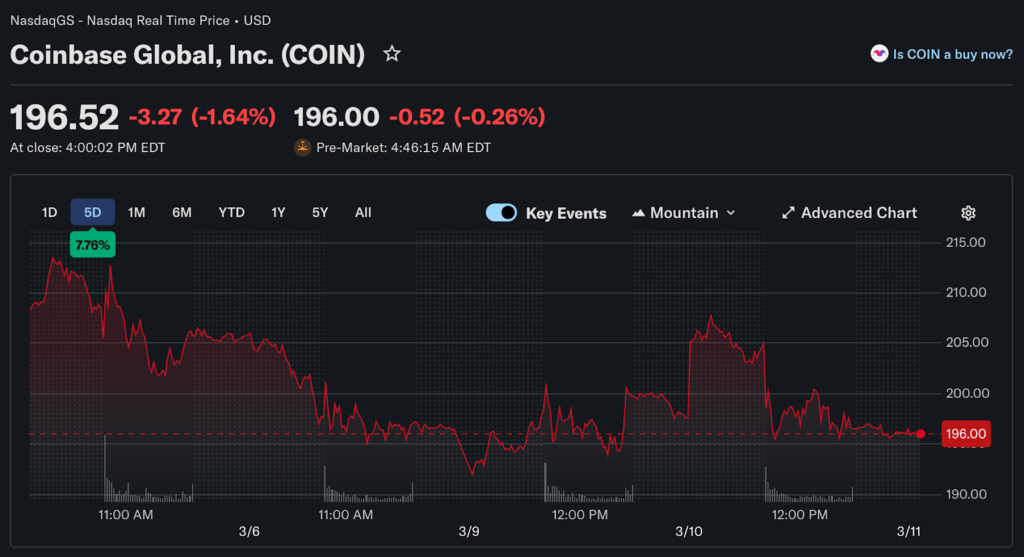
Coinbase rolled out futures contracts on Coinbase Advanced for users in 26 European countries on Monday. The offering includes perpetuals and term contracts on Bitcoin, Ethereum, and Solana, plus equity indices with up to 10x leverage via a MiFID II entity. This marks the first regulated derivatives access for these markets in the region.
The expansion reflects the broader trend of regulated crypto infrastructure building alongside spot markets, providing the legal framework institutional investors require before they can participate at scale.
What the Oil Shock Revealed
The oil price event this week was a useful stress test for Bitcoin’s narratives. Bitcoin sold off alongside equities in the panic phase, then recovered faster than many expected once sentiment stabilized. That is neither a pure safe-haven nor a pure risk-asset profile, and investors should size positions accordingly through periods of genuine macro volatility.


