
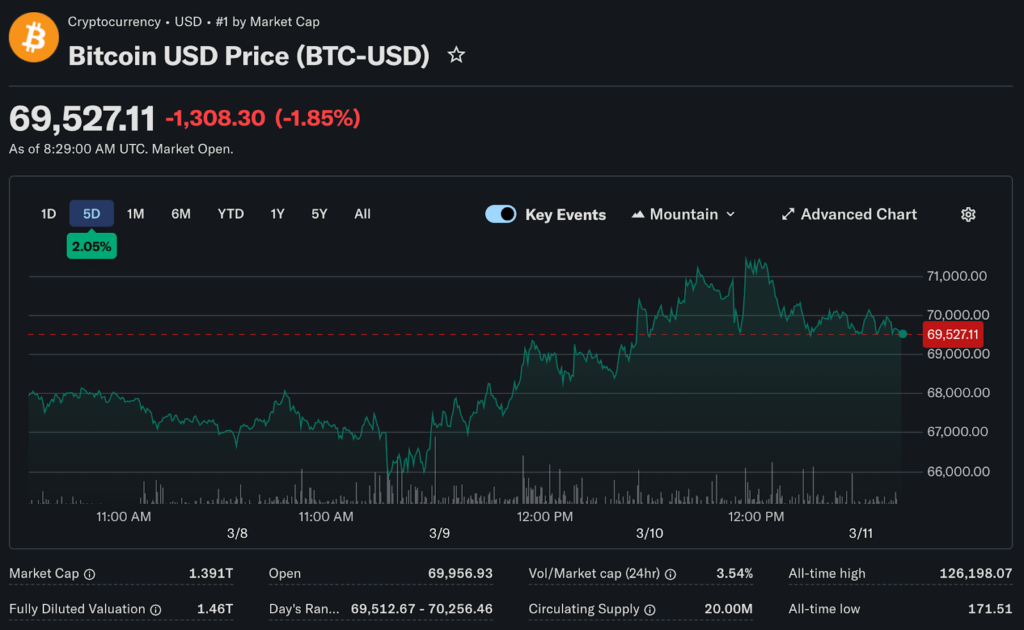
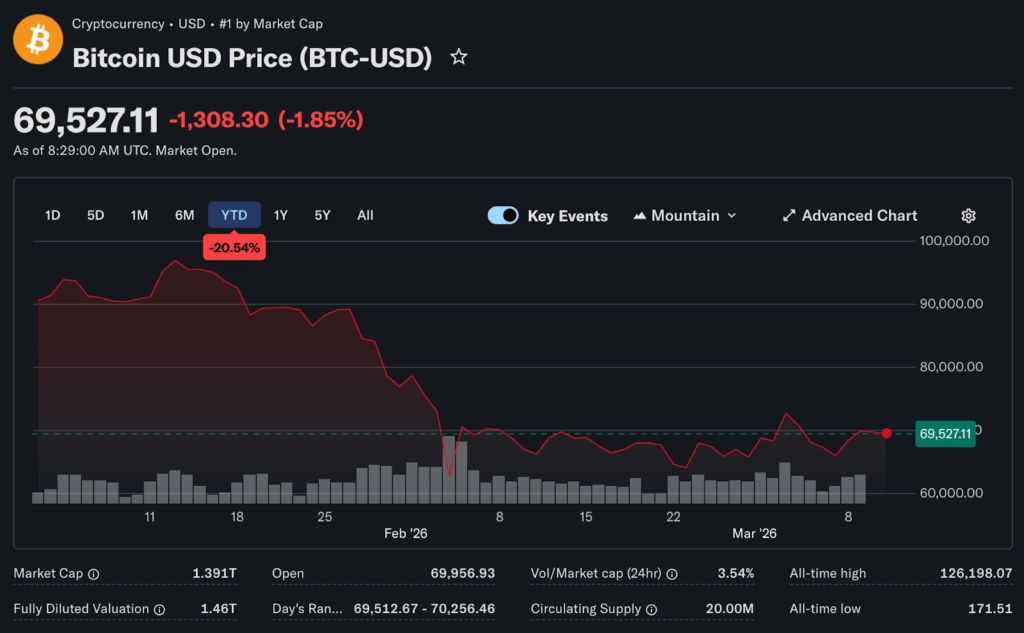
Bitcoin entered 2026 with high expectations and came in well below them. Despite a broadly supportive policy environment and growing institutional products, the world’s largest cryptocurrency fell roughly 4.8% in January 2026. Junior financial expert at BUCKSA breaks down the specific data behind the decline and what the underlying signals may mean for investors watching the longer-term picture.
January’s Numbers Tell a Specific Story
Bitcoin’s January performance was shaped by outflows, macro pressure, and a lack of fresh catalysts. U.S. spot Bitcoin ETF net outflows reached $1.6 billion in January 2026, up from $1.1 billion in December. That marked the third consecutive month of outflows from these products, which had been viewed as a major sustained demand driver when they first launched.
Ethereum had an even harder month, falling 17.7% in January, which was its fifth consecutive monthly decline. Technical improvements over the past year, including lower gas costs and faster transaction times, failed to provide any price support. Markets had already priced in those upgrades before they arrived, a classic case of the market moving ahead of the event.
Macro Uncertainty Is the Primary Headwind
The Federal Reserve’s January meeting sent a clear message: policymakers plan to stay the course in 2026 and are not rushing to cut rates. That posture disappointed crypto markets, which have historically done better in looser monetary conditions. High rates keep capital in yield-bearing assets, reducing the incentive to hold non-yielding alternatives like Bitcoin.
The Buffett Indicator, which measures the total stock market cap relative to GDP, reached approximately 205% in January 2026. That is well above the historical average of 100% and significantly higher than levels that preceded past corrections. When equity markets are this overvalued, any correction would likely drag crypto prices down alongside stocks.
Gold Is Outrunning Bitcoin Right Now
One dynamic that deserves attention is the performance gap between gold and Bitcoin. Gold surged around 66% in 2025, while silver gained roughly 160%. Bitcoin, despite regulatory tailwinds and ETF products, delivered a comparatively modest result in the same period. The question being asked in analyst circles is simple: why hold digital gold when the real thing is outperforming by such a wide margin?
The answer from Bitcoin proponents involves the time horizon. Over five years, Bitcoin has returned 205% compared to 124% for gold. Short-term underperformance relative to one commodity does not change the long-term return profile, but in a market where institutional investors track performance quarterly, the comparison matters in the near term.
The Tariff Overlay
Tariff policy in early 2026 added another layer of complexity to the picture. By January 23, 2026, the weighted average applied U.S. tariff rate reached 14.0%, the highest level since 1946. Yale’s Budget Lab projected the tariff structure would shave 0.4 percentage points off GDP growth and push unemployment up by 0.7 points.
For Bitcoin, tariff-driven inflation is a mixed signal. On one hand, dollar weakness supports the case for store-of-value assets. On the other hand, economic slowdown reduces risk appetite, and Bitcoin tends to trade as a risk asset during market stress rather than as a traditional safe haven like gold.
Solana Finds a Bright Spot
Not every corner of the crypto market had a rough January. Solana showed notable resilience, driven largely by a spike in memecoin activity. Daily token launches on Solana hit 45,500 on January 30, nearly double the Q4 2025 peak of 24,400. Daily launchpad volume reached $183 million, also surpassing its prior quarterly peak.
This activity boosted network fees, DEX volume, and active addresses across the Solana blockchain. It represents genuine user engagement, even if memecoin activity is speculative by nature. High transaction volumes help make the case for the underlying infrastructure, regardless of what is driving the activity.
Long-Term Projections Still Point Higher
Despite the January weakness, long-term forecasts for Bitcoin remain ambitious. Galaxy Digital’s research head, Alex Thorn, has projected Bitcoin reaching $250,000 by 2027. That call is built on continued institutional adoption, a constructive regulatory environment, and the typical price effect following Bitcoin’s four-year halving cycle.
The 2024 halving occurred in April of that year. Historical patterns suggest the price impact of a halving unfolds over 12 to 18 months following the event. If that timeline is accurate, Bitcoin’s January weakness may be a correction within a broader uptrend rather than the beginning of a structural decline.
The Signal Investors Should Not Miss
Short-term crypto movements are driven by sentiment and macro flows as much as fundamentals. What matters more for positioning is the structural adoption curve, which continues to move in one direction. Spot ETF products, corporate treasury allocations, and sovereign wealth fund interest are all developments with multi-year implications.
The current dip may not represent the bottom of this move. But the longer-term framework for Bitcoin has not materially changed based on the January 2026 data alone, and that distinction matters for investors with a proper time horizon.


