
The NZD/USD pair continues to trade modestly higher, maintaining gains above the 0.5600 level as market participants prepare for the highly anticipated US Non-Farm Payrolls (NFP) report later this week. In this article, the brokers from Noxi Rise explain this topic thoroughly.
Traders are approaching the week cautiously, balancing recovery optimism in the New Zealand dollar against lingering macroeconomic uncertainties emanating from the US economy and broader global risk factors.
The pair has demonstrated a resilient bounce following recent declines, with technical indicators suggesting a cautious bullish bias. However, the broader risk sentiment remains vulnerable to external shocks, particularly geopolitical tensions and data surprises that could influence USD strength.
Early Market Dynamics: AUD/JPY as a Risk Barometer
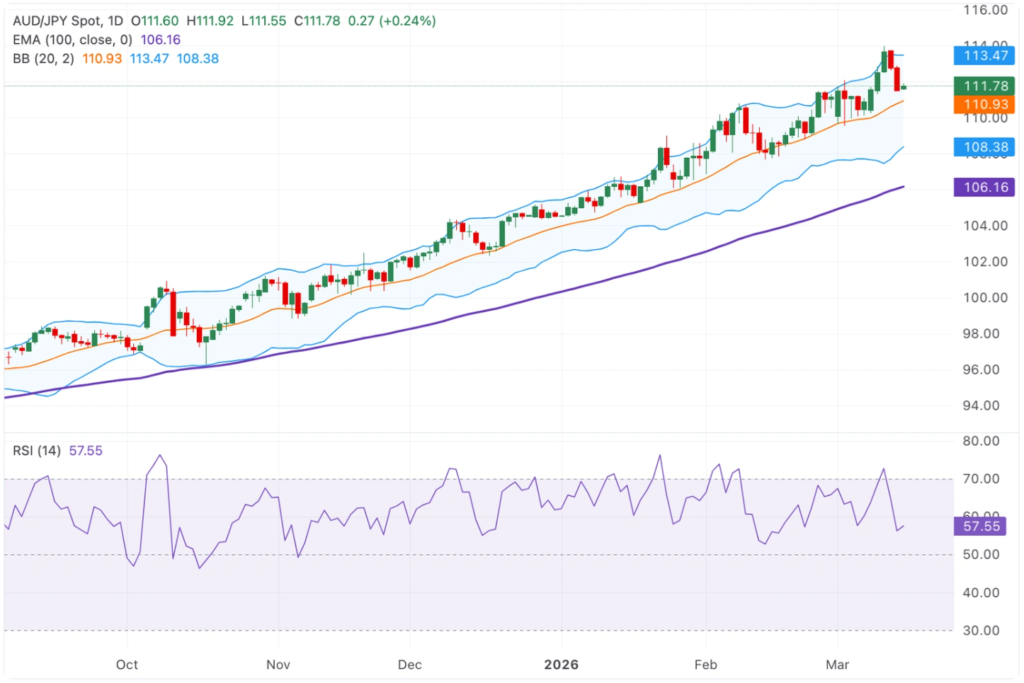
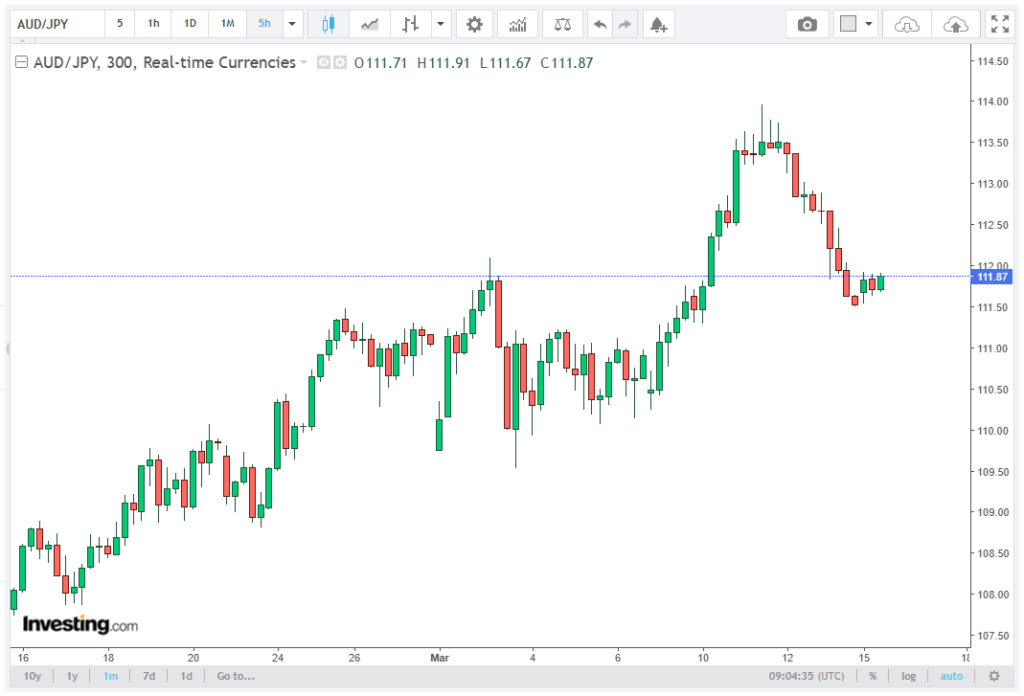
While the focus remains on NZD/USD, the AUD/JPY cross provides a useful proxy for risk appetite in the Asian-Pacific complex. On Monday, the AUD/JPY traded higher near 111.70 in the early European session, reflecting an overall positive tone. This movement aligns with the cross remaining well above the rising 100-day EMA, a critical technical support level, signaling that the medium-term bullish trend remains intact.
The RSI momentum on the daily chart also supports the positive outlook, currently positioned in bullish territory, suggesting that upside momentum is not exhausted. Key support levels are identified around 111.00, while resistance levels stand near 112.50, indicating a clearly defined trading range for near-term market participants.
Geopolitical Tensions and Safe-Haven Flows
Geopolitical developments have emerged as a key driver of market sentiment. Traders are closely monitoring tensions involving the United States, Israel, and Iran, which have heightened the demand for safe-haven assets such as the Japanese yen.
The US President announced discussions with other nations to police the Strait of Hormuz, emphasizing that Israel is collaborating with the US on securing the vital shipping route. Recent US military operations on Kharg Island, a critical Iranian oil export hub, have raised concerns over potential regional escalation. Iran has issued threats to retaliate against any US-linked oil infrastructure, a scenario that could lift the JPY and exert downward pressure on risk-sensitive crosses like AUD/JPY.
China Economic Data and AUD Strength
On the positive side, stronger-than-expected Chinese economic indicators support the AUD, indirectly influencing NZD/USD due to the close trade linkages between the Chinese and Australian economies.
The National Bureau of Statistics (NBS) reported that Chinese Retail Sales increased by 2.8% YoY in January-February, exceeding both the prior 0.9% reading and the consensus of 2.5%. Industrial Production climbed 6.3% YoY, compared to 5.2% previously, surpassing market expectations of 5.1%.
Given that China is a major trading partner for both Australia and New Zealand, robust economic data support the commodity-linked currencies, contributing to the NZD’s modest recovery against the USD.
Technical Analysis: NZD/USD Outlook
From a technical perspective, NZD/USD retains a modest bullish bias above the 0.5600 threshold, with near-term charts indicating support for gradual recovery gains. Price action remains within a consolidation band, suggesting that momentum is cautiously positive, but upside progress may be tempered as traders await the US NFP release.
Key support levels are located at 0.5600, followed by psychological and technical support around 0.5550. Resistance is anticipated near 0.5650, with further upside potential toward 0.5700 should the USD weaken in reaction to softer-than-expected US labor data.
Market Strategy Ahead of US NFP
Traders are advised to monitor the US NFP report, as it is a critical catalyst for USD volatility and could dictate the next directional move for NZD/USD. Market expectations for non-farm payroll growth and wage inflation will likely determine the Fed’s near-term policy trajectory, influencing risk sentiment and the strength of commodity-linked currencies.
In addition to the NFP data, the market will remain attentive to any updates on the Middle East conflict, as heightened tensions could push safe-haven flows into the JPY and indirectly affect NZD/USD positioning.
Short-term traders may focus on intraday technical levels, capitalizing on support near 0.5600 for potential rebound trades, while being cautious of resistance around 0.5650–0.5700. Longer-term investors may consider the interplay between macro fundamentals and geopolitical risks before committing to significant exposure.
Conclusion
In summary, NZD/USD is currently maintaining modest recovery gains above 0.5600, supported by technical strength, positive risk sentiment, and China’s robust economic data. However, geopolitical risks in the Middle East and the upcoming US NFP report remain key catalysts that could influence near-term market dynamics.
Traders should watch for support at 0.5600, resistance at 0.5650–0.5700, and any shifts in safe-haven flows. While the pair exhibits a cautious bullish bias, volatility spikes are possible, and risk management remains essential in navigating the week ahead.


