
The GBP/USD currency pair has entered a critical technical and fundamental phase, where recent price action suggests that the British pound may be losing momentum against the US dollar.
While short-term rallies have appeared encouraging, the broader structure still points toward vulnerability, particularly near key psychological and technical levels. The brokers at FlexFlume provide a comprehensive breakdown of this topic in this article.
Recent Price Action and Key Resistance Levels
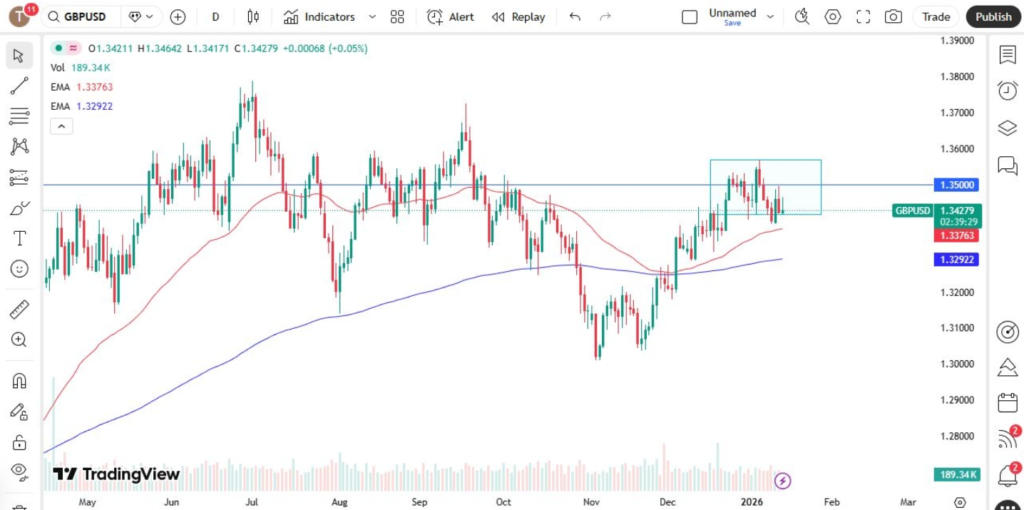
The British pound showed early strength on Wednesday, briefly signaling bullish momentum. That advance, however, lost steam as the price approached the 1.35 level, a key psychological threshold closely tracked by traders, institutions, and trading algorithms.
This 1.35 resistance zone has consistently capped upside attempts, and the market’s stall near this level once again confirms its significance as a major barrier.
The 1.35 level is not just psychological; it also aligns with prior congestion and failed breakouts, making it a major decision point. Every attempt to push higher has been met with selling pressure, suggesting that buyers are losing conviction.
Moving Averages and Downside Risk
Below the current price, the 50-day Exponential Moving Average (EMA) is a key dynamic support level. This indicator has historically attracted short-term buyers and could offer a temporary floor if selling pressure increases. However, the tone of the market suggests fragility, and if the pair breaks decisively below the 50-day EMA, it would likely trigger accelerated downside momentum.
If such a breakdown occurs, the next logical target would be the 1.33 level, which becomes especially important due to its confluence with the 200-day EMA. When a major horizontal support level coincides with a long-term moving average, it often attracts institutional interest. This makes the 1.33 zone an attractive downside target, but also a potential area for short-covering or stabilization.
That said, the fact that the price may need to travel that far already highlights the underlying weakness in the British pound. The structure doesn’t look quite right, and the pair appears ready to roll over, rather than launch into a sustainable bullish trend.
Market Noise and Technical Uncertainty
Another factor that cannot be ignored is the amount of market noise just below current levels. This area has seen frequent reversals, false breaks, and choppy trading, making it a danger zone for overconfident traders. Such conditions often precede larger directional moves, but they also increase the risk of whipsaws.
The presence of this noise reinforces the need for confirmation-based trading, particularly around the 50-day EMA. A clean break and close below that level would be a strong technical signal that the market is shifting toward bearish control.
Rate Policy and Relative Performance Context
From a fundamental perspective, the British pound is still expected to outperform many other currencies against the US dollar. The Bank of England (BoE), while having recently cut rates by 25 basis points, remains relatively slow and cautious compared to other major central banks. This measured approach helps support the pound on a relative basis, limiting the likelihood of an aggressive collapse.
However, rate cuts are still rate cuts, and monetary easing, no matter how gradual, reduces the pound’s yield appeal. It may take time for the full impact of this policy shift to be felt throughout the market, but the medium-term bias remains uncertain.
Given this context, the strategy of fading rallies in the GBP/USD pair becomes appealing. Selling into strength near key resistance levels, such as 1.35, aligns with both technical resistance and macro hesitation. That said, expectations should remain modest, as the broader environment does not currently support large, impulsive moves in the short term.
Bullish Break Scenario: What Would It Take?
While the outlook remains cautious, traders should still consider the alternative scenario. If the market were to break above the 1.36 level, it could signal a meaningful shift in sentiment. Such a move would likely open the door to a larger upside extension, potentially targeting the 1.3750 level.
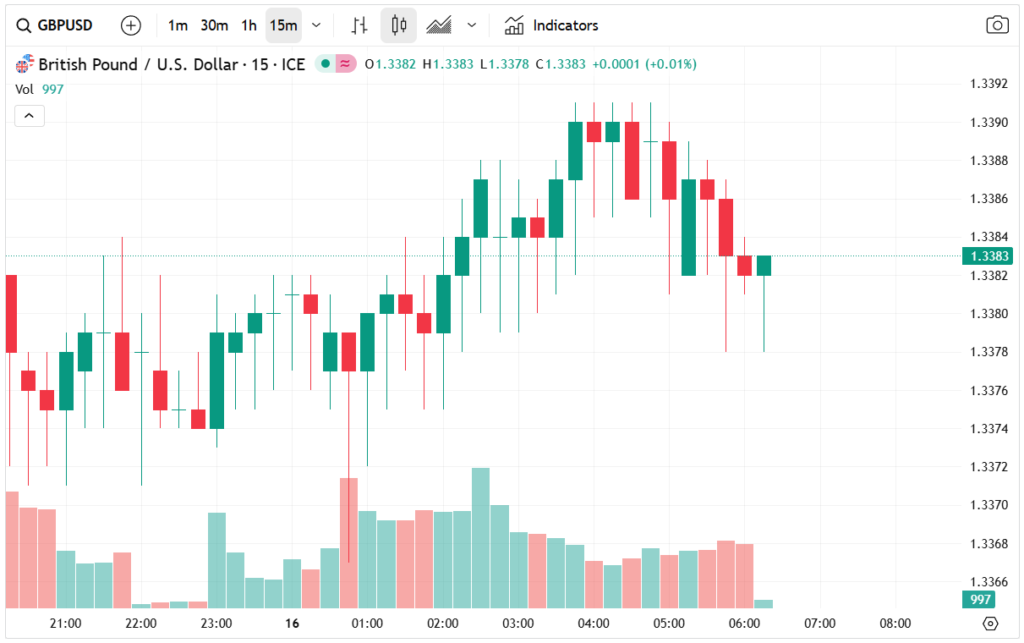
However, achieving this would require a strong catalyst, sustained buying pressure, and a clear change in recent price behavior. Given the weak follow-through seen over the last couple of weeks, this scenario appears difficult to justify at present.
Conclusion: Bearish Bias with Tactical Patience
Overall, the GBP/USD outlook remains uncertain, with the market exhibiting signs of fatigue and vulnerability near key resistance levels. The 1.35 level continues to cap gains, while the 50-day EMA represents a critical line in the sand. A break below it would significantly increase the probability of a move toward 1.33 and the 200-day EMA.
Until proven otherwise, interest remains in getting short of this pair, particularly on a confirmed breakdown. While the British pound may still hold relative strength compared to other currencies, the technical picture favors caution, patience, and disciplined risk management in the days ahead.


