
Silver prices edged lower in late-week trading after the United States paused plans to impose import tariffs on several critical minerals, triggering short-term profit-taking across precious metals. Despite the dip, the white metal remains on track for a strong weekly advance, supported by robust investor demand and structural momentum across commodity markets.
Analysts at PrimeLuno assess that the pullback reflects tactical repositioning rather than a shift in the broader bullish narrative surrounding precious metals, particularly silver, which continues to benefit from heightened demand for hard assets in an uncertain macro environment.
During Asian trading hours, silver slid by as much as 3.1%, extending a modest decline from the previous session. The retreat followed confirmation that the current U.S. administration refrained from introducing new tariffs on strategic minerals, including silver and platinum. While the possibility of future levies remains open, the absence of immediate policy action eased near-term supply concerns that had fueled recent gains.
Tariff Uncertainty and Market Reaction
The prospect of tariffs on critical minerals had been a key driver behind silver’s rapid ascent in recent weeks, as investors priced in potential supply-chain disruptions and rising onshore demand. With those measures temporarily shelved, markets reacted swiftly, trimming positions accumulated during the rally.
Gold prices also softened, slipping by around 0.1%, while platinum and palladium recorded sharper declines, each falling more than 2% during the session. The Bloomberg Dollar Spot Index remained flat, offering little directional influence on precious metals.
Market observers note that the tariff pause may reduce immediate upside momentum, but it does little to dismantle the fundamental case for silver, which continues to attract capital amid ongoing macroeconomic uncertainty and elevated risk aversion.
Weekly Performance Highlights Structural Strength
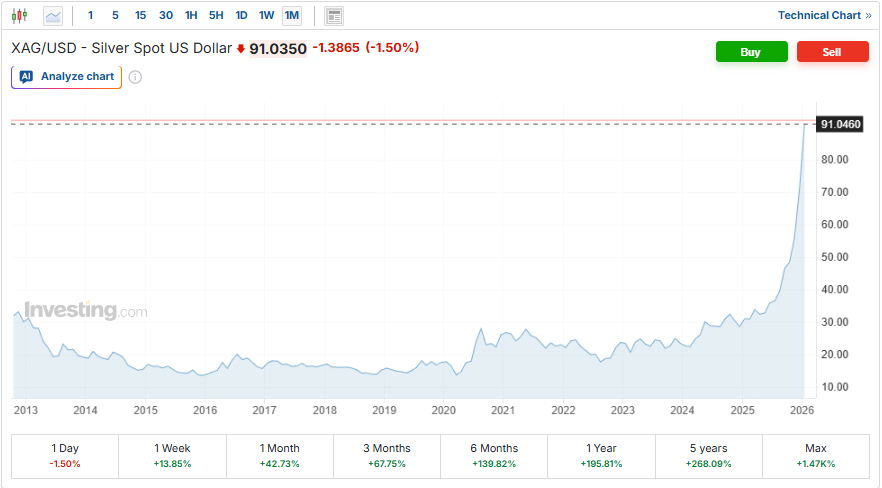
Despite Friday’s decline, silver remains up by more than 13% for the week, marking one of its strongest weekly performances in recent years. Over a longer horizon, the metal has more than tripled in value over the past year and gained over 25% year-to-date, reflecting persistent investor appetite.
This surge mirrors a broader rotation into commodities as investors seek protection against currency debasement, rising debt levels, and weakening confidence in traditional financial instruments. The trend has reinforced allocations to tangible assets, strengthening silver’s role as both an industrial input and a store of value.
Policy Signals and Safe-Haven Demand
Precious metals have also drawn support from elevated geopolitical tension and uncertainty surrounding monetary policy direction. Renewed pressure on the independence of central banking institutions, combined with assertive foreign-policy signals, has weighed on confidence in fiat currencies and government bonds.
This backdrop tends to enhance the safe-haven appeal of gold and silver. Analysts highlight that silver’s dual role, combining industrial use with investment demand, allows it to benefit from both risk-off sentiment and expectations of sustained industrial consumption.
Supply Constraints and Recycling Dynamics
At elevated price levels, silver typically attracts increased recycling activity, as higher valuations incentivize the sale of scrap material. However, the impact of recycling has been limited by structural constraints in refining capacity.
Industry consultants point to a shortage of high-grade refining facilities, restricting how quickly recycled silver can be processed and returned to the market. This bottleneck has slowed supply responsiveness, helping to support elevated price levels despite recent volatility.
Asian Market Developments
The surge in precious-metal prices has prompted regulatory intervention in key consuming regions. Authorities in China have introduced restrictions on high-speed trading across major commodity exchanges to curb excessive volatility and speculative behavior.
While such measures may dampen short-term trading activity, analysts believe they are unlikely to reverse the broader demand trend, which is being driven by macroeconomic forces and global asset-allocation shifts.
Latest Price Snapshot
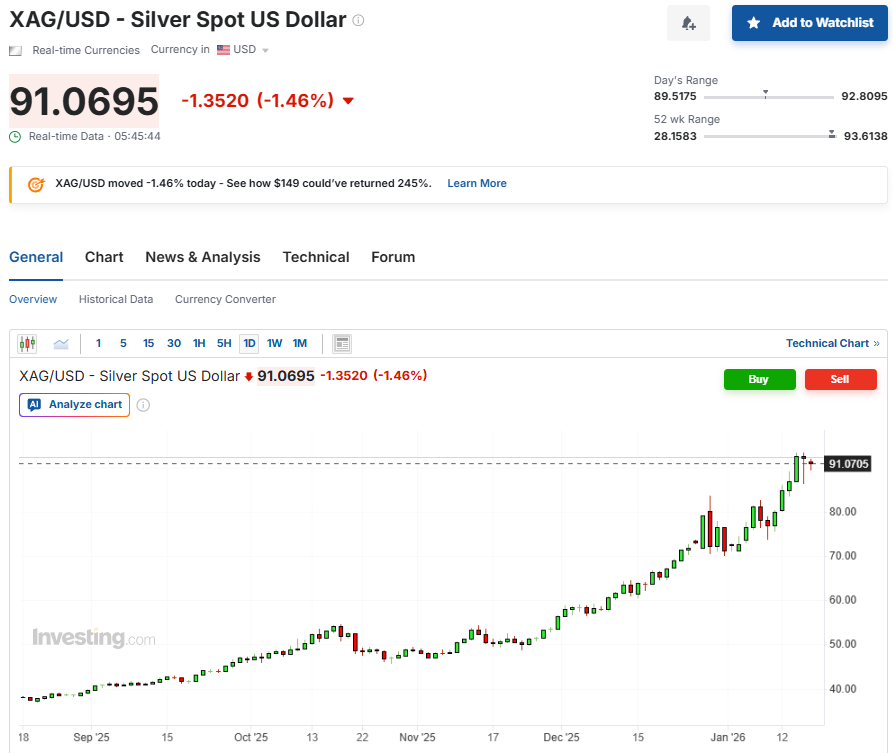
As of the latest update in Singapore trading, silver declined by around 2% to approximately $91.06 per ounce, reflecting short-term consolidation after a sharp rally. The pullback came amid reduced tariff-related momentum and modest profit-taking, rather than a material shift in underlying demand conditions.
Gold was quoted near $4,608 per ounce, holding onto a weekly gain of roughly 2%, while platinum and palladium both posted daily losses exceeding 2%. The moves point to broader consolidation across the precious-metals complex, as investors reassess positioning following recent gains and elevated volatility.
Outlook for Silver Markets
Looking ahead, analysts expect silver to remain highly sensitive to policy developments, particularly around trade decisions, fiscal sustainability, and monetary governance. While short-term volatility may persist following sharp gains, the underlying drivers supporting silver remain intact.
From an investment perspective, the recent pullback is widely viewed as a consolidation phase rather than a trend reversal. As long as hard-asset demand stays elevated and supply constraints persist, silver is likely to retain its strategic appeal within diversified portfolios.


