
Key Points:
- Tether (USDT) is the most traded stablecoin, offering high liquidity, but transparency remains a significant concern.
- USD Coin (USDC) provides better transparency and regulatory oversight, making it a safer option for some investors.
Tether (USDT) is one of the most traded stablecoins in the crypto market, often seen as a haven during periods of high market volatility and liquidity. It’s typically pegged to the U.S. dollar, making it an essential tool for traders looking to park funds in a relatively stable asset during times of market turmoil.
However, despite its high usage and liquidity, investors should be aware of a critical risk with Tether: transparency. SkylineSFO brokers recommend carefully considering this risk before making any investment decisions in Tether, as its lack of transparency can pose significant concerns for long-term investors.
Tether’s Transparency Issue
Since its inception, Tether has faced long-running scrutiny over its transparency. Investigations by the New York Attorney General’s office uncovered serious concerns about Tether Limited’s practices back in 2017 and 2018.
The company was found to have failed to maintain a 1-to-1 backing of USDT, with reserve funds being used to cover financial shortfalls at its sister company, Bitfinex. Both companies were subsequently banned from conducting business in New York, and the issue raised significant doubts about Tether’s backing and reserve management.
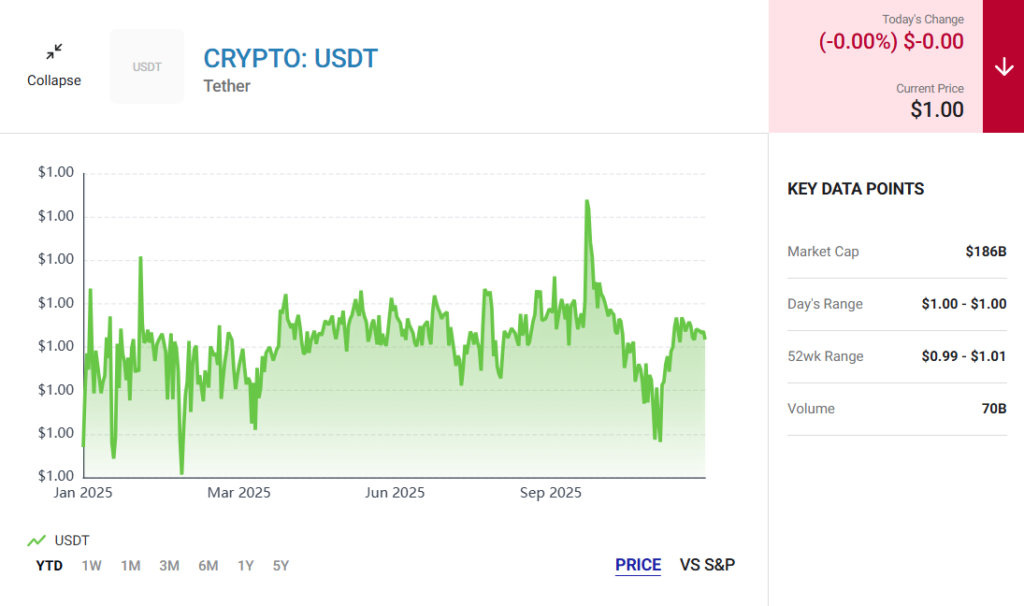
While Tether has made efforts to recover from these findings, transparency remains a key concern for many investors. A significant issue is that Tether’s reserves are held in offshore banks, including those in the Bahamas, which often have looser disclosure requirements compared to U.S. banks. This lack of operational oversight and transparency creates uncertainty regarding the full backing of Tether’s issued coins.
USD Coin: A More Transparent Alternative
In contrast, USD Coin (USDC), issued by Circle, has positioned itself as a more transparent stablecoin. Circle, which became a publicly traded company in June 2025, is subject to the disclosure requirements of the U.S. Securities and Exchange Commission (SEC), a regulatory body with strict oversight over financial entities. This gives USDC a level of transparency that Tether lacks, as Circle reports USDC’s full reserves monthly, whereas Tether only reports its reserves quarterly.
Circle’s operations are also based in New York, one of the most regulated states for cryptocurrency businesses, providing additional regulatory safeguards for USDC investors. This level of transparency is particularly valuable for investors who prioritize regulatory oversight and financial security.
The Trade-Off: Transparency vs. Liquidity
When it comes to stablecoins, investors are often faced with a trade-off between liquidity and transparency. Tether’s higher liquidity and larger market cap, nearly twice that of USDC, make it an attractive option for traders who need to quickly move in and out of positions. This liquidity is one of the primary reasons why Tether remains so popular in the crypto market.
On the other hand, USD Coin offers more transparency but with lower liquidity. If liquidity is a priority for your trading strategy, Tether may still be the preferred choice. However, if you value transparency and regulatory compliance, USD Coin may be the safer option.

The Risks with All Stablecoins
It’s important to note that no stablecoin is completely risk-free. While stablecoins like Tether and USD Coin are designed to maintain a 1:1 peg with the U.S. dollar, they can de-peg in rare situations due to market conditions, liquidity issues, or regulatory changes. In these cases, investors may not receive the full value in fiat currency when selling their stablecoins.
Even with the higher transparency of USD Coin, investors should remain aware of the inherent risks associated with any stablecoin. While both USDT and USDC offer relative stability, changes in market conditions or regulatory environments can still impact their value, and they are not immune to the same challenges that affect other cryptocurrencies.
Conclusion: What Should Crypto Investors Know?
For investors looking for high liquidity, Tether continues to be a key player in the crypto ecosystem. However, transparency issues remain a significant risk that cannot be ignored. If transparency and regulatory compliance are more important to you than liquidity, USD Coin offers a more secure and trustworthy alternative.
Trading experts advise that while Tether’s popularity in the market is hard to ignore, investors should carefully consider the trade-offs between liquidity and transparency.
Given Tether’s long history of scrutiny and ongoing transparency concerns, those looking for stablecoin investments should weigh the potential risks against the benefits of each option before making any decisions. USD Coin, with its more transparent structure, could be a better choice for investors seeking stability without sacrificing regulatory oversight.


